
Trump Admits Poor Economic Pitch as US-Iran War Hits Fuel Prices
The president says the economy is strong, but rising fuel prices and falling voter trust are making his midterm push harder.

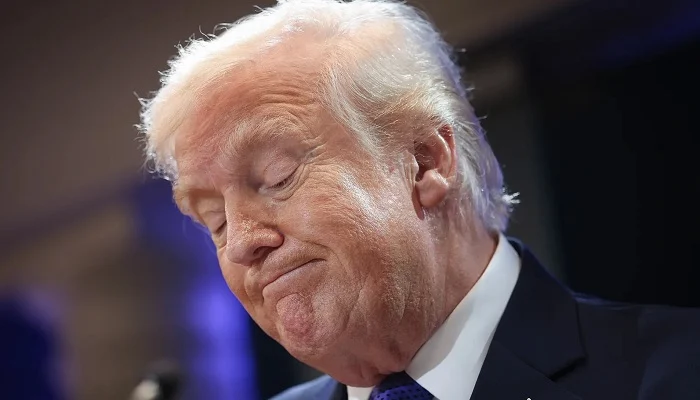
Trump – (Special Correspondent/Web Desk) – President Donald Trump has admitted that he is not explaining his economic record well. The US-Iran war is pushing fuel prices higher, and many families are feeling the pain. This worry could shape the November midterm elections.
Speaking at a Hispanic Heritage Month event at the White House on Wednesday, Trump said he had done a very bad job of explaining how well the country is doing. He still insisted the country is doing better than ever.
“We’re not getting the word out,” he said. He added that his team is doing a poor job of promotion, even while running the country well.
Trump now faces a busy 32-day campaign push before the November 3 vote. Control of Congress is at stake. On Thursday he is due in Texas and Oklahoma, then Alabama on Friday and Ohio on Saturday.
He also admitted the history is against him. The party in the White House usually loses seats in the first election after a presidential vote. “We have to turn this around,” he told supporters.
The numbers show why he is worried. A Reuters/Ipsos poll this month put his approval rating at 32 percent, the lowest of either of his terms. Only 17 percent approve of how he handles the cost of living. Even some Republican voters are unhappy about inflation.
Fuel is the biggest pain point. Diesel recently hit a record $6.53 a gallon, according to AAA data. Several states have tried to hold down fuel costs as supplies tighten.

Experts link the supply problems to the US-Iran war, attacks on Russian refineries and falling global stocks. Oil rose again on Wednesday as talks between Washington and Tehran stalled. Brent crude settled at $103.50 a barrel, and US crude closed at $90.42.
Consumer confidence also fell sharply in September. It dropped to its lowest level in nearly 12 and a half years.
Still, there are some bright spots. The US economy grew at a revised 2.2 percent annual rate in the second quarter. Consumer spending rose 3.8 percent. Heavy investment in artificial intelligence infrastructure has also helped growth.
That gap is the heart of Trump’s argument. He says the economy is strong, but voters are not hearing it. Many voters, however, are judging the economy by what they pay at the pump and the grocery store.
The war is becoming a problem for his own party too. Reuters reported last week that Republican candidates in several states are distancing themselves from his Iran policy. They fear voters are worried about higher food and fuel bills and about how long the war will last.
Talks are still going on. Iran’s Foreign Minister Abbas Araqchi has received US feedback through Qatari mediators. It concerns a seven-day trust-building plan that includes steps toward reopening the Strait of Hormuz. Both sides still disagree on the order and conditions of those steps.
For now, the future of fuel prices depends on whether the talks move forward. Until then, Trump will keep telling voters the economy is strong, while many of them keep counting the cost of the US-Iran war.
Comments are closed, but trackbacks and pingbacks are open.