


There are moments when history does not advance—it hesitates. It draws a breath, as if uncertain whether to continue along the familiar road of destruction or to attempt a quieter, more difficult turn. Civilizations, more often than not, have chosen the former. War has always been the easier language of power. It is decisive, visible, and immediate. Peace, by contrast, is subtle. It requires restraint, patience, and a willingness to step back when every instinct urges forward. And yet, there come rare intervals when that instinct is resisted, when momentum is broken, when the inevitable is interrupted.
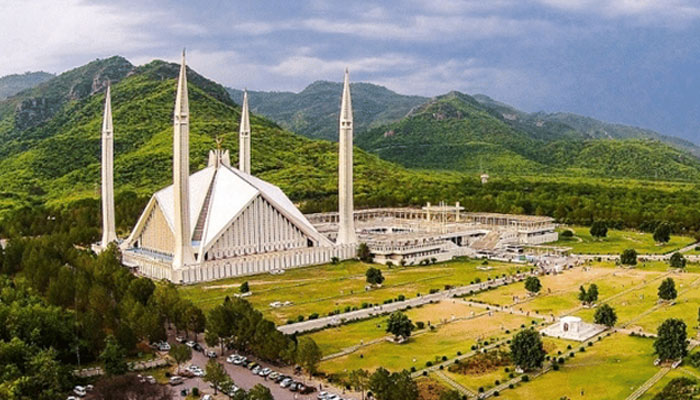
What unfolded in Islamabad was not merely a diplomatic exercise, nor a routine arrangement carved out of exhaustion. It was something more fragile and more profound: a pause inserted into the machinery of escalation. The Islamabad Accord, as it will be called, will be described in cautious terms—ceasefire, de-escalation, breakthrough. Analysts will reduce it to timelines and pressure points, to who conceded what and who gained how much. But beneath that language lies a simpler truth, one that does not lend itself easily to policy briefs or strategic diagrams. Something that was about to happen… did not happen.
War, once it gathers force, rarely pauses. It feeds upon itself, drawing energy from fear, miscalculation, and pride. It moves forward not because it is always desired, but because it becomes difficult to stop. And yet, in this moment, it was stopped—not entirely, not permanently, but decisively enough to matter. This is why the significance of Islamabad cannot be measured in signatures alone. It must be understood as an interruption of a trajectory that seemed all but certain.
Before the language of analysis takes over, the heart instinctively reaches for something older, something more elemental than policy or protocol. It reaches for expression. And so, let it be said—not as a slogan, but as a reflection of a rare moment:
Three Cheers for Pakistan
Long live, long live, long live Pakistan!
Up to the summit—the victory stand,
Pakistan rises with steady hand,
From trembling frontiers where powers engage,
It answered fire… by quieting rage.
When night stood ready the skies to consume,
And shadows of conflict began to loom,
A pause emerged—so fragile, so rare,
As if unseen hands were guiding the air.
Donald Trump’s voice across the global stage,
Marked a pause in an age of rage,
While talks in Pakistan, steady and known,
And Field Marshal Munir—resolute, alone—
Carved from tension a fragile release,
Not victory of war—but a victory of peace.
The Pak-caravan moved through storm and flame,
Not chasing glory, nor seeking fame,
But carrying hope through fractured lands,
With steady resolve—and open hands.
Straits once burdened began to breathe,
Old fears loosened their tightening wreath,
As Islamabad stood calm, aware—
A silent force in global affair.
The world now watches, weighs each move,
In guarded tones, in cautious groove,
Yet one truth rises, firm and clear—
Pakistan stood when none drew near.
Not for conquest, nor for gain,
Not to deepen the world’s pain,
But to place its hand—firm, aware—
Between the spark… and the flare.
Three cheers for Pakistan—let them rise!
Not from habit, nor disguise,
But for a moment rare and high—
When peace was chosen… before goodbye.
Three cheers for Pakistan, loud and clear!
For courage that silenced the drums of fear,
For a nation that stood—when it mattered most—
Not as a player… but as a host.
And let it echo, sky to sky—
In every heart, in every cry:
Three cheers for Pakistan—
Long live, long live, long live Pakistan!
Poetry, however, is only the doorway. Beyond it lies the burden of understanding what truly occurred. The world was not drifting toward conflict; it was being pulled toward it by the gravitational forces of rivalry, fear, and domestic compulsions. Such moments do not require a conscious leap into war. They require only the absence of restraint. And restraint, in modern geopolitics, is a scarce commodity.
For Pakistan to step into this space was not an act of convenience. It was an assumption of pressure. Mediation is rarely neutral ground; it is contested terrain. Each party arrives with suspicion, each gesture is interpreted, each silence is analyzed. And yet, within this environment, a narrow corridor was opened in which dialogue could take place. Pakistan did not control the forces at play, but it did something essential: it created the possibility for those forces to pause.
The presence of JD Vance at the negotiating table signaled the seriousness of engagement from Washington, even as it reflected the layered nature of decision-making under Donald Trump. In contemporary politics, the domestic and the international are inseparable. Every move abroad carries echoes at home. Yet even within this web of calculation, something more elemental occurred. The machinery of escalation slowed, not because it lost its capacity, but because, for a moment, it lost its consent.
There is a verse in the Qur’an that reframes how one understands such moments: “Whoever saves one life—it is as if he has saved all mankind” (5:32).
This is not a statement limited to individual acts; it is a principle that elevates prevention above reaction. If destruction is averted before it begins, the value of that act cannot be quantified in numbers. It exists in the realm of what did not happen—in the lives not lost, in the futures not erased.

The Prophet Muhammad (peace and Blessings be upon him) deepened this understanding when he said, “Allah is more merciful to His servants than a mother is to her child.” In a world that often seems governed by calculation alone, such a statement introduces another dimension—the possibility that mercy, though unseen, plays its part in the unfolding of events. One need not abandon reason to acknowledge that not everything is explained by it.
It is here that the quiet figure of “BaBa Tal” enters—not as an analyst, but as a witness. He walks not through corridors of power, but along the margins where ordinary life persists. He does not speak in the language of strategy; he listens for something else. And what he hears, on a night like this, is not the noise of agreement, but the silence that follows the decision not to escalate.
“Wars,” he says, almost to himself, “are loud. Peace… is always quiet.”
In that quiet, he senses something that others might overlook—a softening, a hesitation, a turning away from the edge. He does not name it policy or pressure. He simply calls it a moment when hearts refused to harden further.
This intuition finds echoes beyond his world. The philosopher Baruch Spinoza described peace not as the absence of war, but as a disposition toward justice and confidence. Martin Luther King Jr. went further, reminding us that true peace is the presence of justice. Both insights converge on a single truth: peace is not passive. It is chosen.
And that choice, in this instance, carries implications that extend beyond the immediate. For decades, Pakistan has been viewed through the lens of its geography—its borders, its conflicts, its strategic vulnerabilities. But geography does not dictate destiny unless it is allowed to do so. Moments like this suggest a shift, however tentative, toward a different role—one defined not only by position, but by responsibility.
This is not to romanticize what has occurred. The Islamabad Accord is not a guarantee of lasting peace. It is an opening, a pause, a chance. Such moments are fragile. They can be undone by mistrust, by miscalculation, by the reassertion of old habits. Peace requires maintenance; it demands continuity of intent. Without it, even the most promising beginnings can dissolve.
Yet fragility does not diminish significance. On the contrary, it heightens it. The more uncertain the outcome, the more meaningful the choice to attempt it.
In the days to come, experts will debate the details. They will analyze who gained, who conceded, who maneuvered more effectively. But history, when it looks back, will ask a simpler question: who prevented what was about to happen?
And the answer, in this moment, will lead to Pakistan—not as a victor in the conventional sense, not as a power imposing its will, but as a nation that chose to stand in the path of escalation and say, quietly but firmly, enough.
This is why the phrase that opened this reflection must return—not as repetition, but as conclusion.
Not because Pakistan won a war.
But because it refused one.
Not because it altered the balance of power.
But because it paused the descent into chaos.
Not because it was expected.
But because it was necessary.
And for that—
Three cheers for Pakistan.
Long live, long live, long live Pakistan.

Comments are closed, but trackbacks and pingbacks are open.