
The Truth Hidden in Oil, Power, and Conflict
Power, Oil, and the Unspoken Wars: How Global Powers Shape the World Through Energy and Deception

By Abid Rasheed
There is a truth that is yours… a truth that is mine… and then there is that one truth: the ultimate truth. This ultimate truth is rooted in facts; it does not drown in the river of reality but rises like a wave upon its surface. It may be obscured for a time beneath the dust of narratives, powerful media, and political rhetoric, but it can never be erased.
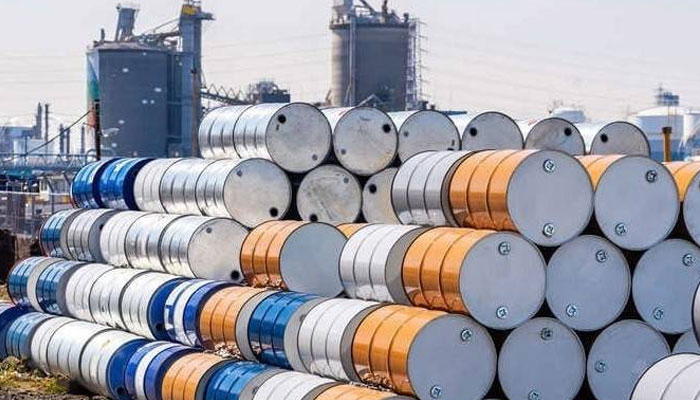
International politics is a chessboard upon which nations are arranged like pieces, yet it is always the powerful who make the moves. Behind every move lies a story, and behind every story, interests shift and stir. It would not be incorrect to say that control over energy resources has long been a central strategy of global powers. The deserts of the Middle East are not merely seas of sand; they are reservoirs of black gold, holding a pivotal place in the global economy. As history has already recorded, the Iran-Iraq war and the Iraq-Kuwait conflict were, in essence, part of a broader American design; one that ultimately ensured access not only to Kuwaiti oil but also to Saudi reserves. In time, even the Iraqi leadership was brought to its end, completing yet another phase of this grand game.
This same strategy of energy dominance entered a new phase with Venezuela, with Iran representing its next chapter. Following Donald Trump’s assumption of the presidency in November 2025, the U.S. National Security Strategy was unveiled and widely published. Those in Pakistan who still maintain a habit of reading newspapers might recall a key point within that document: America will seize energy resources from its adversaries. If understood carefully, this was nothing short of a veiled declaration of war. In this light, the underlying motives behind U.S. and Israeli actions against Iran cease to be a mystery. These measures are not merely ideological or political disagreements but part of a broader geopolitical and economic design. History teaches us that whenever a nation has been targeted, a larger interest has always been at play; more often than not, tied to energy.
Those with discerning insight should have taken note when President Trump carefully selected individuals for his cabinet whose past and present reflected deep-seated hostility toward Muslims, and who were known for their extreme ideological positions. One such example is Tulsi Gabbard, often associated with India’s extremist organization RSS, and reportedly dubbed the “Queen of RSS” by American journalist Peter Friedrich due to her ideological leanings. Appointed Director of National Intelligence in February 2025, her inclusion speaks volumes. While Trump may appear to mock Indian Prime Minister Narendra Modi on occasion, such gestures are often part of political theatre. In reality, his sympathies and strategic alignment appear closely tied to India and its hardline government.
After the collapse of the Soviet Union, the world entered a Unipolar era in which one power gained overwhelming dominance. As the arrogance of the United States and its Western allies grew, so too did their pride, blinding their judgment and clouding their reason. The same worn-out justifications once used in Iraq and other Muslim countries were once again invoked against Iran. Yet this time, they failed to gain acceptance—not only globally but even within the United States itself. NATO refused to support the move, and even Sri Lanka denied the use of its territory for operations against Iran.
As for the United Nations, the global community has long watched; calmly yet helplessly; as its charter and the golden principles of collective security have been repeatedly violated. The death of peaceful coexistence is now witnessed in silence, for in global affairs, law and morality often remain the weakest arguments.
In the Middle East, many Arab states find themselves vulnerable, lacking the means to ensure their own security and thus remaining dependent on external powers. In such a world, power becomes the only accepted currency. When the balance of power is disrupted, moral values are easily cast aside. Wars and interventions against weaker nations can be justified through fabricated pretexts, while governments are overthrown in the name of social progress and economic reform. New idols are carved, and populations are compelled to worship them. History is filled with such attempts; many of which end in failure.

However, when a nation awakens to a sense of collective consciousness, internal divisions fade into the background, and unity emerges around a shared purpose. This unity becomes the strongest shield against external aggression. The illusion of power shatters when confronted with resistance. In societies where dignity and honor endure, regime-change operations often prove costly. Arrogance turns into miscalculation, and the aggressor’s confidence crumbles under the weight of resistance. In such moments, even political opponents set aside their differences to defend national sovereignty.
An analysis of recent decades reveals that power is never permanent. Those who dominate today may find themselves subdued tomorrow. Interventions carried out under the banner of regime change may achieve short-term success, but their long-term consequences are often disastrous. Afghanistan, Iraq, and several other nations stand as stark examples, where instability replaced the promise of order.
In today’s world, flooded with information, discerning truth has become more difficult than ever. Yet if we examine the present through the lens of history, many veils begin to lift, allowing us to distinguish between the truth that is presented and the truth that exists.
Wars have occurred before, and they have ended. This war, too, will one day conclude. But in its course, many illusions of power will turn to dust, and the intoxication of dominance will fade. When the dust finally settles, history will deliver its verdict in a silent yet unforgiving voice. It will reveal who distorted the truth, who concealed it, and who recognized and upheld it. Such moments are rare in the life of nations, but when they arise, they shape their destiny. These are the times when narratives collapse and reality emerges in its true form.
Those who reap temporary gains in the games of global power often forget that the balance of power is never static. The hand that writes decisions today may stand in the dock of history tomorrow. This is the law of nature—and the enduring lesson of history.
In this entire landscape, the most pressing question remains: where do we stand? Are we mere spectators, or do we possess the awareness to understand reality and shape our intellectual and national direction accordingly? For truth gains meaning not merely by being known, but by being accepted and acted upon.
Witkoff Confirms Pakistan Mediates Iran-US; Trump Eyes Oil Control
When nations begin to recognize the truth, not only do external conspiracies weaken, but internal stability also strengthens. This awareness becomes the guarantor of the future; the light that guides the way through darkness
Comments are closed, but trackbacks and pingbacks are open.