

The Global Transition from a Unipolar to a Multipolar World Order
By: Maryam Akhtar Zaheer (University of Chakwal)

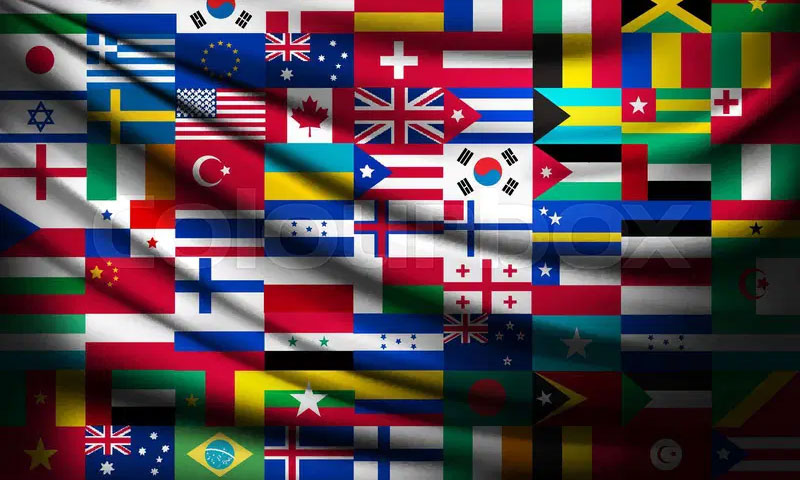
The international system is one of the most important transformation since the end of the Cold War. For more than three decades, global politics was generally shaped by a unipolar world order dominated by the United States. Today, despite, that dominance is increasingly being challenged. The rise of new powers, shifting economic centers, regional conflicts, and changing alliances are pushing the world towards the multipolar world – the one in which power is distributed among several major states instead of a single superpower.
The unipolar world order emerged after the collapse of the Soviet Union in 1991. With no competing superpower to challenge it, the United States owned incomparable military strength, economic influence, and political authority. Meanwhile, Washington played a leading role in global institutions like the United Nations, the World Bank, the International Monetary Fund, and NATO. Liberal democratic values, free markets, and globalization became central features of the international system.
Nonetheless, unipolarity also generated criticism and resistance. Military interventions in Afghanistan and Iraq, along with unilateral foreign policy decisions, raised concerns about the misuse of power and the weakening of international law. Overtime, dissatisfaction with a US dominated order encouraged other states to seek greater strategic autonomy and alternative centers of power.
One of the most significant drivers of the shift toward multipolarity is the rise of China. Over rapid industrialization, technological advancements, and sustained economic growth, China has emerged as the world’s second-largest economy. Its global influence has expanded through initiatives like the Belt and Road Initiative, which connects Asia, Africa, and Europe through infrastructure development and trade. However, China’s growing military capabilities and diplomatic engagement have further strengthened its position as a major global actor.
Russia has also played an important role in challenging unipolar dominance. Regardless of economic limitations and international sanctions, Russia has relied on its military strength, energy resources, and strategic diplomacy to assert influence, especially in Eastern Europe, Central Asia, and Middle East. Its actions have highlighted the limits of western power and contributed to the fragmentation of the global system.
Moreover China and Russia, several regional powers are becoming increasingly influential. India’s economic growth and strategic partnerships, the European Union’s regulatory and economic strength, and the assertive regional roles of countries such as Turkey, Iran, Brazil, and Saudi Arabia all point toward a more distributed global power structure. These actors are no longer followers of a single power but active participants shaping international outcomes.
The relative decline of US dominance has further accelerated this transition. Whilst, the United States remains a leading military and economic power, internal political polarization, economic competition, and war fatigue have reduced its ability to act as the one global leader. The 2008 global financial crises exposed vulnerabilities in Western economies and strengthened the economic position of emerging powers, especially in Asia. More recently, debates over trade protectionism, alliances, and global responsibilities have raised question about the sustainability of US-led leadership.
Thus doesn’t mean the end of American power, but rather than the end of uncontested dominance. The US is now several major powers competing and cooperating within an increasingly multipolar environment.
In a multipolar world, no single country can easily impose its will on others. Decision-making becomes more negotiated, global institutions face pressure to reform in order to reflect new power realities. Security dynamics are also changing. Rather than a single global rivalry, the world now faces multiple regional and global competitions – among the US and China in the Indo-Pacific, Russia and NATO in Europe, and various powers in the Middle East.
The emerging multipolar world order brings both opportunities and challenges. On the positive side, power diffusion can promote balance and reduce the likelihood of unchecked dominance by any single state. Countries now have greater flexibility in forming partnerships and pursuing independent foreign policies. Economically, diversification of trade and investment has reduced dependence on a single market or currency, exploring alternative trade routes, and strengthening regional cooperation. The growing use of local currencies in trade and the emergence of new financial institutions reflect this trend.
For developing countries, including Pakistan, the shift toward multipolarity offers a chance to broaden diplomatic and economic options. By engaging with multiple global and regional powers, such states can pursue development goals while maintaining strategic balance. However, careful diplomacy is required to avoid entanglement in major power rivalries.
The transition from unipolarity to multipolarity is not a sudden event but a gradual and uneven process. It is marked by cooperation and conflict, stability and disruption. While multipolarity may reduce the risk of absolute dominance by one power, it also brings challenges related to coordination, trust, and global governance.
The success of this new world order will depend on how major powers manage competition, whether international institutions adapt to new realities, and how smaller states protect their interests in a changing global landscape.
As the world moves further into the multipolarity era, one thing is clear: global politics will be more complex, more contested, and more Interconnected than even before. The age of a single centre of power is fading, replaces by a world of many voices shaping the future of international relations.


Comments are closed, but trackbacks and pingbacks are open.