
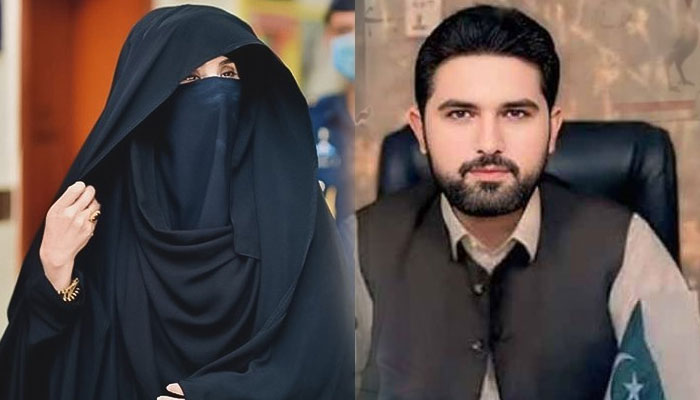

The Economist report alleging that Bushra Bibi exercised extraordinary spiritual and political influence over Imran Khan’s government has intensified longstanding concerns about informal power networks shaping state decisions. Claims that she affected major appointments, policy directions, and even received sensitive intelligence briefings have reinforced a widespread belief that personal relationships and mysticism overshadowed institutional mechanisms during PTI’s rule. Many citizens remember how Bushra Bibi and Farah Khan frequently appeared at the center of political discussions, symbolizing unaccountable influence amid ongoing controversies, governance paralysis, and heightened confrontation with state institutions—trends viewed as contributing to deeper national polarization and weakened administrative stability.
At the same time, frustration has grown over PTI’s approach to national security, especially in Khyber Pakhtunkhwa, where terrorism is resurging and local communities are again facing severe violence. Many Pakistanis believe the party’s stance on counter-terrorism appears evasive and politically driven, undermining unity at a moment when unwavering support for security forces is seen as essential. Public anger intensified when the KP government opposed the Action in Aid of Civil Power regulations, a framework widely regarded as crucial for combating entrenched militant networks. The decision is broadly viewed as irresponsible and disconnected from ground realities, heightening fears that political priorities are being placed above public safety and further reinforcing concerns that leadership choices are deepening divisions rather than strengthening national resilience against terrorism.

In the broader public discourse, the actions attributed to Chief Minister Sohail Afridi are frequently viewed as representative of a more extensive trend that the public associates with the PTI’s core leadership model. Similar to how Imran Khan was often perceived to place personal loyalty and goals above the national interest, Sohail Afridi is alleged to be aligning crucial provincial policies with the PTI’s specific, narrow political strategy rather than with paramount national security needs. Much of the PTI’s current political energy appears to be obsessively focused on the singular goal of securing political relief for their imprisoned leader, Imran Khan, and this intense, singular focus has, in the public view, severely overshadowed their fundamental responsibility toward effective governance. Citizens believe that PTI leaders are intentionally adopting adversarial and confrontational stances not because these positions genuinely benefit the people of KP, but specifically because such postures increase targeted political pressure on national institutions. This entire approach is widely interpreted as reckless, dangerous, and fundamentally misaligned with the severe, existential security threats currently faced by the country.
A clear and consistent sentiment has now emerged across the country: the public perceives a worrying, consistent pattern, extending from the actions of Imran Khan to Bushra Bibi, to Farha Gogi, and now to Sohail Afridi, of persistently prioritizing personal agendas over collective national priorities. The PTI’s leadership frequently presents itself as a victim of relentless political persecution while concurrently failing to acknowledge or accept the damaging consequences of its own political decisions. People and political analysts consistently highlight how the PTI’s aggressive confrontations with national institutions, its frequent refusal to engage in constructive dialogue, its deep-seated reliance on dramatic, hyperbolic narratives, and its alleged promotion of unverified and often inflammatory accusations have collectively created a political environment where the unity and essential stability of the country are constantly compromised. According to these observers, the distinct political style associated with the PTI is one that demonstrably thrives on intense polarization rather than consensus-building, on political spectacle rather than substantive reform, and on confrontation rather than constructive cooperation.
In discussions unfolding across the nation, Pakistanis are firmly insisting that the nation can no longer afford a style of politics that is solely built upon bitter personal rivalries, the uncritical worship of a charisma cult, or the continuous assertion of unverified claims. They powerfully emphasize that Pakistan’s current, multifaceted challenges are too dire—encompassing profound economic instability, escalating security threats, the worrying rise of extremism, and institutional fatigue—for political actors to indulge in political strategies that intentionally divide rather than urgently unite. In the public’s emphatic view, Pakistan requires leadership that unequivocally places national security, comprehensive economic recovery, and institutional resilience far above every other consideration. They stress with urgency that political actors must immediately cease weaponizing divisive narratives that actively undermine vital national institutions, especially at a time when soldiers and civilians are sacrificing their lives daily in the difficult fight against terrorism. The citizenry believes that the people of Pakistan are profoundly weary of politicians who self-servingly present themselves as national saviors while simultaneously engaging in political behaviors that actively create deeper and more destructive rifts within the country’s fabric.
The continuous political drama surrounding the PTI, its leadership, its multiple controversies, and its currently perceived approach to governance in Khyber Pakhtunkhwa has pushed the Pakistani populace to express not only significant disappointment but also an outright, visceral rejection of what they widely regard as profoundly destabilizing political conduct. In their conversations, they articulate the clear sentiment that Pakistan deserves substantially better—better leadership, more effective governance, stronger institutions, and greater national unity. They argue passionately that the long-term future of the country must not be sacrificed at the altar of narrow, short-sighted personal political ambitions. And in the collective view of the people, the time has definitively come for the public to demand rigorous accountability, not merely for traditional corruption or administrative incompetence, but also for political behavior that fundamentally undermines essential national cohesion. Whether these widespread, deeply held concerns will ultimately shape the course of future political outcomes remains a crucial question, but the sentiment being expressed is unequivocally clear: the people of Pakistan overwhelmingly desire stability, unity, and a model of leadership that is firmly grounded in responsible action, not solely in self-serving personal agendas.
Comments are closed, but trackbacks and pingbacks are open.