

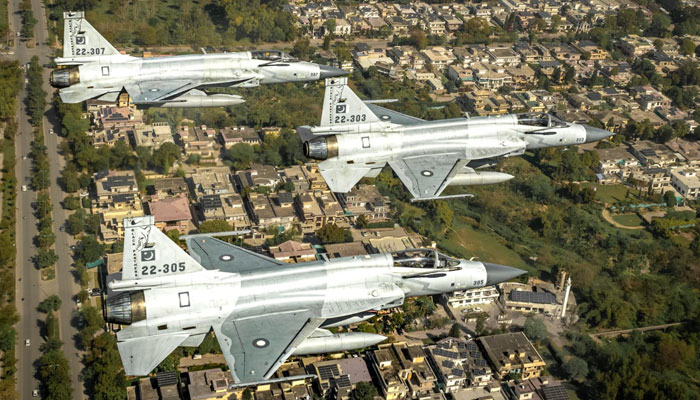

The Pakistan Air Force has produced many remarkable pilots whose extraordinary bravery, skill, and commitment shine through both in historic conflicts and in recent engagements. Among the most legendary figures is Air Commodore Muhammad Mahmood Alam, widely known as M.M. Alam. During the 1965 Indo-Pak war, flying the F-86 Sabre, he shot down five Indian Hawker Hunters in less than a minute during a single sortie—earning him the rare distinction of being an “ace in a day.” Over the eleven days of combat, he achieved nine confirmed kills and two probable victories, a feat that remains one of the most breathtaking achievements in modern aerial warfare.
Another celebrated aviator is Squadron Leader Syed Sajjad Haider, credited with leading the strike on Pathankot airbase in the 1965 war. His daring low-altitude attack destroyed more than ten Indian aircraft on the ground, dealing a crippling blow to the IAF’s capabilities at a crucial moment.
Among bomber pilots, Air Commodore Najeeb Ahmad Khan, affectionately known as “8 Pass Charlie,” earned his nickname during repeated solo raids on Adampur airbase in 1965. He made multiple attacking passes, honing the accuracy of each bomb run, rather than dropping all ordnance at once—often by cutting throttle until the last moment to confuse defenders—earning the respect of his adversaries and the Sitara-e-Jurat for his fearless style.
There is also Squadron Leader Ghani Akbar, who flew critical strike missions during the 1965 war. As a Flight Lieutenant, he executed a daring dual bombing run over Pathankot airbase: after delivering his bomb payload, he turned back and deliberately attacked additional targets, destroying an Indian MiG-21 and five tanks, even though he risked running out of fuel over hostile territory.
Another stalwart is Wing Commander Syed Manzoor ul Hasan Hashmi, a veteran of both the 1965 and 1971 wars. His citation notes that he flew over twenty strike missions and two air defense missions, often under intense anti-aircraft fire, destroying heavy enemy guns shelling Lahore and demonstrating “cool, courageous and operational leadership in complete disregard to his own safety.”

Turning to the recent Operation Bunyan Marsoos, although detailed public naming of specific pilots is limited, one officer received special acknowledgement: Squadron Leader Kamran Masih Bhatti, a Christian PAF officer honored by his community for a leading role in the strike on Rajouri airbase in Indian-administered Kashmir. His contribution in that high-profile mission was publicly recognized with a rally and tribute in Hyderabad, underlining both his bravery and symbolic importance as minority representation in the armed forces.
PAF official accounts emphasize that on May 7–8, J-10C jets armed with long-range PL-15 missiles achieved decisive results, reportedly downing five to six Indian fighter aircraft—including Rafales, Su-30s, and MiG-29s—at ranges up to 190 km, before the Indian Air Force could mount any effective missile response. While pilot names were not disclosed, the high skill, precision, and use of advanced tactics reflect the collective excellence of PAF aviators in that engagement.
The operation narrative highlighted that the PAF’s network-centric warfare skills, real-time coordination across air, land, and cyber domains, and leadership philosophy granting tactical autonomy contributed significantly to its success. Air Chief Marshal Zaheer Ahmad Babar Sidhu reportedly empowered squadron leaders to make split-second decisions—a factor that boosted morale and operational tempo across the force.
Pakistan’s Air Force legacy includes icons like M.M. Alam, Sajjad Haider, Najeeb Ahmad Khan, Ghani Akbar, Manzoor Hashmi, and Kamran Masih Bhatti, each of whom demonstrated extraordinary courage and tactical prowess during past wars. Their spirit and skill were mirrored in recent times by pilots engaged in Operation Bunyan Marsoos—among whom Kamran Masih Bhatti was singled out—operating advanced platforms like J-10C jets, delivering precise, long-range strikes, and demonstrating air superiority under pressure. Their collective performances reaffirm the professionalism and continuing evolution of PAF aviators across generations.
The PAF’s strength and perfection have also been recognized globally and PAF is considered among the top Air Forces in the world. Recently, Pakistan achieved significant success at this year’s Royal International Air Tattoo (RIAT) airshow, held in the United Kingdom. Out of more than 220 aircraft from 27 different nations, Pakistan’s aircraft received two prestigious awards. The Pakistan Air Force (PAF) showcased two of their flagship aircrafts at this year’s airshow. The first aircraft, the JF-17 Thunder Block-III, was awarded the “Spirit of the Meet” Trophy. The RIAT organization noted that this trophy was awarded to the PAF “in recognition of their efforts deploying a pair of indigenous fighter aircraft on a 4,000-mile journey, alongside a tanker and specially painted transport aircraft, and presenting them in a colourful and engaging static display,” according to a statement regarding the winning participants. The second winning aircraft, the C-130H Hercules, was awarded the RUAG Trophy, presented to the overall winner of the Concours d’Elegance. Pakistan Army’s Inter-Services Public Relations issued a statement acknowledging the win and sharing the remarks of Air Chief Marshal Zaheer Ahmed Baber Sidhu, the Chief of the Air Staff, who “extended his heartfelt congratulations to PAF contingent.” He stated, “Winning these prestigious awards is a testament to our professionalism, technical expertise and relentless pursuit of excellence. He also commended the entire team for showcasing Pakistan’s true potential with pride and dignity.” Pakistan Prime Minister Shehbaz Sharif also noted the achievement, stating, “By the grace of Allah, the vision of the leadership of the Pakistan Air Force and the professional skills of the pilots and technicians are making Pakistan’s name shine all over the world.” This marks the first time in seven years that Pakistan has taken home awards at RIAT, having previously won in 2018, 2016, and 2006. The Royal International Air Tattoo (RIAT) is the world’s largest international military airshow, occurring annually at the Royal Air Force Base Fairford in Gloucestershire, England. The three-day event boasts thousands of visitors and has been running for over 50 years, with the very first RIAT show taking place in Essex in 1971. The event also directly supports the Royal Air Force Charitable Trust (RAFCT), primarily dedicated to encouraging young people’s interest and involvement in aviation, space, and technology spheres. This year’s airshow took place from July 18 through July 20 and had over 175,000 attendees.
The Pakistan Air Force (PAF) stands as a profound source of national pride for the people of Pakistan, whose trust in its unwavering dedication and exceptional capabilities for safeguarding the homeland is absolute. There is a deep-seated conviction across the nation that, with such courageous and outstanding armed forces, no external power would dare to harbor malicious intentions or cast an aggressive gaze upon Pakistan. The PAF’s remarkable service record, from its pivotal role in defending national airspace and delivering decisive strategic blows to its crucial contributions in humanitarian crises and its consistent pursuit of technological excellence, has cemented its place not just as a military branch, but as a revered symbol of national strength, resilience, and sovereignty. This collective belief in the PAF’s formidable presence underscores a powerful sense of security and unity among Pakistanis, who view their air force as an invincible shield against any form of aggression, ensuring the dignity and integrity of their beloved motherland.


Comments are closed, but trackbacks and pingbacks are open.