

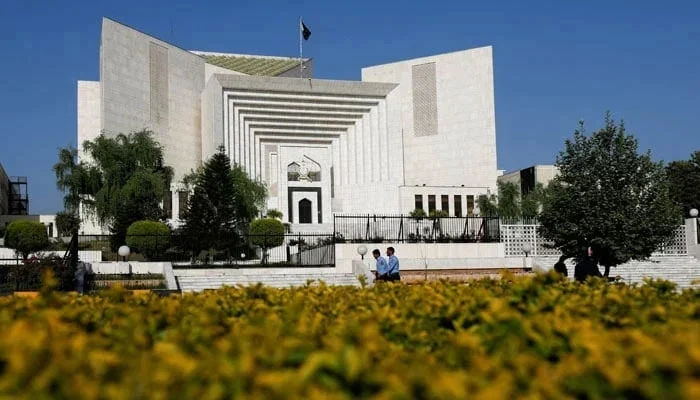
Supreme Court Declares Auqaf Takeover of Private Land in Hafizabad Illegal
Punjab Auqaf Had No Authority to Seize Private Land: SC

In a judgment issued on Tuesday, the apex court directed the Chief Administrator of Auqaf Punjab to restore the administration, control and possession of the land and structures to their owner, Muhammad Hussain, within 30 days of receiving the verdict.
The court also ordered the relevant revenue authorities to correct the land record if any changes had been made following the takeover notification.
A two-member bench comprising Justice Shahid Waheed and Justice Naeem Akhter Afghan dismissed an appeal filed by the Chief Administrator of Auqaf Punjab against a Lahore High Court judgment dated November 21, 2008, which had declared the takeover notification illegal.
In a judgment authored by Justice Shahid Waheed, the Supreme Court observed that a shrine constructed on privately owned land does not automatically become waqf property merely because members of the public visit it or make offerings there.
The court explained that under Section 2(e) of the Punjab Waqf Properties Ordinance, 1979, permanent dedication of property for a religious, charitable or pious purpose is essential for establishing its waqf status.
It clarified that a written deed is not compulsory to establish such dedication, as it may also be demonstrated through an oral declaration or the owner’s conduct. However, the intention to dedicate the property permanently and relinquish ownership must be established through evidence.
According to the judgment, Muhammad Hussain had purchased the land through a registered sale deed in 1988. In 1993, he buried a family member, Syed Shabir Hussain Shah, on the property with permission and subsequently constructed a shrine over the grave.
The court found that the available evidence did not establish either permanent dedication of the land or religious use from time immemorial, as required under the law.
It further observed that permitting devotees to visit the shrine and make offerings did not amount to transferring ownership or converting the privately owned land into waqf property.
The Supreme Court held that the existence of waqf property was a necessary condition for the exercise of takeover powers. The Chief Administrator, it ruled, could not assume jurisdiction simply by declaring privately owned land to be waqf property.
Comments are closed, but trackbacks and pingbacks are open.