
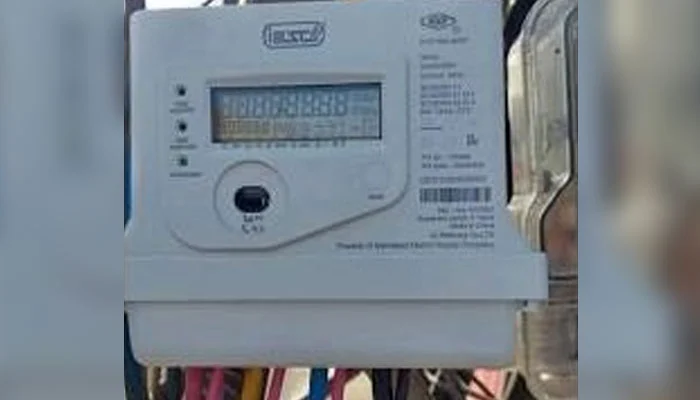
Smart Meter Prices Cut 40%, Rs150bn Annual Savings
The projected Rs150 billion annual savings are based on replacing defective and outdated meters.

Islamabad: Federal Minister for Power Awais Ahmed Khan Leghari on Monday announced that the prices of smart meters for power distribution companies (Discos) have been reduced by up to 40 percent, a move expected to generate annual savings of Rs150 billion nationwide.
In a statement, the minister said that transparent and internationally competitive procurement practices have significantly lowered costs. The price of a three-phase smart meter has dropped from around Rs45,000 to Rs25,000, bringing it close to the cost of a conventional three-phase meter. Similarly, the price of a single-phase smart meter has been reduced by Rs7,000. These prices are exclusive of applicable taxes.
Leghari credited improved planning by the Power Division and regulatory reforms by the Pakistan Engineering Council for attracting strong participation from international companies. He added that removing barriers to entry and adopting bulk procurement across all Discos helped reduce costs through economies of scale and lower raw material prices.

Read more: China to Invest Billions in Pakistan’s Solar Manufacturing
The minister also noted that continuous monitoring and the introduction of clear, competitive technical standards contributed to the price reduction.
According to Leghari, the projected Rs150 billion annual savings are based on replacing defective and outdated meters. He said that installing new meters would also provide additional relief to electricity consumers, as lower meter costs would be reflected in reduced charges on demand notices for new connections.
He added that more affordable smart meters would accelerate digitalisation in the power sector, improve the performance of the national grid, and bring multiple benefits, including accurate readings, faster detection of electricity theft, prepaid billing options, real-time access to consumption data, quicker power restoration without the need for a lineman, and overall improved service delivery.

Comments are closed, but trackbacks and pingbacks are open.