
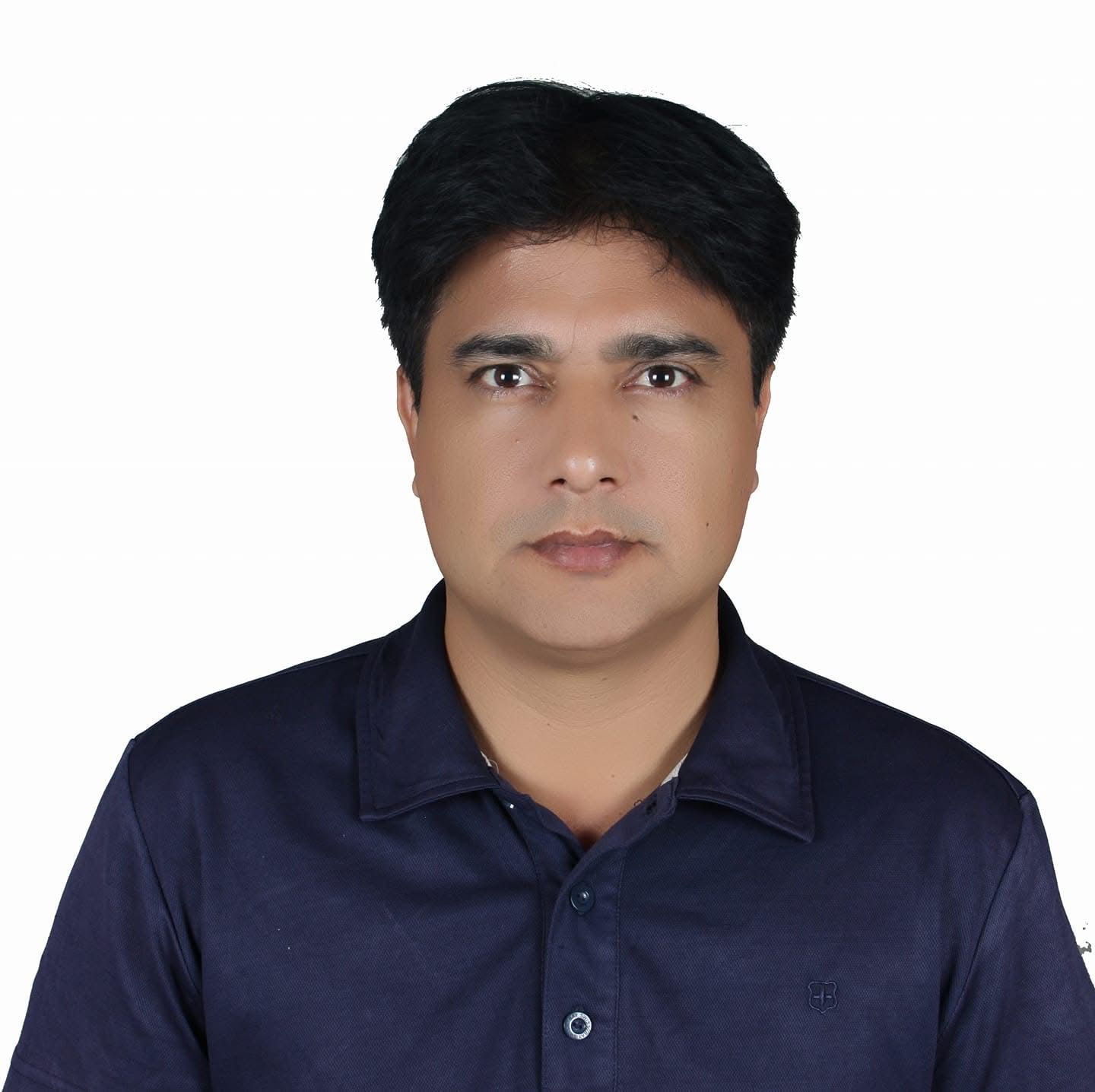

Gilgit- (Musaab Khaliq)-Senior journalist Ghulam Abbas, belonging to the Rigiayul area of Skardu, has been appointed as a Minister in the Caretaker Cabinet of Gilgit-Baltistan. His appointment has been warmly welcomed by journalists, intellectuals, and residents of Skardu.
Ghulam Abbas received his early education from Government Boys Middle School Rigiayul, where he consistently passed examinations with distinction. After completing matriculation, he moved to Karachi for higher education and earned an MA in International Relations from the University of Karachi.
Gilgit-Baltistan Assembly elections postponed due to severe weather conditions
In 2008, Ghulam Abbas began his professional journalism career with the renowned English daily Business Recorder as a Business Reporter. During this period, he also had the opportunity to visit several countries on professional assignments. Later, he relocated to Islamabad.
Currently, Ghulam Abbas is associated with the English daily Pakistan Today and a leading Gilgit-Baltistan-based media organization, GPN.

Apart from being a seasoned journalist, he is also known as a writer, intellectual, columnist, and poet.
Talking briefly to the media, Provincial Minister Ghulam Abbas said that he would fulfill his ministerial responsibilities with honesty and dedication and would work for the welfare and development of Gilgit-Baltistan
Gilgit-Baltistan (/ˌɡɪlɡɪt ˌbɔːltɪˈstɑːn, –stæn/; Urdu: گِلْگِت بَلْتِسْتان [ɡɪlɪt̪ bəlt̪ɪst̪aːn] ⓘ),[a] formerly known as the Northern Areas,[10] is a region administered by Pakistan as an administrative territory and consists of the northern portion of the larger Kashmir region, which has been the subject of a dispute between India and Pakistan since 1947 and between India and China since 1959.[1] It borders Azad Kashmir to the south, the province of Khyber Pakhtunkhwa to the west, the Wakhan corridor of Afghanistan to the north, the Xinjiang region of China to the east and northeast, and the Indian-administered union territories of Jammu and Kashmir and Ladakh to the southeast.
The region, together with Azad Kashmir in the southwest, is grouped and referred to by the United Nations and other international organisations as “Pakistan-administered Kashmir“.[note 1] Gilgit-Baltistan is six times larger than Azad Kashmir in terms of geographical area.[15]
The territory of present-day Gilgit-Baltistan became a separate administrative unit in 1972 under the name “Federally Administered Northern Areas”. It was formed by the amalgamation of Gilgit and Baltistan Agencies.[16][17] In 2009, the region was renamed “Gilgit-Baltistan” and granted limited autonomy through the Self-Governance Order signed by then Pakistani president Asif Ali Zardari, a move that was reportedly intended to also empower the territory’s people; however, scholars state that the real power rests with the governor and not with the chief minister or elected assembly.[18][19] Much of the population of Gilgit-Baltistan reportedly wants the territory to become integrated with Pakistan proper as a fifth province, and opposes integration with the rest of the Kashmir region.[20][21] The Pakistani government has rejected calls from the territory for provincial status on the grounds that granting such a request would jeopardise Pakistan’s demands for the entire Kashmir conflict to be resolved according to all related United Nations resolutions.[22]
Gilgit-Baltistan covers an area of over 72,496 km2 (27,911 sq mi)[23] and is highly mountainous. Its capital and largest city is Gilgit, while Skardu is the second largest city. It had a population of 1.492 million people according to the 2017 national census (estimated to be 1.7 million in 2022).[23] The economy is dominated by agriculture and the tourism industry.[24] The region is home to five of the 14 eight-thousanders, including K2, and has more than fifty mountain peaks above 7,000 metres (23,000 ft). Three of the world’s longest glaciers outside of Earth’s polar regions are found in Gilgit-Baltistan. The main tourism activities are trekking and mountaineering, and this industry has been growing in importance throughout the region


Comments are closed, but trackbacks and pingbacks are open.