
RealMan Intelligent Pakistan Explores Robotics and AI Business Opportunities
Chinese robotics company RealMan Intelligent is exploring Pakistan’s market for robotics, industrial automation and artificial intelligence, with potential opportunities for future technology cooperation.

By Zafar Hussain
CHANGZHOU – RealMan Intelligent Pakistan is emerging as a potential market for Chinese robotics company RealMan Intelligent, which is exploring business opportunities in robotics, industrial automation and artificial intelligence. The company wants to expand its global reach and is considering Pakistan as a possible market for future growth.
Zhongxun (Leo) Liu, Global Brand Lead at RealMan Robotics, shared the company’s interest in Pakistan during a visit to its facilities in Changzhou, China, on Friday. He said the company was interested in exploring the Pakistani market and understanding its business potential.
However, RealMan Intelligent is not currently selling its products directly in Pakistan. Liu explained that some of its products might be reaching the country through other sales channels. The company has not yet announced a formal launch, direct investment or confirmed market entry plan for Pakistan.
RealMan Intelligent Focuses on Robotics and AI
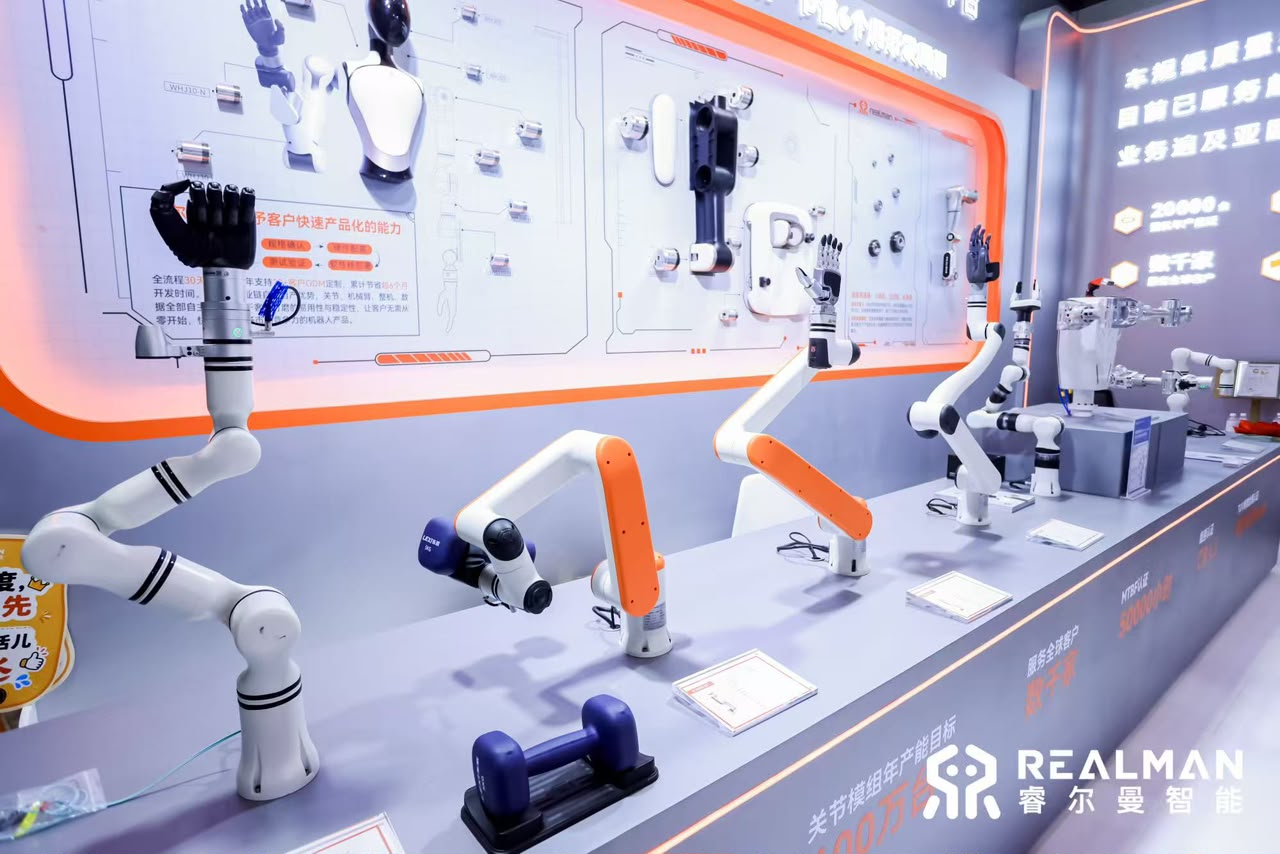
Established in 2018, RealMan Intelligent develops robotic arms, mobile manipulators, healthcare robots and other advanced robotic systems. Its products are designed for industrial, commercial and research applications.
The company focuses on Physical AI, a technology that combines artificial intelligence with machines that can perform tasks in the real world. Unlike software that works only with digital information, Physical AI allows robots to interact with their surroundings and carry out physical activities.
These systems can support industries that need speed, accuracy and reliable performance. They may also help reduce the amount of repetitive work done by human workers.
Robots Demonstrate Factory Operations
During the media visit, RealMan demonstrated several robots working in a factory environment. The robots performed tasks such as sorting items, moving materials and handling other routine operations.
The demonstrations showed how robotic systems can support manufacturing and improve workplace efficiency. Such machines can be useful in factories where workers need to repeat the same tasks many times.
According to Liu, human operators currently control the robots while the machines collect operational data. This data helps the company improve its artificial intelligence models and develop better robotic systems.
Over time, the company aims to make its robots more independent. The goal is to allow machines to perform routine tasks on their own while human operators step in when unexpected situations occur or specialised control is needed.
RealMan Develops Robots for Different Industries
RealMan Intelligent is developing robotic solutions for different environments, including homes, factories, healthcare facilities and power infrastructure.
The company said its robots have already been used in practical applications, including the inspection and maintenance of power stations. These tasks can be difficult or risky for human workers, particularly in areas where regular monitoring is required.
Robots can help inspect equipment, collect information and support maintenance teams. In industrial settings, they can also move materials, assist production lines and carry out precision-based tasks.
Healthcare robotics is another area where automated systems may provide support. Depending on the application, robots can help with routine operations and improve the efficiency of certain services.
Company Plans to Increase Production Capacity
RealMan said its integrated joint modules have a maximum annual production capacity of 500,000 units. These modules are important components that help robotic arms and other machines move accurately.
The company is also working to expand its manufacturing capabilities. With the deployment of its AUTRON production line in 2026, RealMan is advancing flexible mass production and targeting an annual capacity of one million joint modules.
Higher production capacity could help the company meet growing demand from industrial and commercial customers. It may also support the wider adoption of robotic technology as more businesses look for ways to automate their operations.
RealMan operates across Asia, Europe and North America. Its customers include businesses and organisations working in industrial control, education, research and commercial services.
Pakistan Could Benefit From Robotics and Automation
Pakistan could find new opportunities through cooperation with Chinese robotics manufacturers. Industrial automation may help local businesses improve productivity, reduce delays and maintain consistent product quality.
Factories that rely on repetitive work could use robotic systems to support production and material handling. Automated machines may also help businesses perform tasks that require high precision or expose workers to dangerous conditions.
Power generation is another possible area for cooperation. Robotic systems could support the inspection of power stations and other infrastructure, helping technical teams monitor equipment and identify potential problems.
Healthcare, technical education and scientific research could also benefit from greater access to robotics. Universities and training institutions could work with technology companies to help students learn practical skills in robotics, automation and artificial intelligence.
Such cooperation could support the development of local expertise. It may also create opportunities for engineers, researchers and technical workers to gain experience with modern industrial systems.
China-Pakistan Technology Cooperation Could Expand
As Pakistan seeks to improve industrial productivity and strengthen its technology sector, cooperation with Chinese companies could provide new opportunities for knowledge sharing and skills development.
Partnerships with robotics manufacturers could help local businesses understand how to introduce automation into their operations. Universities and research institutions could also explore joint projects related to artificial intelligence and robotic engineering.
However, successful cooperation would depend on factors such as investment, product costs, technical training, after-sales support and demand from Pakistani businesses. Local companies would need to assess whether robotic systems are suitable for their production needs and budgets.
For now, RealMan Intelligent Pakistan remains an exploratory business opportunity rather than a confirmed market expansion. The company’s interest signals potential for future cooperation, but no formal announcement has been made regarding direct sales, investment or the launch of operations in Pakistan.
Comments are closed, but trackbacks and pingbacks are open.