
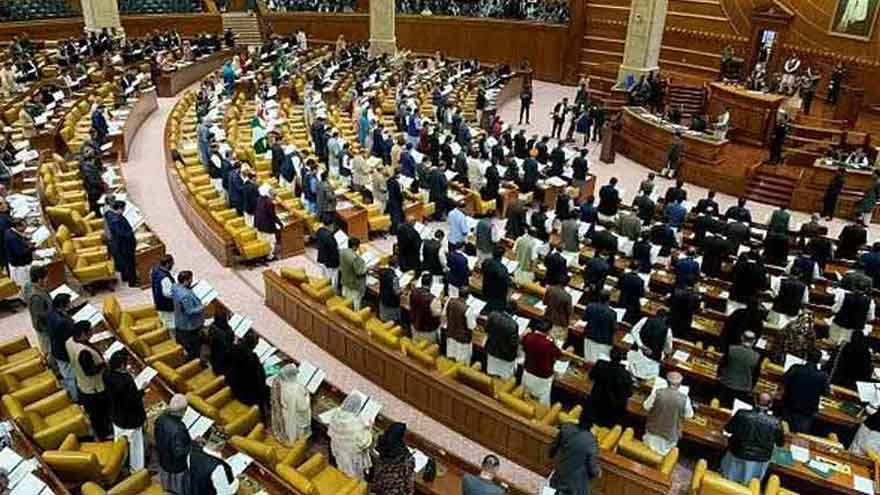


The recent resolution passed by the Punjab Assembly has once again revived a fundamental question: why has Punjab’s local government system never been able to take firm root? Why do citizens’ everyday problems remain entangled in the offices of the provincial capital, and why do those representatives who were meant to resolve issues at the street and neighbourhood level remain deprived of real authority? As a result, every few years the local government system re-emerges in a weakened, fragmented form.
These questions are not new. However, the prevailing political and administrative environment has made them far more urgent. Punjab’s current local government framework is not only weak and limited in practice, but also suffers from serious uncertainty regarding its constitutional status.
The most critical weakness of the local government system is the absence of solid constitutional protection. Despite the presence of Article 140-A in the Constitution of Pakistan, local governments have remained trapped in ambiguity and instability. Over the past two decades alone, Punjab’s local government system has been altered six times. A system that required at least a decade to mature was never even allowed two uninterrupted years. This lack of continuity has hampered implementation and rendered local representatives ineffective.
Financial autonomy is the backbone of any local governance structure, yet in Punjab it has consistently remained fragile. Local bodies have neither sustainable own-source revenues nor timely and complete access to provincial funds. Punjab Assembly Speaker Malik Muhammad Ahmad Khan has repeatedly highlighted that when funds generated in an area are spent there, public dissatisfaction declines and development does not stall.
In reality, however, the situation is quite the opposite. From union councils to metropolitan corporations, every local institution remains dependent on the provincial government’s discretion. When funding is tied to political priorities, development schemes are buried in files, while a significant portion of budgets is consumed by administrative expenses.
Moreover, local governments in Punjab have never been granted comprehensive authority. Sanitation is managed by one department, water supply by another, while traffic management, master planning and civil defence fall under separate provincial entities. In this fragmented structure, elected local representatives are reduced to mere recommendatory roles, while bureaucracy emerges as the dominant force, pushing public representatives to the margins.
Another persistent issue has been the manipulation of local government boundaries for political gain. In some areas, small populations have been divided into multiple union councils, while elsewhere hundreds of thousands of residents are confined to a single council. This imbalance in representation further weakens the system and shifts the focus away from genuine public service.
Perhaps the most damaging factor is the complete lack of continuity. No local government system in Punjab has been allowed to complete its term or achieve stability. Dissolution, new legislation, fresh elections, and then yet another dissolution have become a recurring cycle. Such uncertainty is fatal for any institutional framework.
The 28th Constitutional Amendment: A New Hope or Just Another Debate?
For the first time, the Punjab Assembly’s recent resolution has explicitly called for granting constitutional protection to local governments. This demand has opened a new debate: will this move finally ensure stability, continuity and empowerment at the grassroots level, or will it remain another well-intentioned resolution lost in the political churn?
Without genuine constitutional safeguards, financial autonomy and administrative authority, Punjab’s local government system will continue to exist in name only. The question, therefore, remains pressing: how long can local governance in Punjab survive without real constitutional protection?


Comments are closed, but trackbacks and pingbacks are open.