

Punjab Government Ensures Affordable Food, Free Transport, and Price Controls Across Province
Chinese Investors to Launch Lahore Solar Plant, 1,000-Acre Estate; 50,000 Students Trained

Lahore-(Asif Iqba/News Desk)- Chief Minister Punjab Maryam Nawaz Sharif has launched a series of wide-ranging initiatives aimed at providing public relief, strengthening governance, boosting industrial investment, and improving infrastructure across the province amid rising global oil prices and regional uncertainty.
Chairing a high-level meeting in Lahore, the Chief Minister reviewed the performance and accountability of administrative officers, directing them to ensure maximum relief for citizens affected by inflation. She noted that despite increasing fuel prices internationally due to a tense Middle East situation, the Punjab government’s price control measures have helped stabilize essential commodity rates and maintain ample availability of food items.
CM Maryam rejects proposal to close markets at 8pm in Punjab
According to officials, Punjab has managed to significantly reduce the cost of essential goods compared to other provinces. Flour prices, in particular, were reported to be substantially lower—by hundreds of rupees—than in Sindh, Khyber Pakhtunkhwa, and Balochistan. Authorities also highlighted that prices of pulses, fruits, and vegetables remain comparatively affordable, supported by sufficient stock levels across the province.
To further ease the burden on citizens, the Chief Minister announced free public transport services in areas lacking proper transit systems. Initially, this initiative will cover 17 districts, with pilot projects already approved for Gujranwala, Multan, and Sialkot. In addition, subsidies on petroleum products have contributed to lowering transportation and food costs. She directed relevant departments to submit a detailed report within 24 hours on transport fares per kilometre to ensure transparency and affordability.
During the briefing, officials presented a comprehensive review of prices of 23 essential food items across districts. The Chief Minister instructed authorities to reassess district collector (DC) rates and take strict action against profiteering and hoarding. She also called for immediate regulation of LPG prices and urged citizens to avoid purchasing goods at rates exceeding official price lists.
Expressing concern over public safety, Maryam Nawaz Sharif took notice of incidents linked to open drains and unsafe water ponds. She directed assistant commissioners to conduct thorough surveys in all neighborhoods and union councils, ensuring that hazardous areas are secured. The Chief Minister warned that failure to address such risks would be treated as administrative negligence.
The meeting also focused on improving urban management and cleanliness. She expressed dissatisfaction over sanitation conditions in certain cities, particularly Jhang, and set strict deadlines for improvement. A province-wide cleanliness drive has been reactivated under the “Suthra Punjab” initiative, with special emphasis on clearing garbage dumps and maintaining public spaces, including cemeteries.
In a major step toward modernization, the Chief Minister approved the introduction of AI-based monitoring systems for municipal services. Digital mapping and real-time tracking of sanitation workers will be implemented to enhance efficiency and accountability. Authorities also presented plans for an AI-powered waste detection vehicle, aimed at improving garbage collection processes.
Maryam Nawaz Sharif also reviewed progress on beautification and infrastructure development projects across multiple districts, including Lahore, Faisalabad, Attock, and Rahim Yar Khan. While appreciating improvements in some areas, she directed officials to ensure timely completion of all projects by June and maintain high standards after completion.

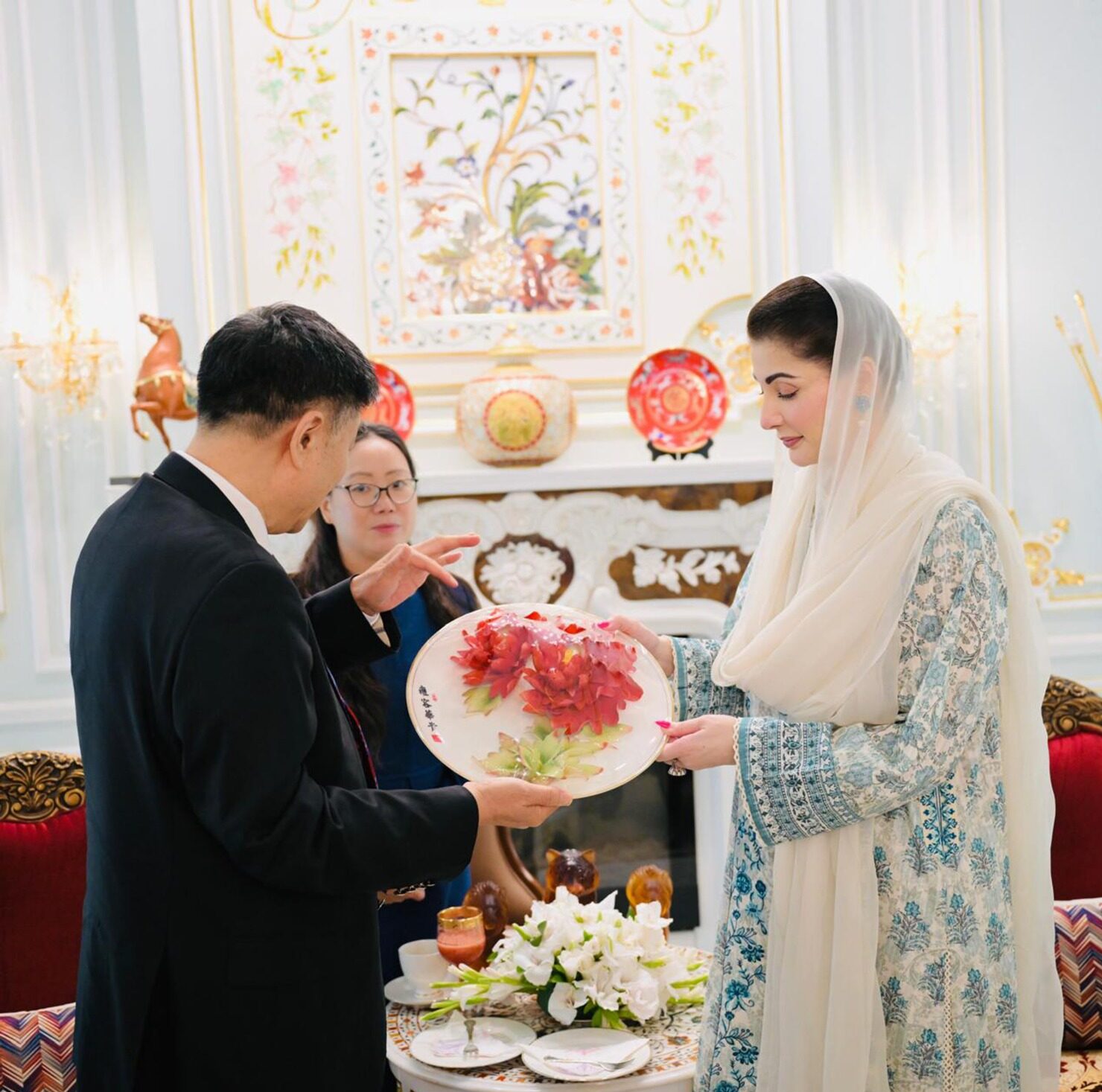
Separately, the Chief Minister met a delegation of Chinese investors, including representatives from Kunlun Group and Sunder Green Group, to discuss industrial collaboration and investment opportunities. During the meeting, both sides agreed to establish a solar panel manufacturing facility in Lahore, marking a significant step toward promoting renewable energy in Punjab.
The discussions also included plans to develop a 1,000-acre industrial estate in collaboration with Chinese partners, which is expected to create approximately 18,000 jobs. Maryam Nawaz Sharif reaffirmed her government’s commitment to facilitating investors and accelerating industrial growth. She emphasized that the government’s role is to support businesses rather than compete with them.
In addition, the Chief Minister approved a proposal to send 50,000 Pakistani students to China for advanced vocational and technical training, highlighting the importance of skill development in strengthening the country’s workforce. She also reviewed initiatives related to technology transfer, particularly in the field of coal-based petrochemical production.
Highlighting the growing demand for alternative energy, she noted that Pakistan presents a vast market for solar technology due to ongoing energy challenges. She reiterated the strong bilateral relationship between Pakistan and China, describing it as a cornerstone of economic cooperation.
On another front, Maryam Nawaz Sharif personally monitored emergency operations following heavy rainfall in Lahore and other cities. Through digital systems, she oversaw drainage efforts and ensured prompt response by local administrations and the Water and Sanitation Agency (WASA). Authorities reported that key roads and areas in Lahore, including major commercial and residential zones, were cleared of rainwater.
The Chief Minister directed all district administrations to remain on high alert during adverse weather conditions and ensure efficient utilization of resources. She stressed that the establishment of WASA Punjab should translate into tangible relief for citizens.
In her message on World Health Day, Maryam Nawaz Sharif reaffirmed her commitment to improving healthcare services across the province. She emphasized the importance of preventive healthcare, balanced nutrition, and public awareness in building a healthier society.
Under the “Healthy Punjab” initiative, the government has launched several healthcare reforms, including the recruitment of 50,000 community health inspectors to provide services at the grassroots level. She also highlighted the introduction of air ambulance services to facilitate emergency medical transport from remote areas.
Major healthcare projects nearing completion in Lahore include the Nawaz Sharif Institute of Cancer Treatment and Research and the Jinnah Institute of Cardiology. The Chief Minister noted that thousands of surgeries have already been conducted under various specialized programs, including stroke management and organ transplantation.
She further stated that free medicines worth billions of rupees are being provided in government hospitals, while mobile “Clinic on Wheels” units are delivering healthcare services to thousands of people daily across the province.
Concluding her remarks, Maryam Nawaz Sharif stressed that public welfare, economic development, and institutional reform remain top priorities of her administration. She reiterated that a healthy, economically stable, and well-governed Punjab is essential for the overall progress of the country.


Comments are closed, but trackbacks and pingbacks are open.