

PM orders appeal against NEPRA solar rules
PM Shehbaz directs appeal to protect existing solar consumers

ISLAMABAD: (Web Desk)- Prime Minister Shehbaz Sharif has taken formal notice of the National Electric Power Regulatory Authority’s (NEPRA) newly notified Prosumer Regulations 2026, directing the Power Division to urgently challenge the decision to protect the rights of existing solar consumers.
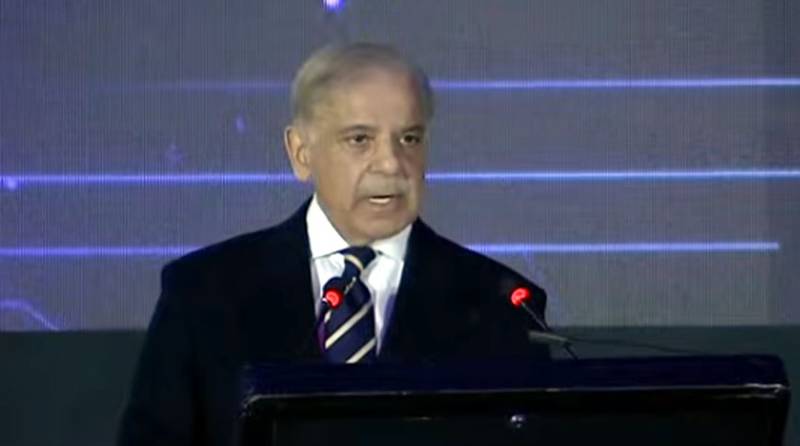
While chairing a high-level meeting on the issue, the prime minister instructed officials to immediately submit a review appeal before NEPRA, ensuring that current prosumers operating under net-metering arrangements receive maximum contractual protection, according to a statement released by the Prime Minister’s Office (PMO).
The prime minister underlined that the financial burden of around 466,000 solar consumers must not be transferred to 37.6 million domestic electricity users who are fully dependent on the national grid. He further directed the Power Division to formulate a comprehensive and balanced strategy to address the issue.
The meeting was attended by Deputy Prime Minister and Foreign Minister Ishaq Dar, Federal Minister for Power Sardar Owais Leghari, Economic Affairs Minister Ahad Cheema, Information Minister Attaullah Tarar, Minister of State for Finance Bilal Azhar Kayani, Adviser on Privatization Muhammad Ali, and other senior officials.
The development follows strong criticism from lawmakers across political lines, including members of coalition partner PPP and opposition PTI, who raised concerns over NEPRA’s regulatory changes.
Earlier, addressing the Senate, Power Minister Owais Leghari defended NEPRA’s decision, stating that revising regulations in line with the Constitution and law falls within the regulator’s mandate. He asserted that the amendments aim to ease pressure on consumers and do not represent a shift in government policy.

Under the new Prosumer Regulations, existing registered prosumers will be transitioned from net-metering to net-billing. Exported electricity will now be credited for a single month instead of the previous three-month adjustment cycle, while other contractual terms will remain valid until the completion of their seven-year agreements.
PM Shehbaz revises foreign tour, skips Germany, visits US Feb 19
Under net-billing, distribution companies will purchase surplus electricity from solar consumers at the National Average Energy Purchase Price (NAEPP), currently estimated at around Rs10 per unit. In contrast, electricity drawn from the grid will be charged separately at slab-based rates ranging from Rs37 to Rs55 per unit, excluding taxes and surcharges.
The regulations also bar existing prosumers from increasing solar capacity beyond their approved load, potentially limiting expansion by as much as 50 percent.
For new prosumers, five-year contracts will be introduced, with exported electricity purchased at approximately Rs11 per unit, compared to nearly Rs26 under earlier net-metering arrangements. Surplus generation will now be calculated independently rather than adjusted on a unit-for-unit basis.
Energy experts and stakeholders have warned that these changes could discourage citizen-driven solar adoption. While the government and NEPRA have cited grid constraints and rising capacity payments—partly due to prosumers exceeding approved limits and unregistered solar systems—critics point out that the new framework lacks clear enforcement mechanisms against unauthorized installations.
In its official statement, NEPRA said the revised regulations aim to strengthen system stability by introducing clearer procedures, enhanced technical standards, and an updated billing mechanism to better integrate distributed solar generation into the national grid.


Comments are closed, but trackbacks and pingbacks are open.