

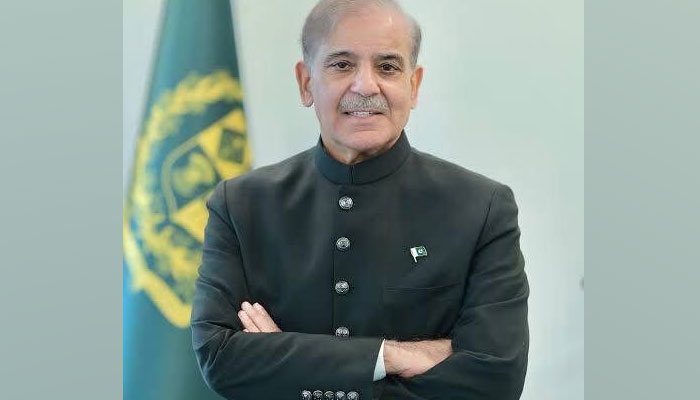

Prime Minister Shehbaz Sharif on Friday formally launched the Prime Minister’s Sehat Card programme, extending free medical treatment facilities to residents of Islamabad, Azad Jammu and Kashmir and Gilgit-Baltistan.
Speaking at the launch ceremony, the prime minister said the initiative reflected the government’s commitment to public welfare and aimed to make quality healthcare accessible at people’s doorsteps. He stressed that good health was the foundation of progress in all areas of life, including education, sports and economic development.
The prime minister said that while the affluent could afford costly treatment, even abroad, access to healthcare remained a serious challenge for the common citizen, labourers and the poor, making the Sehat Card programme especially important. He directed authorities to ensure complete transparency in the scheme through third-party monitoring.
He said the government was considering extending the programme to Sindh and that he would hold discussions with the Sindh chief minister to resolve issues so that people of the province could also benefit. He added that similar health initiatives were already being implemented successfully in Khyber Pakhtunkhwa, Balochistan and Punjab, with billions of rupees being spent on public healthcare.
Prime Minister’s Health Card Programme Chief Executive Officer Mohammad Arshad Qaimkhani said the scheme, launched in 2016, had now developed into a universal health coverage programme. He said poverty surveys showed that 66 per cent of people fell below the poverty line due to high healthcare costs. Under the programme, he said, cashless treatment would be available at more than 600 public and private hospitals across the country.
He added that national identity cards and children’s B-Forms would serve as health cards, ensuring free treatment for every Pakistani from Gilgit to Gwadar. On the occasion, the prime minister also distributed Sehat Cards for Islamabad, Azad Jammu and Kashmir and Gilgit-Baltistan.
Health Minister Mustafa Kamal said that permanent residents of the three regions would benefit from free healthcare facilities, covering a population of nearly 10 million. Quoting World Health Organization data, he said 13 million Pakistanis had been pushed below the poverty line due to illness, but under the Sehat Card programme, no poor family would be forced to struggle for medical treatment.
He said people would no longer have to sell household belongings or jewellery to pay for medical care, and no child would be deprived of treatment due to poverty. He added that more than 1,000 public and private hospitals were included in the programme, ensuring dignified and free treatment for emergencies and major surgeries.
Mustafa Kamal urged the prime minister to include 10 urban and rural districts of Sindh in the next health budget under the programme, estimating an annual cost of around Rs24 billion. He highlighted disparities in Karachi, where some residents received free treatment while others did not due to differences in identity cards, and said the prime minister had assured him he would raise the issue with the Sindh chief minister.
The health minister also said Pakistan’s healthcare system had traditionally focused on “sick care” rather than prevention, adding that steps were being taken to transform it into a comprehensive healthcare system aimed at preventing disease as well as treating it.


Comments are closed, but trackbacks and pingbacks are open.