

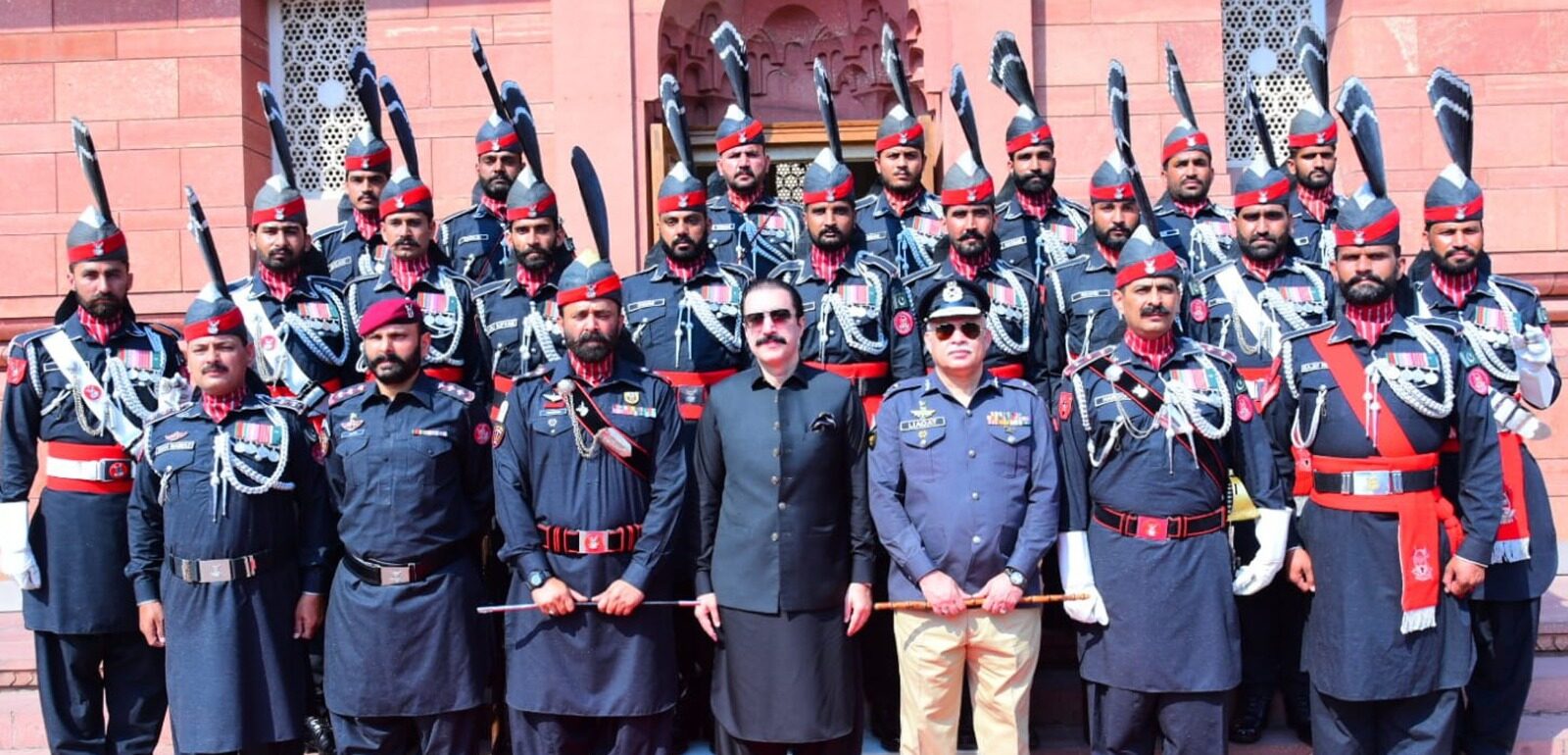
PM AJK Honors Iqbal’s Vision, Calls It Roadmap for Pakistan’s Future
Faisal Mumtaz Rathore Reviews Safe City, Honors National and Spiritual Icons

Lahore-(Special Correspondent)-Prime Minister of Azad Jammu and Kashmir, Faisal Mumtaz Rathore, undertook a significant visit to Lahore on Monday, where he reviewed modern urban security systems and paid homage to Pakistan’s intellectual and spiritual heritage. The visit highlighted the government’s dual focus on technological innovation and preservation of cultural and ideological values.
The Prime Minister first visited the headquarters of the Lahore Safe City Authority, where he was received by CEO Mustansar Feroz. Rathore was briefed in detail on the performance of the project, its security measures, and advanced surveillance systems implemented across the city.
Public Trust Restored as AJK Enters New Era of Progress;PM
During the briefing, officials explained the Safe City Project’s integrated approach for emergency response, traffic management, and coordination among law enforcement agencies. The project uses a network of high-tech cameras, monitoring systems, and data analytics to prevent crime, ensure public safety, and respond to incidents in real time.
The Prime Minister toured several control rooms, observing how technology is used to monitor city activities, analyze data, and enhance operational efficiency. He praised the project’s achievements, highlighting its role in improving public safety and strengthening law enforcement mechanisms.
Rathore noted that modern urban governance requires investment in technology and innovation. He emphasized that projects like the Safe City Authority provide a model for other cities and are essential for maintaining law and order in rapidly growing urban centers.
The visit was attended by senior officials, including Inspector General of Police Azad Kashmir, Captain (Retired) Liaquat Ali Malik, and other members of the delegation. The Prime Minister lauded the commitment of the Safe City team and encouraged the continued use of technology to enhance public services.
After reviewing the Safe City Project, Rathore shifted focus to Pakistan’s cultural and spiritual heritage. He visited the mausoleum of Allama Muhammad Iqbal, the visionary poet-philosopher whose ideas inspired the creation of Pakistan and shaped the ideological foundations of the nation. The mausoleum is located near the historic Badshahi Mosque.
At the mausoleum, the Prime Minister laid a floral wreath and offered prayers for peace, stability, and prosperity in Pakistan, as well as for the freedom and rights of the people of Indian-administered Jammu and Kashmir.
Recording his remarks in the visitors’ book, Rathore described Iqbal as a towering intellectual figure whose philosophy awakened a sense of identity and purpose among Muslims in the subcontinent. He noted that Iqbal’s vision instilled unity and inspired the demand for an independent homeland.

“Iqbal’s teachings are not just historical; they are a roadmap for our future,” the Prime Minister said. “Our youth must draw inspiration from his message to build a stronger, prosperous, and unified Pakistan.”
Rathore emphasized that understanding and implementing Iqbal’s principles is essential to national development and progress. He said that Pakistan can achieve its potential only by following the ideals set forth by the great philosopher-poet, who emphasized self-realization, social responsibility, and collective unity.
Later, the Prime Minister visited the shrine of Ali Hujwiri, widely known as Data Ganj Bakhsh, one of South Asia’s most revered Sufi saints. The shrine is a spiritual center for thousands of visitors and serves as a symbol of tolerance, compassion, and moral guidance.
At the shrine, Rathore laid a floral wreath and offered prayers for the well-being of Pakistan and its citizens. Speaking to attendees, he highlighted the contributions of Sufi saints in spreading the message of love, harmony, and social cohesion across the subcontinent. He said that their teachings continue to be relevant in addressing today’s global challenges.
“The universal message of Islam—brotherhood, mutual respect, and service to humanity—remains a guiding light,” Rathore said. “Following the teachings of saints like Data Ganj Bakhsh can strengthen society, promote unity, and inspire ethical behavior.”
The Prime Minister observed that the moral and spiritual guidance offered by historical figures complements modern governance initiatives. By honoring these icons, the government demonstrates its commitment to preserving Pakistan’s ideological and cultural legacy.
The visits to the Safe City Project, Allama Iqbal’s mausoleum, and Data Ganj Bakhsh’s shrine were attended by senior officials, including government minister Javed Iqbal Badhanvi, Inspector General Azad Kashmir Liaquat Ali Malik, Prime Minister’s spokesperson Shaukat Javed Mir, Staff Officer Sahibzada Younis, and Public Relations Officer Tajamul Qureshi. The chief cleric of the Badshahi Mosque also joined the ceremonies.
Observers noted that Rathore’s engagements reflect a comprehensive approach to governance that balances heritage with modernity. His visits underscore the importance of learning from the past while leveraging technology and innovation to address contemporary challenges.
The Prime Minister’s Lahore visit also sends a strong message about leadership priorities: advancing public safety through technological innovation while respecting and promoting Pakistan’s spiritual and intellectual foundations. His remarks called for national unity, ideological clarity, and active citizen participation in nation-building.
The visit concluded with prayers for peace, stability, and prosperity in Pakistan, along with renewed calls for the rights and freedom of the people of Jammu and Kashmir. Rathore’s engagements demonstrated the integration of governance, public safety, and cultural respect as cornerstones of his administration’s vision for Azad Jammu and Kashmir and Pakistan at large.


Comments are closed, but trackbacks and pingbacks are open.