

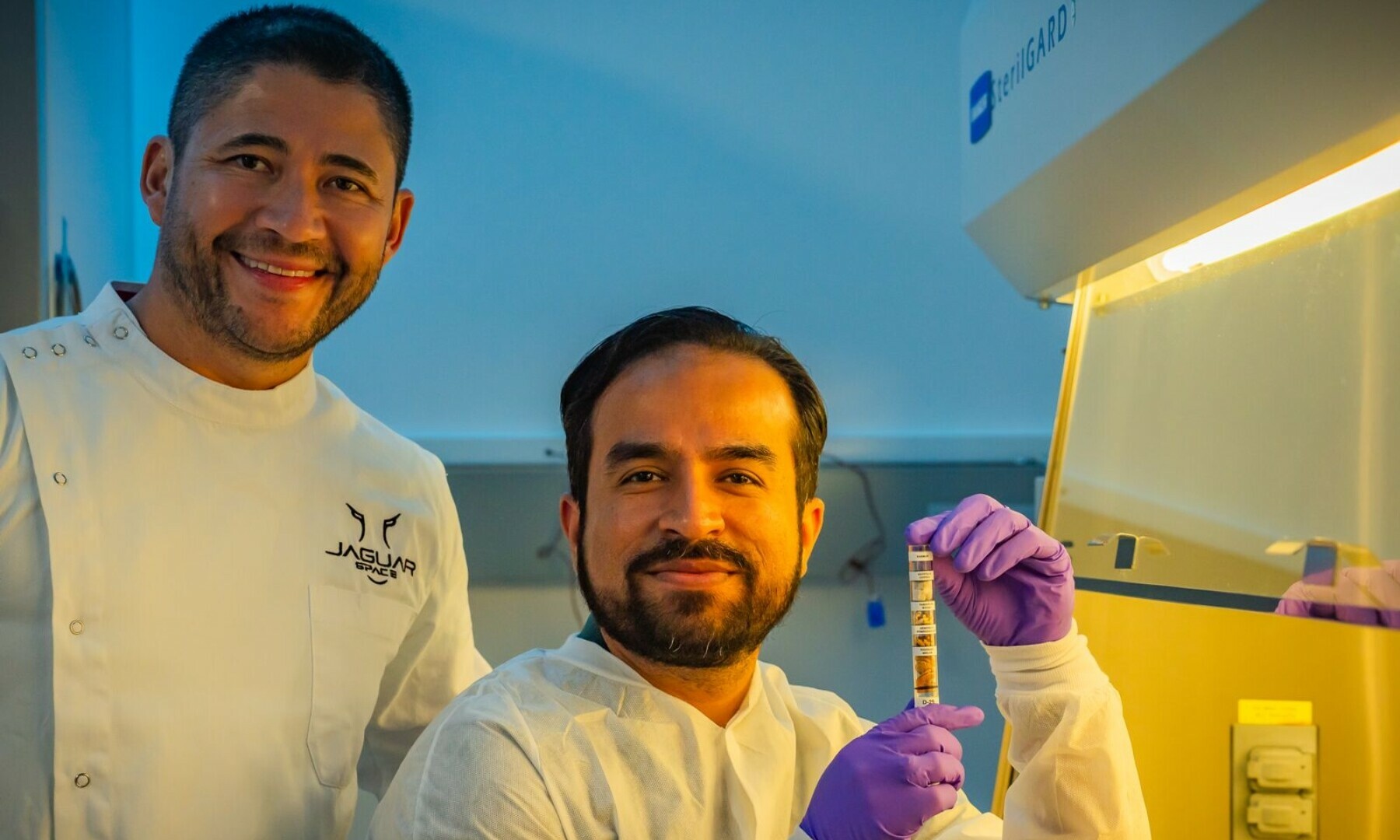
Pakistani wheat seeds journey to space for research
Pakistani Wheat Seeds Begin Space Journey for Groundbreaking Research

In a first for Pakistan’s space journey, native wheat seeds have made their way to the International Space Station (ISS) aboard SpaceX’s Dragon capsule. The mission, launched from NASA’s Kennedy Space Center in Florida on August 1, is part of the global Kármán-Jaguar “Earth Seeds for Space” initiative, which studies how different crops react to the conditions of space.
The Pakistani contribution — carefully selected wheat seeds — was spearheaded by aerospace engineer Mahhad Nayyar, alongside botanist Muhammad Haroon, both PhD students at Purdue University, USA. Their experiment marks Pakistan’s debut in such a space research program, making it a moment of national pride.
The test tube carrying the seeds also included samples from three other countries: Nigerian melon seeds, Armenian pomegranate seeds, and Egyptian cotton seeds. Together, these will help researchers compare how crops from different climates respond to microgravity. The Pakistani wheat filled one-quarter of the tube’s space.
A dream turned reality
For Mahhad, this launch was more than just a scientific project — it was a childhood dream come true. Growing up in Pakistan, he had always been fascinated by the endless sky above. He joined the Pakistan Air Force (PAF) with hopes of becoming a fighter pilot, but when eyesight issues steered him toward engineering, his path changed.
Gilgit-Baltistan’s Vanishing Green Veins
During his studies at the US Air Force Academy, Mahhad discovered his passion for space. He worked on satellite design and monitoring, developing a vision to connect Pakistan with global space exploration efforts. In 2024, when he came across the Kármán Project’s invitation for proposals, he teamed up with Haroon to send an experiment that was both scientifically valuable and culturally meaningful.
Why wheat seeds?
Wheat is Pakistan’s staple food, forming the basis of daily meals for millions. It also has a short growth cycle, high nutritional value, and can adapt well to controlled environments — qualities that make it a strong candidate for future space farming.
The goal of this experiment is to study stomatal traits — tiny pores on leaves that control water loss and gas exchange — to see how they change in microgravity. These changes could reveal new drought-resistant features. Once the seeds return to Earth, expected by the end of the month, they will be germinated and studied under controlled conditions.
If the results are promising, they could help create new wheat varieties that use less water — a vital breakthrough for Pakistan, which faces growing water scarcity.
A step toward Pakistan’s space future
While the science is crucial, Mahhad says the mission is also about inspiration. “Just the fact that a Pakistani experiment is going to space matters the most,” he shared. He hopes this achievement encourages young Pakistanis to explore careers in space science, engineering, and research.
The mission also comes at a time when Pakistan is preparing to send its first astronaut to China’s space station. For Mahhad, it’s proof that space is not out of reach. “Space should be for everyone, not just a few countries,” he said.
As the seeds orbit Earth aboard the ISS, they carry with them more than scientific curiosity — they carry Pakistan’s hopes for a future where its name is firmly placed among the stars.


Comments are closed, but trackbacks and pingbacks are open.