

Pakistan Slams India at UNSC Over Terror Claims
Sarwani rejected Indian criticism of Pakistan’s constitutional process, stating that constitutional amendments were the exclusive domain of Pakistan’s elected parliament.

NEW YORK: Pakistan has strongly rejected Indian allegations at the United Nations Security Council (UNSC), accusing New Delhi of sponsoring terrorism and interfering in Pakistan’s internal affairs.
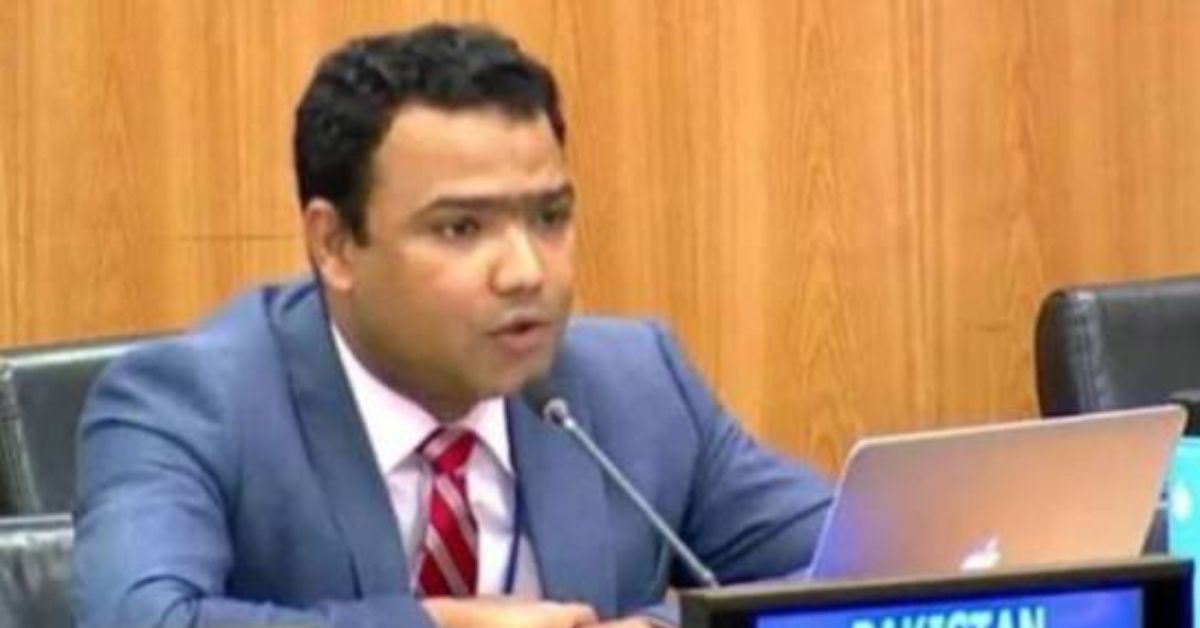
Replying to remarks by Indian representative Harish Parvathaneni, Pakistan’s Counsellor and Political Coordinator to the UN, Gul Qaiser Sarwani, said there was solid and credible evidence of Indian patronage of terrorism in Pakistan.
Sarwani told the UNSC that India was backing banned outfits, including Tehrik-e-Taliban Pakistan (TTP), Fitna al-Khawarij, and the Balochistan Liberation Army (BLA), and was also facilitating terrorist activities from across the border in Afghanistan.
He added that there was concrete proof of India’s involvement in targeted killings of individuals it considered enemies in North America and other countries.
Read More: Pakistan extends airspace ban for India until January 2026
Highlighting human rights concerns, the Pakistani diplomat said minorities were being persecuted in India under the government of Prime Minister Narendra Modi, while Pakistan had consistently exercised restraint and patience despite provocations.
Sarwani rejected Indian criticism of Pakistan’s constitutional process, stating that constitutional amendments were the exclusive domain of Pakistan’s elected parliament.
He termed Indian assertions “full of denial and inaccuracies,” adding that India lacked both the standing and moral authority to question Pakistan’s democratic processes.
On Kashmir, Sarwani said India had unleashed a reign of terror in the occupied territory and reminded the Council that India itself had taken the Kashmir issue to the UNSC, committing to a UN-supervised plebiscite, a promise that remains unfulfilled.
He said India continued to suppress fundamental freedoms, silence dissenting voices, and pursue demographic changes in violation of international law.


Comments are closed, but trackbacks and pingbacks are open.