

Pakistan Launches Climate-Resilient Infrastructure Capacity Initiative
Pakistan Advances Climate-Resilient Infrastructure Through Capacity Development Initiative

Islamabad (Web Desk) — Pakistan took a significant step towards safeguarding public infrastructure from climate and disaster risks through the Capacity Development for Climate-Resilient Infrastructure (CD-CRI) high-level stakeholder consultation held in Islamabad. The event, organized by Kokkyo naki Kodomotachi (KnK) Japan in partnership with the Pakistan Engineering Council (PEC), National Disaster Risk Management Fund (NDRMF), Deutsche Gesellschaft für Internationale Zusammenarbeit (GIZ) GmbH, and expert consultation from Dr. Qasier Ali Associates, brought together national engineering leaders, disaster management authorities, and development partners.
Key highlights included the unveiling of a new data-driven Structural Health Assessment (SHA) system aligned with Pakistan’s 2021 Building Code global standards. This GIS-enabled digital platform will modernize the evaluation of public buildings for safety and resilience, marking a major shift towards evidence-based infrastructure planning.
A dynamic panel discussion involving representatives from PEC, NDRMF, UN, and GIZ focused on integrating climate risk data, disaster financing, and inclusive approaches into infrastructure development, bridging the gap between policy, engineering, and community needs.
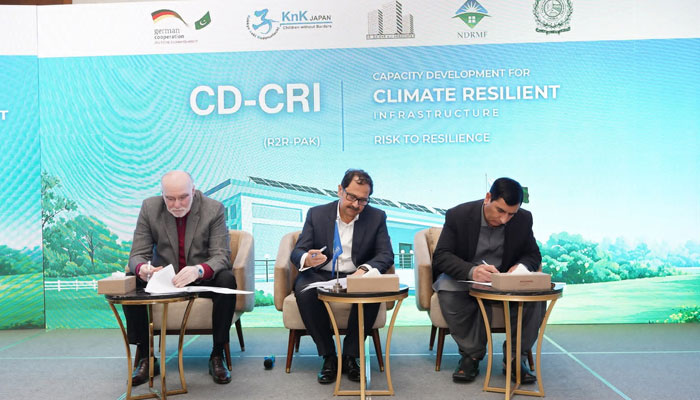
A landmark Memorandum of Understanding (MoU) was signed between KnK Japan, PEC, and NDRMF to institutionalize resilience in infrastructure development nationwide. PEC Chairman Wasim Nazir praised the initiative, calling KnK Japan “a light in the tunnel” for turning resilience from a mere buzzword into actionable practice.
With pilot projects underway in Khyber Pakhtunkhwa and Punjab, the initiative is supported by the German Federal Ministry for Economic Cooperation and Development (BMZ) through GIZ. It aims not only to introduce cutting-edge technology but also to build local capacity by training engineers, certifying professionals in resilient standards, and promoting women’s participation in technical decision-making.
The CD-CRI initiative paves the way for a safer, more resilient Pakistan, where schools, hospitals, and key infrastructure are strengthened against climate threats. This collaborative effort signals a future where innovation and partnership ensure sustainable infrastructure development for generations to come.


Comments are closed, but trackbacks and pingbacks are open.