
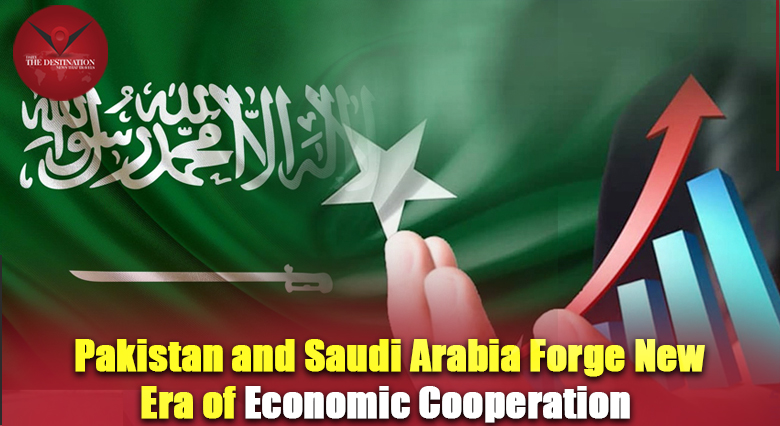

Pakistan and Saudi Arabia are entering a new chapter in economic collaboration, as highlighted by the recent Pakistan-Saudi Business Forum held in Islamabad. The forum aimed to enhance bilateral trade relations.
Saudi Minister of Investment Khalid Al-Falih expressed a strong dedication to boosting investments in Pakistan, emphasizing the multitude of opportunities available. Pakistan’s Minister for Industries and Commerce, Jam Kamal, supported this view, highlighting the country’s investment potential.
Additionally, Pakistan’s Minister for Petroleum, Musadik Malik, noted that Pakistan represents a significant market for Saudi crude oil.
The forum, which included several Pakistani federal ministers alongside Dr. Khalid Al-Falih, is regarded as a vital step towards fostering Pakistan’s economic growth and stability.
In his address, Minister Al-Falih pointed out the extensive growth potential in the Middle East and South Asia, advocating for collaborative efforts to achieve regional prosperity. He mentioned the substantial increase in bilateral trade and stressed the importance of utilizing their geographical closeness to further enhance economic ties. He characterized economic cooperation between Pakistan and Saudi Arabia as essential.
Al-Falih underscored the significance of the Pakistan-Saudi Business Forum in nurturing business relationships, stating that Pakistan is viewed as a “second home” for Saudi Arabia. He reiterated the strategic partnership between the two nations, emphasizing their long-standing relationship based on religious and spiritual connections.

Optimistic Outlook on Pakistan’s Economic Future
Federal Minister for Finance and Revenue, Senator Muhammad Aurangzeb, expressed confidence in Pakistan’s economic prospects during the forum, stating that the country is in a favorable position and open for business.
He highlighted government initiatives aimed at empowering the private sector to drive the economy, stating that the government’s role is to facilitate rather than engage in business. Aurangzeb welcomed the Saudi delegation to explore trade and investment opportunities through a Business-to-Business (B2B) model. He noted significant strides in macroeconomic stability over the past 12-14 months, including achieving a primary surplus, reducing the current account deficit to under $1 billion, stabilizing the currency, and increasing foreign exchange reserves to cover two months of imports.
The minister reported that these improvements have been maintained in the current fiscal year, marked by robust remittances, export growth, and a decrease in inflation from 38% to 6.9%. The reduction in the policy rate has also benefitted businesses. He mentioned that Pakistan’s credit rating has been upgraded, though he acknowledged the need for further improvements to reach at least a B- rating. Aurangzeb stated that institutional investments are returning to the country in both debt and equity.
The Islamabad Stock Exchange has hit a record high, and the International Monetary Fund (IMF) board has approved an extended program for Pakistan. He emphasized that the IMF program has two main implications: ensuring lasting macroeconomic stability and implementing structural reforms. Aurangzeb reaffirmed the government’s commitment to structural reforms aimed at fostering sustainable growth and tax reform.
Follow us on our social media platforms here: Twitter WHATSAPP CHANNEL FACEBOOK PAGE

Comments are closed, but trackbacks and pingbacks are open.