

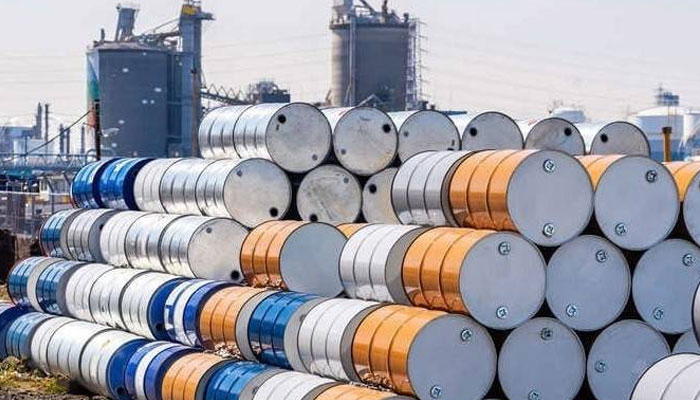

News emerging from the gunpowder-laden skies of the Persian Gulf and the rapidly shifting regional landscape has sent a shiver through the financial nerves of the world. That tremor stems from an economic structure that for more than half a century has sustained global politics and the trade of energy. Recent tensions surrounding the Strait of Hormuz and the strategic signals coming out of Iran have revived debate about the durability of that structure.
It may be premature to declare that the international financial order stands on the brink of an immediate upheaval. Yet it is increasingly clear that the politics of energy and the politics of currency have reached a decisive crossroads; one where every geopolitical move carries financial consequences far beyond the region in which it occurs.
The importance of oil in the modern world economy needs little explanation. From industrial production to global commerce, the wheels of development turn on this singular source of energy. For that reason, the narrow maritime corridor of the Persian Gulf known as the Strait of Hormuz remains one of the most sensitive strategic chokepoints on the planet.
Despite its modest width of only a few kilometers, this passage carries a significant portion of the world’s oil supply. Any disruption along this route sends shockwaves through international markets. Oil prices can skyrocket overnight, and uncertainty quickly spreads across financial systems and commodity exchanges. Control over, or even influence within, this narrow waterway has therefore long been a matter of strategic importance for global powers.
Over the past several years, tensions between Iran and the Western world have kept the region at the center of international headlines. Economic sanctions imposed on Tehran have undoubtedly placed pressure on Iran’s economy. Yet those same constraints have also compelled the country to explore alternative economic pathways.
It is here that China’s role becomes particularly significant. Over the past two decades, Beijing has steadily worked to strengthen its presence within the global financial system. Its vast industrial capacity, expanding trade networks, and rising economic weight have positioned China as a power capable of shaping the rules of international commerce.
Within this broader context, the question of currency in energy trade becomes crucial. In 1974, Saudi Arabia reached a historic agreement with the United States to sell its oil exclusively in U.S. dollars in exchange for American military protection. From that moment the “petrodollar” system was born. For more than half a century, the global energy market has largely operated within this framework.
The arrangement delivered an extraordinary advantage to the American economy. Because oil; the lifeblood of modern industry, is priced in dollars, countries around the world must hold substantial dollar reserves to purchase it. In effect, the dollar evolved from a national currency into the central pillar of the global financial system.
Every barrel of oil traded on international markets reinforces that structure. Central banks accumulate dollar reserves to secure energy imports, international trade settlements rely heavily on dollar-denominated transactions, and the broader architecture of global finance continues to revolve around this monetary axis. In many ways, America’s financial hegemony has been underwritten by the currency in which the world buys its energy.
Yet shifting global power dynamics have begun to raise questions about the permanence of that system. In recent years, China, Russia, and several other countries have intensified efforts to conduct international trade in alternative currencies. China, in particular, has strengthened its financial institutions and payment mechanisms to expand the global role of the yuan.
Although the dominance of the dollar remains formidable, the emergence of new economic powers has introduced the possibility of gradual change within the international monetary order.
For Iran, this evolving environment represents both necessity and opportunity. Western sanctions have complicated Tehran’s access to the dollar-based financial system. In response, Iran has sought alternative arrangements for its energy trade, particularly with China and a handful of other partners.

Reports suggest that a substantial portion of Iranian oil already flows toward Chinese markets, where various financial mechanisms are employed to facilitate transactions. These may involve payments in yuan or other forms of settlement that bypass traditional dollar-based channels. Such developments have prompted many global analysts to consider whether the future of energy trade could become more financially diverse.
Recent tensions surrounding the Strait of Hormuz have further intensified this debate. Should the flow of energy through this region become tied to new political or financial conditions, the implications would extend far beyond regional geopolitics. Oil prices, international trade, and the global financial system are deeply intertwined; any major geopolitical shift within the Gulf inevitably reverberates across world markets.
In this unfolding strategic contest, China’s role has become exceptionally significant. As the world’s largest importer of energy, Beijing possesses economic leverage to influence global energy trade patterns. If China were to systematically expand long-term energy purchases denominated in yuan, the consequences could mark the beginning of a gradual yet meaningful shift within the global monetary system.
Still, the transformation of such a vast financial structure cannot occur overnight. International monetary systems are not overturned by a single decision or crisis; they evolve through long, complex processes shaped by political alliances, institutional frameworks, and the confidence of global markets.
From Iran’s perspective, the current environment offers an opportunity to convert geopolitical relevance into economic leverage. Its geographic position in the Persian Gulf provides a strategic advantage, particularly given its proximity to the Strait of Hormuz. That location grants Tehran a degree of influence over one of the world’s most vital energy supply routes.
Iran’s present strategy, therefore, may be seen as a calculated maneuver in both economic and geopolitical terms; an attempt to expand its diplomatic and financial space under conditions of external pressure.
Yet it is equally important to approach this discussion with realism rather than emotion. The global dominance of the U.S. dollar is not sustained by oil trade alone. It rests upon decades of institutional foundations: powerful financial markets, global investment networks, international banking systems, and the credibility of American economic institutions.
For this reason, it would be inaccurate to interpret any single development or limited financial experiment as signaling the immediate collapse of the dollar-centric system. What can be said, however, is that a new trend is emerging in global politics; one in which major powers are seeking greater economic autonomy by exploring alternative financial pathways.
The current tensions in the Persian Gulf may thus represent an early signal of a broader transformation. Should the use of multiple currencies in global energy trade expand over time, the world could gradually move toward a more balanced financial order; one in which no single currency exercises absolute dominance.
Some economists describe this possibility as the emergence of a “multipolar” global economy.
History teaches us that systems of power rarely remain unchanged. Empires rise and fall, financial structures evolve, and political alliances reshape themselves with time. Transformations that appear sudden are often the culmination of forces set in motion years earlier.
The unfolding dynamics in the Persian Gulf; and the growing role of currency politics within energy markets; must therefore be viewed within this wider historical perspective. The map of global energy trade may look very different in the decades ahead, or the current system may endure longer than many anticipate.
What is certain, however, is that the contest shaping the future of the world economy is no longer fought solely over oil wells and maritime routes. Beneath the surface, a quieter struggle is underway; one waged in the realm of currencies, financial systems, and the architecture of global power.

Comments are closed, but trackbacks and pingbacks are open.