

Navy Removes Leadership Photos Website Amid Growing Iran Tensions
Navy Commander Bios Removed to Protect Sailors From Online Threats

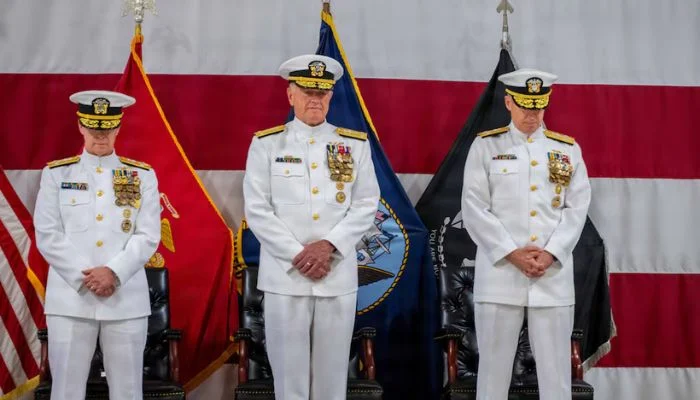
US NAVY – (Special Correspondent/Web Desk) – The U.S. Navy removes leadership photos website content this week, and the move has caught wide attention. The Navy also confirmed that navy commander bios removed from public pages will not return anytime soon. This step comes at a tense time, as the U.S. and Iran remain locked in a standoff over the Strait of Hormuz.
Navy officials say the change is meant to protect sailors and their families. Online threats have grown in recent months. Enemies can gather small bits of public data and use them to track real people. That risk pushed the Navy to act fast.
An official Navy message explained the reasoning in plain terms. It said enemies often collect open data to watch, study, and target Navy staff. A simple photo or job title can give away too much. Even a short bio page can become a tool for harm.
The order affects many roles across the fleet. These include:
- Commanding officers
- Executive officers
- Chief of staff
- Chief staff officers
- Deputies
- Command master chiefs
All of these leaders will lose their public photos and short bios. This rule applies to commands led by officers at the rank of vice admiral or below.
Not every leader is affected the same way. Commands run by full admirals, the Navy’s top rank, will keep their bios online. The Navy has not shared a clear reason for this gap. Still, the policy stands as written for now.

Inside Access Remains Open
The Navy made clear that internal systems are not touched by this change. Staff can still view photos and bios through secure Navy networks. These include CAC-enabled tools, base intranets, and other private systems. Only public websites are affected.
This shows the goal is not to hide information from staff. The real aim is to block outside eyes, especially those who mean harm.
This move does not happen in a vacuum. Iran has closed the Strait of Hormuz in recent weeks. The U.S. says the route stays open for lawful ships. Navy forces are now guarding vessels that pass through this narrow, high-risk zone.
With more Navy activity in the region, safety concerns have grown too. Removing public photos is one small but useful step. It cuts down the digital footprint that bad actors could use.
Sailors and their families may feel some relief from this change. Public exposure often brings real-world risk, especially during active conflict. By pulling bios and photos offline, the Navy hopes to lower that risk.
Still, questions remain about long-term plans. Will lower-ranked commands ever return to public listings? Will admirals face the same rule someday? For now, the Navy has not shared further details.
This story is still developing. As tension with Iran continues, more security steps may follow. The Navy has shown it is willing to act quickly when safety is on the line.
Comments are closed, but trackbacks and pingbacks are open.