

Nation Stands United as Pakistan Closes 2025 with Renewed Confidence
May 2025 Conflict Reshapes Pak-US Relations and South Asian Power Balance

By: (Asghar Ali Mubarak)
The entire nation is grateful to Field Marshal for his great leadership in Operation Bunyan Al-Marsoos, the fight for truth.
Our martyrs are the pride of the nation; their sacrifices are a shining example of courage, patriotism, and sacrifice, which will never be forgotten. Pakistan is a peaceful country that has always advocated stability in the region, cooperation, and the resolution of disputes through dialogue.
However, whenever India tried to impose aggression. Pakistan took effective and decisive steps for the protection of its people, national sovereignty, and honor and dignity.
On the night between May 6 and 7, India once again demonstrated its traditional aggressive policy and tried to target different areas of Pakistan and places in Azad Kashmir.
In this regard, Pakistani forces remained patient, but when the enemy crossed all the boundaries, Pakistan launched a grand and historic counter-offensive on May 9, which was named “Operation Bunyan Marsus”.
Operation ‘Bunyan Marsus’ was launched against the enemy at dawn, and the Fateh-1 missile was fired at India.
The Fateh-1 missile is Pakistan’s modern and short-range weapon with a range of up to 140 kilometers. The indigenously developed Fateh-1 rocket system was tested on August 24, 2021. Fateh-1 is a Pakistani-developed surface-to-surface guided missile that is part of the Fateh series.

Another missile, Fateh-2, is also included in this series. This missile, which can hit its target at a distance of up to 400 kilometers, has the ability to accurately hit its target.
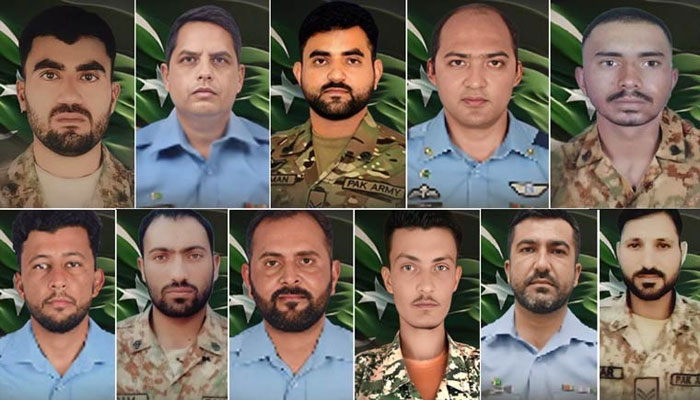
‘Bunyan Marsu’ means (a wall of lead), the translation of the verse of Surah As-Saff is ‘Indeed, Allah loves those who fight in His way in rows as if they were a wall of lead.’ The meaning is that Allah Almighty loves brave Mujahideen who stand firm and fight the infidels and do not turn their backs. In that era, since rows were formed in jihad, the row was mentioned here, whereas in our era, jihad can be formed by forming rows and in other ways as well. Now every method will be included in it that has a useful discipline and which becomes a means of strengthening each other and victory over others. In 2025, Pakistan went through a difficult phase in history when, on the night of May 6 and 7, India imposed an unprovoked and unjustified war on Pakistan, and innocent civilians, including women and children, were targeted among the civilian population of Pakistan. The enemy made a despicable attempt to violate Pakistan’s sovereignty and border integrity. Thanks to the unparalleled leadership of the Army Chief, Pakistan achieved a historic victory in the war of justice. In this battle, 11 soldiers were martyred while protecting the country, while 78 personnel were injured while responding to the enemy’s aggression. 6 of the martyrs belonged to the Pakistan Army, and 5 belonged to the Pakistan Air Force. India carried out unprovoked attacks on May 6 and 7, in which 40 civilians were martyred, including 7 women and 15 children. As a result of these attacks, 121 people were injured, including 27 children and 10 women.
Army Chief Syed Asim Munir led the Pakistan Army with exemplary courage and determination and fully coordinated the war strategy and efforts of the armed forces. Thanks to the unparalleled leadership of the Army Chief, Pakistan achieved a historic victory in the war of truth. In recognition of his brilliant military leadership, courage, and bravery, ensuring Pakistan’s sovereignty and territorial integrity, and courageous defense against the enemy, the cabinet approved the Prime Minister’s proposal to promote General Syed Asim Munir to the rank of Field Marshal. Field Marshal is the highest rank above the rank of General in the army, and Field Marshal General Asim Munir is the most senior five-star army officer. Army Chief General Asim Munir has played a full role in the economic journey with patriotism. It should be noted that 2025 has proven to be an exceptionally successful year for Pakistan. Operation Banyan Al-Marsoos has had such effects on both the strategic and psychological levels that few could have imagined. Today, Pakistan looks stronger, more confident, and credible than ever. Chief of Army Staff and Chief of Defense Forces Field Marshal Syed Asim Munir said that he saw and felt the help of Allah coming in Operation Banyan Al-Marsoos.
At the Ulema Mashaikh Conference, the Field Marshal discussed in detail the challenges facing the country, terrorism, national security issues, Pakistan’s emerging role in the world, war preparations, and the importance of knowledge. He presented his clear point of view about Pakistan by citing verses and poems of the Holy Quran. The conference was held in Islamabad on December 10, 2025, in which scholars and Mashaikhs of all schools of thought from across the country participated in full. The Field Marshal said that Allah Almighty has bestowed the honor of being the custodians of the two holy mosques on Pakistan among the Islamic countries, and the State of Pakistan and the State of Islam have a deep relationship and similarity. The State of Islam and the State of Pakistan were established on the basis of the Word of God in the blessed month of Ramadan.
The reason for the similarity between the two states is that the Lord of the Universe wanted to make them the custodians of the two holy mosques and make us the custodians of the two holy mosques. In 2025, Pakistan proved that it cannot be ignored. Through discipline, strategy, and unity, it has earned the respect, influence, and prestige it believes is its right. As December draws to a close, it is clear that this is not the Pakistan we saw at the beginning of the year. When Donald Trump returned to the White House after the US election, most global analysts believed that Pakistan had fallen out of Washington’s strategic priorities. The general perception was that America now had only a limited and temporary need for Islamabad, but that assumption has now died down. From South Asia to the Middle East, Pakistan has once again emerged as a major player in major policymaking. Field Marshal Syed Asim Munir’s statement a few days ago that he felt the help of Allah during Operation Banyan Al-Marsoos had a profound impact on the entire country. This was not just a personal feeling but a feeling that many Pakistanis are feeling today. There is a clear impression that Allah Almighty has given Pakistan an opportunity for honor and glory, which came so quickly that even experienced observers and experts were surprised. Two recent articles in the Western media are very important for understanding this sudden change in Pakistan’s global status. The first is an article by Brigadier General Mark Kimmitt, published in the Washington Post. The second is an article by Edward Luce, published in the Financial Times. Reading these two articles together, it becomes clear how Pakistan is being re-viewed in American strategic circles and why its global reputation has increased dramatically. The most striking thing that emerges from the new assessment is that 2025 has proven to be a real turning point in Pak-US relations. For decades, Pakistan was seen in a limited security context and was often portrayed as an unreliable partner. This impression has now been shattered after the Indo-Pak war in May. The immediate cause of this change was the severe military confrontation with India in May. Pakistan’s disciplined, targeted, and disproportionately effective response has come as a surprise to Washington. In a single incident, Pakistan has established itself as a serious defensive force in South Asia, a regional power. This is in stark contrast to India’s recent trend. Washington’s long-standing India-first policy, based on the assumption that New Delhi can effectively protect American interests in South Asia, is now in question. India’s internal political instability, restrictions on civil liberties, inconsistent military performance, and a tough diplomatic posture have undermined this assumption, while Pakistan’s professional capabilities have strengthened its position. The improvement in Pak-US relations in 2025 did not begin with a grand announcement but rather through quiet counterterrorism and intelligence cooperation. Practical steps have provided clear evidence of Pakistan’s seriousness. President Trump’s open praise of Pakistan in March was an indication that this new assessment had reached the highest level. Islamabad demonstrated strategic foresight on this occasion. The limited cooperation gradually turned into trust, and relations grew stronger. The May military confrontation accelerated the pace and forced Washington to reconsider its broader strategy for South Asia. A major reason for this new confidence is Pakistan’s military reforms. Modernization, reorganization of the command structure, and the active role of the Chief of Defense Forces have significantly improved operational performance. Field Marshal Syed Asim Munir has emerged not only as the army chief but also as the architect of a coherent and effective military system. Field Marshal Syed Asim Munir, who recently became the Chief of Defense Forces, is seen in American strategic circles as an organized, dignified, and authoritative leader who commands respect without any show. His high-level meetings in Washington and Pakistan’s cooperative diplomatic approach further strengthen US confidence in the face of India’s cautious, indecisive approach. Pakistan is positioned to play a central role in American strategic thinking in the coming period. A possible means of a quiet engagement with Iran, and at the same time its importance in the Gaza issue and its role in stabilizing the region, are all slowly but clearly being recognized in Washington. Pakistan’s re-emergence as a preferred strategic partner is a major shift in US policy towards South Asia after decades. It is a rare moment of strategic validation for Pakistan. In 2025, Pakistan has proven that it cannot be ignored. Through discipline, strategy, and unity, it has earned the respect, influence, and prestige it believes is its right.Recall that on May 7, 2025, the Indian armed forces launched a surprise missile strike called ‘Operation Sindoor’, targeting nine different locations in Pakistani-administered Kashmir and Punjab province. The Indian Air Force carried out this operation using Rafale aircraft with Scalp missiles and Hammer bombs. According to some reports, the attack also included Brahmos cruise missiles and ‘Skystriker’ suicide drones made with Israeli technology. The Indian government said that the attacks in Bahawalpur and Muridke were premeditated. After these attacks, the situation on the Line of Control deteriorated. Pakistan started shelling and firing in several areas, including Kupwara, Baramulla, Uri, and Akhnoor. Pakistan shot down 4 Indian Rafales, a MiG-29, an SU-30 MKI, and a drone. A French intelligence officer told CNN that Pakistan had indeed shot down a Rafale, but the French military did not comment on it. Reuters quoted some Indian officials as saying that three aircraft had crashed in India. On May 8, a US official told Reuters that, according to him, Pakistani J-10 jets had shot down at least three Indian aircraft, including a Dassault Rafale. The Washington Post later identified three crash sites in India on May 7, two of which were identified as Dassault Rafale and Dassault Mirage 2000 aircraft of the Indian Air Force. On May 9, local government sources in Indian-administered Kashmir reported that three fighter jets had crashed in India on May 7 and three pilots had been injured and taken to the hospital. On May 11, the Indian Air Force, when asked whether it had suffered any casualties, said: “Casualties are part of war.” In response, India claimed that Pakistan had carried out drone and missile attacks on several Indian cities, including Amritsar. The Indian government said it had been “forced to stop mortar and artillery shelling by Pakistan.” However, Pakistan rejected the Indian claim, saying that the Indian army had mistakenly attacked itself in Amritsar and wanted to incite anti-Pakistan sentiment among Sikhs by blaming Pakistan. In retaliation, the Indian drones violated Pakistani airspace, 12 of which were shot down. According to Pakistan, these drones were sent to 9 different locations, including Karachi and Lahore, one of which targeted a Pakistani military installation near Lahore. The Pakistani army later claimed that it had shot down 25 Israeli-made Harpoon suicide drones that had come from across the border. One drone crashed inside the Rawalpindi Cricket Stadium, after which the Pakistan Cricket Board shifted the Pakistan Super League match to the United Arab Emirates. On May 9, it was reported that the Pakistan Super League had been suspended indefinitely due to the deteriorating situation between India and Pakistan. That evening, Pakistan carried out air strikes in Jammu district, including around the airport and Jammu University. On May 9, the Indian Foreign Secretary had said that 300 to 400 Turkish-made ‘Assis Guard Sonar’ drones were used in these attacks. Pakistani General Ahmed Sharif Chaudhry denied India’s claim, which said Pakistan forces had attacked 15 locations in India, he said, adding that India had fabricated a false story to create a media frenzy, even though “every missile has a digital trace and signature.” The media had described the clash as the “first drone war” between South Asia’s “nuclear-capable neighbours,” with the deployment of Israeli and Indian drones in particular drawing attention. On May 9, the media reported that India had targeted the Gurdwara Janmashtami in Nankana Sahib. The Pakistan Army also claimed that it had shot down 77 Indian drones since May 6. The exchange of fire had stopped in the morning, but after “about 13 hours of silence,” clashes resumed. Artillery shelling began in Kupwara, Poonch, Uri, and Samba areas along the LoC. Pakistan has been targeting the LoC and the international border from Baramulla in the north to Bhuj in the south. 26 targets were targeted, including armed drones. On May 9, Director General of the Pakistan Army’s Public Relations Department, Ahmed Sharif Chaudhry, gave a press briefing along with senior officials of the Pakistan Air Force and Pakistan Navy. The Pakistan Army had denied Indian allegations that Pakistan had carried out missile and drone attacks on Indian military installations. It had demanded that India provide evidence of these allegations and had dismissed Indian media reports after the Pahalgam incident as false. Pakistani officials had said that their response was limited to those Indian posts that had targeted Pakistani civilian areas and had denied involvement in the Pahalgam attack. Pakistan had also proposed an impartial third-party investigation. Air Vice Marshal Aurangzeb Ahmed had also claimed that six Indian warplanes had been shot down.
The ceasefire came into effect at 4:30 PM Pakistan time, which was the result of diplomatic efforts by 36 countries. It was announced by US President Donald Trump on social media before official statements by the Indian and Pakistani foreign ministers. On May 10, Pakistani Prime Minister Shahbaz Sharif declared May 11 as a “Day of Gratitude” for the victory.

Comments are closed, but trackbacks and pingbacks are open.