
Munich Emerges as Europe’s Fast-Growing Defence Tech Hub
AI Drones and Military Software Drive Munich Defence Boom

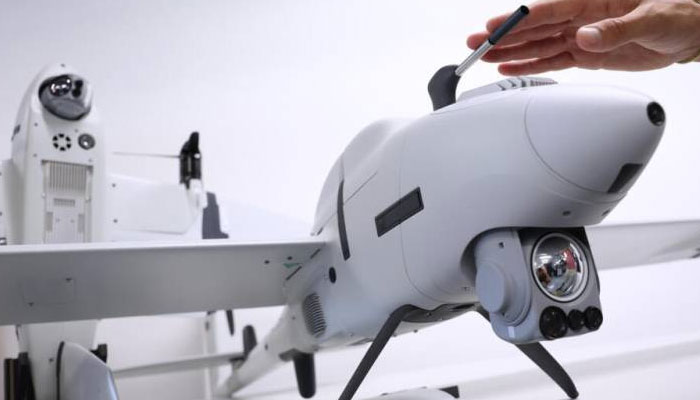
MUNICH: (News Desk) – Munich is rapidly emerging as a major centre for Europe’s young defence technology companies, with startups developing everything from AI-powered drones to advanced military software as European nations strengthen their armed forces.
Companies including Quantum Systems, Helsing and Tytan Technologies are among dozens of defence technology firms operating in and around the Bavarian capital, a city better known for Oktoberfest, Bayern Munich and its proximity to the Alps.
The expansion comes as European governments reassess their defence strategies amid heightened tensions with Russia and uncertainty over the future of US security commitments. Alongside established defence manufacturers, a new generation of technology-driven companies is increasingly entering the sector.
Industry executives point to Munich’s combination of established aerospace and engineering expertise, leading technical universities, skilled workers and supportive government policies as key factors behind the region’s appeal.
Martin Karkour, chief revenue officer at drone company Quantum Systems, said Munich brings together engineering, software, artificial intelligence and robotics expertise in a combination that would be difficult for other locations to replicate.
The war in Ukraine has further accelerated innovation, particularly in autonomous and AI-enabled drone systems. The conflict has also encouraged European militaries to reconsider their reliance on traditional equipment such as tanks and artillery.
Founded in 2015, Quantum Systems supplies drones to Ukraine and other armed forces and has expanded its unmanned technology into land and maritime applications.
Tytan Targets Drone Threats
Another Munich-area startup, Tytan Technologies, is developing interceptor drones designed to counter hostile unmanned aerial vehicles and protect critical sites.
Founded in 2023 by two Technical University of Munich graduates, the company emerged after its founders participated in a Ukraine-based hackathon focused on developing affordable ways to counter enemy drones.
Nemo Farber, Tytan’s chief manufacturing officer, said the company’s goal was to improve the cost-effectiveness of European air defence.
The startup has expanded its workforce tenfold and is preparing to open a new production facility. It has also worked with Germany’s armed forces on a drone system designed to protect installations from hostile UAVs and has operations in Ukraine.
Germany’s growing concerns over drone threats have added urgency to the sector. Authorities have reported suspicious drone activity around sensitive locations, including an explosive-carrying drone discovered at Leipzig airport in August.
Farber said the wider ecosystem across Munich and Bavaria was helping defence startups grow. He noted that downsizing by traditional automotive manufacturers was also creating a pool of experienced engineers and other skilled workers for defence companies.
Munich Mayor Dominik Krause attributed the region’s success to cooperation between established companies and startups, along with close relationships among universities, government authorities and businesses.
Startups Face Bureaucratic Obstacles
The number of dedicated defence startups around Munich has reportedly doubled in recent years to about 60, according to the local Chamber of Commerce and Industry. Drone companies have also attracted significant investment as demand for autonomous defence systems grows.
Despite increased military spending, however, young defence companies say funding remains disproportionately focused on conventional equipment. They argue that greater investment is needed in autonomous systems, particularly because inexpensive drones can threaten much more costly military hardware.
Startups also face practical obstacles, including lengthy security-clearance procedures, regulatory requirements and difficulties securing permission to build new production facilities.
Defence expert Maximilian Epp of the chamber said companies often struggle to increase output even when they have strong demand and new orders because approvals for warehouses and manufacturing sites can take too long.
Bavarian authorities are seeking to address some of these concerns and have generally taken a supportive position toward the growing defence technology industry.
Security Risks Grow Alongside Industry
Munich’s defence boom also reflects a broader shift in Germany, where the military industry has historically faced public scrutiny because of the country’s history during World War II.
The growing prominence of defence executives has brought additional security concerns. Reports say the head of Bavaria-based drone manufacturer Donaustahl went into hiding following an alleged Russian assassination plot, while an alleged plan targeting Rheinmetall chief executive Armin Papperger was disrupted in 2024.
Defence companies contacted for the report said they were taking additional security measures as the threat environment changes.
Quantum Systems’ Karkour said the company was conscious of the circumstances surrounding its work and had security measures in place.
Comments are closed, but trackbacks and pingbacks are open.