
Macron Unveils Expanded French Nuclear Deterrence Plan
Macron Plans Nuclear Expansion, Offers Deterrence Shield to Europe

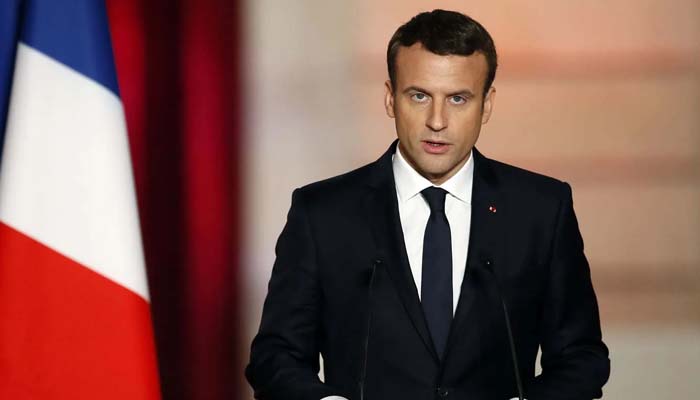
PARIS: (Web Desk) – French President Emmanuel Macron announced on Monday that France will expand its nuclear arsenal and, for the first time, may deploy nuclear-armed aircraft to allied European countries as part of a new continent-wide security strategy.
Speaking at the Île Longue nuclear submarine base, Macron said eight European nations, including Germany, Poland, Sweden and United Kingdom, have agreed to participate in what he termed a “forward nuclear deterrence” initiative aimed at strengthening Europe’s collective security.
Under the plan, countries such as the Netherlands, Belgium, Greece and Denmark could temporarily host France’s strategic air forces, allowing nuclear-capable aircraft to be dispersed across the continent to complicate adversaries’ military calculations. Macron stressed, however, that France would retain exclusive control over all nuclear decision-making.
In a joint statement, France and Germany confirmed the creation of a bilateral “nuclear steering group,” clarifying that the initiative would complement — not replace — the nuclear deterrence framework of NATO. The two countries said initial steps, including German participation in French nuclear exercises, would begin this year.
Macron said the move comes amid rising geopolitical instability, citing conflicts in the Middle East and the prolonged war triggered by Russia against Ukraine. He argued that Europe must reinforce its strategic autonomy in the face of multiple threats.

The French president also revealed that he had ordered an increase in France’s number of nuclear warheads, though he said Paris would no longer publicly disclose details about its stockpile. France currently possesses the world’s fourth-largest nuclear arsenal, estimated at around 290 warheads.
European concerns over long-term U.S. commitment to the continent have intensified under Donald Trump, despite Washington’s assurances that American nuclear protection under NATO remains intact. Macron emphasized that France’s proposal is fully complementary to NATO’s mission.
Polish Prime Minister Donald Tusk welcomed the initiative, saying Poland was engaged in talks with France and other allies to enhance deterrence. Swedish Prime Minister Ulf Kristersson also voiced support, while reiterating his country’s long-term goal of a world free of nuclear weapons.
Analysts noted that France’s domestic politics could affect the plan’s future, with concerns that a possible electoral victory by far-right leader Marine Le Pen in next year’s presidential election could weaken European defence cooperation.
Experts cautioned that electoral shifts can significantly influence the credibility of nuclear deterrence, both for allies seeking reassurance and adversaries assessing Europe’s resolve.

Comments are closed, but trackbacks and pingbacks are open.