

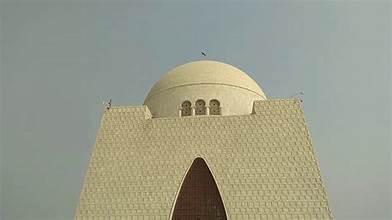

Karachi is not merely a city; it is an entire universe. Millions of dreams move along its roads, countless hopes breathe in its alleys, and the pulse of a national economy resonates along its coastline. Yet when this city begins to speak in the language of statistics, dreams shatter, hopes collapse, and that pulse grows disturbingly faint. The latest report released by the Chhipa Foundation for the year 2025 is not just a compilation of figures; it is a knock on the collective conscience. It holds up a mirror before us, but the real question is whether we possess the courage to look at our own reflection.
During the current year, thousands of citizens in Karachi have been killed or injured due to accidents, crime, violence, and sheer negligence. These deaths cannot be attributed to the failure of a single sector; rather, they are the cumulative outcome of weak urban governance, ineffective law enforcement, decaying infrastructure, and deep-rooted social apathy. Among the most alarming statistics are those related to traffic accidents, which claimed 830 lives and left more than 11,000 people injured. These are not mere accidents; they represent a silent killing field that unfolds daily on the city’s roads. The real question is not why accidents occur, but why they are repeatedly allowed to happen. Poorly maintained roads, untrained drivers, vehicles without fitness certification, overspeeding, and a feeble enforcement mechanism collectively render human life expendable.
What makes this tragedy even more disturbing is the presence of women and children among the victims. In any civilized society, the death of children while going to school or crossing a road should be enough to trigger national outrage. Where children lose their lives so casually, claims of development amount to little more than hollow slogans. Across the developed world, traffic fatalities have been significantly reduced through sound traffic engineering, smart signaling systems, strict laws, and uncompromising enforcement. Karachi, however, continues to function as a city of unchecked experimentation, where human lives serve as collateral damage.
The figures related to gun violence and street crime are no less catastrophic. This year alone, 407 people were killed and 1,632 injured in various shooting incidents. The killing of 89 citizens during robbery resistance starkly illustrates that fear has become a permanent feature of urban life. Citizens are increasingly forced to choose between surrendering their belongings in silence or resisting and risking death. This is a dangerous threshold for any state. When the law grows weak and criminals grow powerful, daily survival becomes a test for ordinary citizens.
The recovery of tortured bodies and bodies stuffed in sacks marks the lowest point of social decay. These are not just murders; they are symptoms of a society in moral freefall. A society where human beings can be discarded like objects inevitably raises serious questions about justice, dignity, and the rule of law. Such conditions demand that state institutions move beyond mere data collection and focus on dismantling the structures that breed violence and fear.

Another painful dimension of accidental deaths involves electrocution, falls into gutters and drains, collapsing roofs, and burn injuries. The death of 131 people due to electrocution alone exposes the dangerous state of the city’s power infrastructure. Drownings in open drains are not natural disasters; they are the direct result of administrative neglect. Modern urban planning is founded on a simple principle: infrastructure must serve human beings, not endanger them. In Karachi, this principle appears to have been turned upside down.
Suicides and drug-related deaths reveal an equally grave but often ignored crisis. The loss of 119 lives to suicide and the recovery of hundreds of unclaimed bodies linked to drug abuse signal a city under immense psychological strain. Economic pressure, unemployment, insecurity, the breakdown of family structures, and a pervasive sense of hopelessness hollow individuals from within. This crisis cannot be resolved through policing alone; it demands that mental health be recognized as a national priority.
Taken together, these statistics point toward a single, unavoidable question: Is Karachi still a livable city? And if not, who will accept responsibility? The state, the government, institutions, and citizens alike must confront this question honestly. Issuing reports is not enough; the real test lies in learning from them and translating insight into action.
To pull Karachi out of this quagmire, emotional slogans must give way to decisions grounded in science, technology, and sound administration. Data-driven governance, modern urban planning, strict yet fair enforcement of laws, and an unconditional respect for human life are no longer optional. Without these principles, the city cannot bear any further burden. If we continue to avert our eyes today, tomorrow’s statistics will be even grimmer, and regret may be all that remains.
Karachi does not scream in protest; it suffers silently through statistics. The question is: is anyone listening?


Comments are closed, but trackbacks and pingbacks are open.