
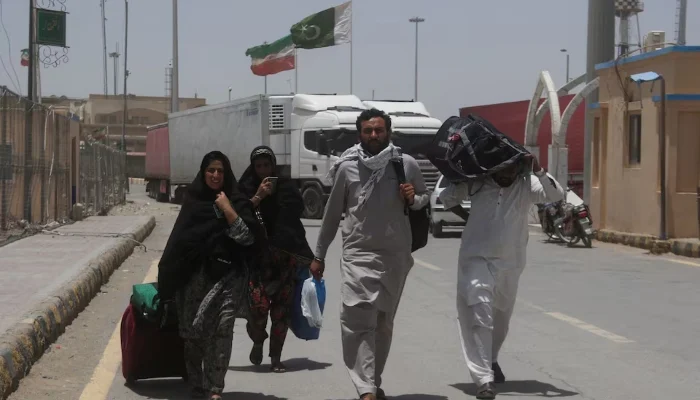

LPG – (Staff Reporter/Web Desk) – Iran has said the Iran Pakistan border is still open and that it has placed no limits on exports to Pakistan. This includes liquefied petroleum gas, which is known as LPG.
Iranian Ambassador to Pakistan Reza Amiri Moghadam shared the message on X. He spoke after some reports claimed that Iran had closed its border. He said those reports were not correct.
According to the envoy, every border Iran shares with its neighbours is open. He said closing them would make no sense in the current situation. It would not help Iran or Pakistan, he added.
The ambassador also used warm words for Pakistan. He called it a brotherly country and said Tehran has no reason to block trade with it.
Why the Statement Matters
Rumours about a border closure can worry traders and buyers. A clear message from an ambassador can help calm such fears.
Still, an open border does not help much if cargo cannot move. That is the gap Moghadam wanted to point out.
The Real Problem: Pakistan’s E-Form Process
Moghadam said recent changes to Pakistan’s E-Form procedure for imports from Iran have created trouble. The E-Form is an online document that importers in Pakistan usually need before goods arrive.
Clarification Regarding Reports on the Closure of Iranian Borders to Pakistan
With regard to reports concerning the closure of Iranian borders to Pakistan, I would like to clarify a few important points here:
First, there are currently no restrictions on the Iranian side on the export of Iranian goods to Pakistan, including LPG.
Iran’s borders with all its neighboring countries remain open.
Naturally and rationally, under the prevailing circumstances, it would be neither logical nor in the interests of either side for Iran to close its borders to its immediate neighbors, particularly brotherly Pakistan.
Second, changes in the implementation of Pakistan’s E-Form procedure for imports from Iran have created a situation in which traders are effectively and literally unable to dispatch cargo from Iran to Pakistan.
Consultations with the Pakistani side are currently underway to address this issue.
Third, according to reports, several hundred trucks carrying LPG have crossed the Rimdan border into Gabd on the Pakistani side.
However, despite having remained there for several weeks, these trucks have yet to be unloaded or cleared, further complicating the movement of goods and the smooth flow of bilateral trade.
Finally, I would like to emphasize that cross-border trade between Iran and Pakistan is an integral part of the bilateral agreements reached at the highest levels. It serves the mutual interests of both countries and their people.
Iran has made every possible effort, leaving no stone unturned, to facilitate and promote this essential bilateral trade.
We remain committed to continuing these efforts in close coordination with our Pakistani counterparts to overcome existing challenges, facilitate the movement of goods, and strengthen economic cooperation between our two brotherly countries.
— Reza Amiri Moghadam (@IranAmbPak) October 25, 2026
When such rules change, traders must adjust their paperwork. He said that, because of the new steps, traders are effectively unable to send cargo from Iran to Pakistan.
He added that talks with the Pakistani side are now going on to solve the issue.
LPG Trucks Waiting at Gabd
The ambassador also spoke about LPG trucks. Citing reports, he said several hundred trucks have crossed the Rimdan border and entered Gabd on the Pakistani side.
Gabd is a border town in Balochistan, Pakistan. Rimdan is the crossing point on the Iranian side.
He said the trucks have been parked there for several weeks. They have not been unloaded or cleared.
In his view, this delay is making it harder for goods to move. It is also hurting the smooth flow of trade between the two countries.
Trade Backed by High-Level Agreements
Moghadam said cross-border trade is part of agreements reached at the highest level between Iran and Pakistan. He said it benefits people in both countries.
He also said Iran has tried every possible way to make this trade easier and to promote it. According to him, Tehran has left no stone unturned.
The envoy ended by saying Iran wants to keep working closely with Pakistani officials. The aim, he said, is to clear the current hurdles, ease the movement of goods and build stronger economic ties.
For now, the Iran Pakistan border stays open from the Iranian side. The next step depends on talks over the E-Form system and on the clearance of the waiting trucks.
Traders on both sides will be watching these talks closely. A quick solution could help restart normal cargo movement and keep bilateral trade on track.
Comments are closed, but trackbacks and pingbacks are open.