
Iran-Israel-US War: Shadow of World War III
The biggest wars in history are fought when power meets power on the battlefield.

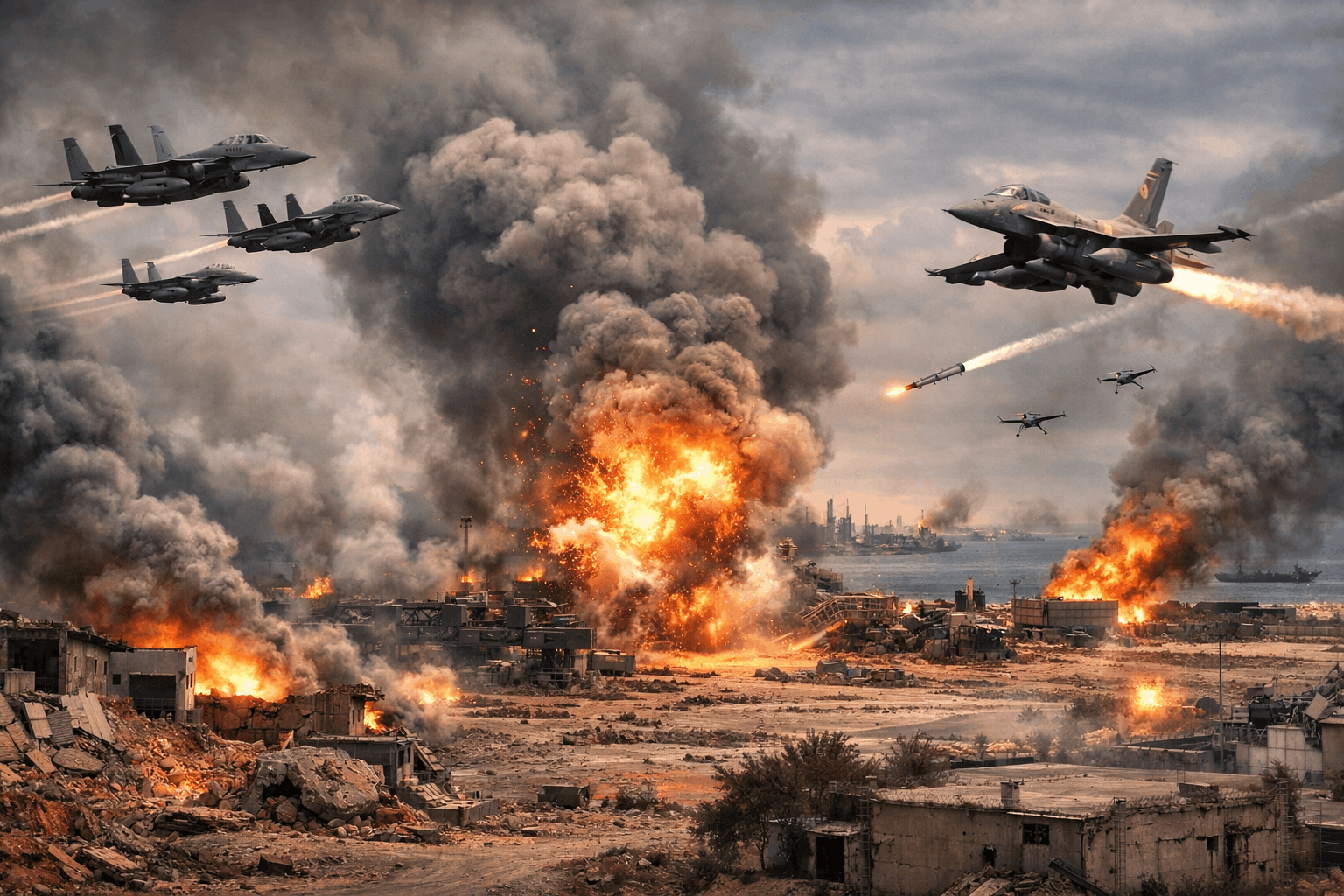
This fact was made clear by the events of the morning of February 28, 2026, when the world was busy with its usual activities, but sudden explosions and air strikes in the Middle East attracted global attention. The United States and Israel launched joint air strikes on several Iranian military targets, and within hours, Iran retaliated by targeting American military bases and Israeli interests in the Gulf. Within days, this tension turned into a major regional crisis, which raised concerns around the world that the conflict could turn into a full-scale world war.
The situation remained extremely tense during the first five to six days and many countries are feeling its effects. Hundreds of people have been killed and thousands injured, while several countries have raised security alerts. The global economy is also being affected by the crisis, especially the energy market, as Iran announced the closure of the Strait of Hormuz, a vital sea route for global oil shipments. Experts are warning that if the crisis continues, crude oil prices could reach $200 a barrel.
According to US and Israeli defense officials, the initial attacks on the morning of February 28 were part of a coordinated joint operation. The US military called the operation “Epic Fury” and Israel called it “Roaring Line”. The attacks were aimed at Iran’s missile program, air defense systems and regional military infrastructure. According to the Israeli military, about 2,500 weapons were used and about 600 targets were hit in Iran, including missile storage depots, air defense installations and Revolutionary Guard command centers. According to Iranian officials, the attacks also killed Iran’s Supreme Leader Ayatollah Ali Khamenei, who had led the country since 1989, in a severe blow to Iran’s political and military system.
Within hours, Iran launched a counterattack dubbed “Fateh Khaybar”, in which US military bases and Israeli targets in the Gulf countries were targeted with missiles and drones. According to the Revolutionary Guards, 26 drones and 5 ballistic missiles were fired at US targets in Kuwait, the United Arab Emirates, Bahrain and the Strait of Hormuz. Although air defense systems installed in the region destroyed many of the missiles and drones, some of the attacks managed to reach their targets. Following these attacks, Gulf countries issued high security alerts and several airspaces were temporarily closed.
Iran suffered the highest number of casualties between February 28 and March 5, 2026. According to confirmed reports, approximately 1,000 to 1,100 civilians were killed, while some estimates put the total death toll, including soldiers, at over 4,000. Five to six thousand people were injured. Military casualties included more than 1,000 Revolutionary Guards and other security personnel, and 48 senior commanders and government figures were also martyred in the initial attacks. The most tragic incident was the attack on a girls’ school in the Iranian city of Minab, in which approximately 160 students and staff were martyred, shocking the entire region.
The missile attacks in Israel killed approximately 10 to 12 civilians and injured more than 400, while buildings and infrastructure were damaged in the Tel Aviv and Beit Shemesh areas. The United States also suffered casualties, with six soldiers killed and 18 injured. Three American F-15E fighter jets were destroyed in a shooting incident in Kuwait.

The Gulf states were not spared either. Three foreign workers were killed and about 78 injured by missile debris in the United Arab Emirates, while about 1,000 missiles and drones were fired towards the UAE. No deaths were reported in Qatar, but 16 civilians were injured by missile debris and the Qatari air force shot down two Iranian Su-24 jets. Six people were killed and more than 18 were injured in Kuwait.
The conflict has also spilled over into other countries. Israeli strikes in Lebanon have killed more than 70 people targeting Hezbollah. Four Iranian-backed militia fighters were killed in Iraq, while one person was killed in attacks on ports and shipping in Oman. A missile was intercepted near a NATO base in Turkey, with no confirmed casualties.
Militarily, Iran has about 610,000 active personnel and 350,000 reserve forces, while it has a large stockpile of ballistic missiles and underground military installations. The United States, the world’s largest military power, has about 1.3 million active personnel, modern fighter jets, stealth bombers, and a strong navy. Israel also has a modern air force and defense systems, including Iron Dome, David’s Sling, and the Aero missile defense system.
Pakistan LNG Supply Disrupted After Strait of Hormuz Closure
In just six elections, more than 1,300 people have been killed in the conflict, affecting 10 to 12 Middle Eastern countries. Nearly 170 countries have recorded casualties in Iran. This conflict is not just a war, but also the future of global politics, economics, and security. Governments around the world are watching as the day unfolds to decide whether this crisis will remain contained or escalate into a global conflict.
Centcom, IDF, IRGC, CNN, BBC, CGTN, Al Jazeera, Politico, Anadolu Agency, Daily Mirror.

Comments are closed, but trackbacks and pingbacks are open.