
Iran Blames US for Hormuz Insecurity as Lavrov Visits Tehran
Russia’s top diplomat arrives in Iran for his first visit since the war began, as talks between Tehran and Washington remain stuck.

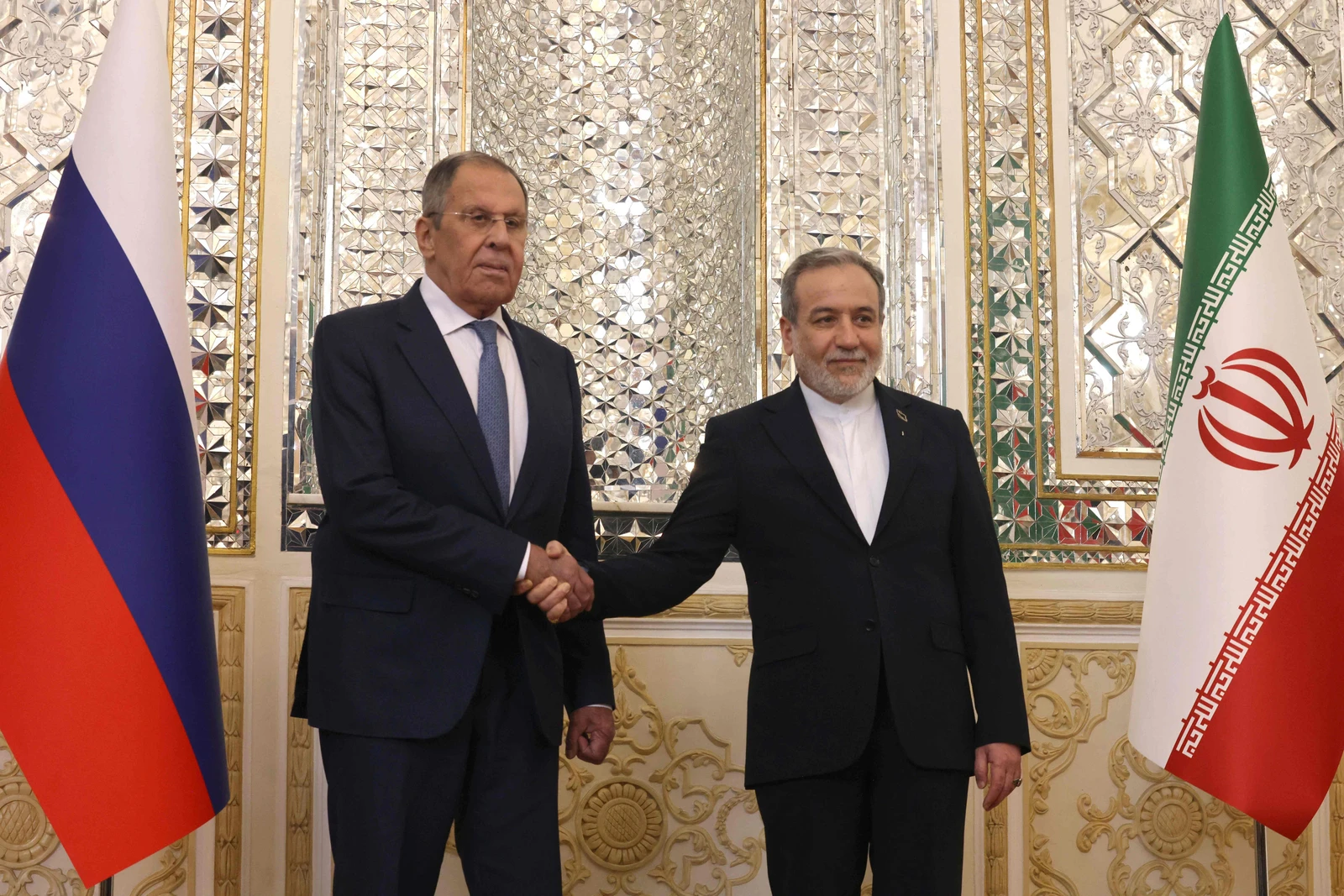
IRAN – (Special Correspondent/Web Desk) – Iran’s foreign minister said on Monday that the United States is to blame for Hormuz insecurity. He made the claim during a visit by his Russian counterpart to Tehran.
Abbas Araghchi said the war forced on Iran by the US and Israel, along with the economic blockade, is the main cause of danger in the region. He had earlier spoken about the Gulf and the Strait of Hormuz.
He spoke at a joint press conference with Sergei Lavrov. The Russian minister landed in Tehran earlier in the day.
This is Lavrov’s first trip to Iran since the Middle East war began. Moscow says it wants to act as a mediator.
Iranian foreign ministry spokesman Esmaeil Baqaei said on Sunday that the visit would focus on regional and international developments.
Lavrov was due to meet President Masoud Pezeshkian. He was also set to hold talks with Araghchi, according to the Russian foreign ministry.
Lavrov has said Russia’s efforts aim to stop a return to large-scale war. Talks between Tehran and Washington are currently stalled.
The visit follows a message from Russian President Vladimir Putin. In early October, he told Pezeshkian that Moscow was ready to help with mediation.
Russia and Iran are two of the most heavily sanctioned countries in the world. Their ties are close, and military and economic cooperation has grown since Russia invaded Ukraine in 2022.
The war began in February, when the US and Israel struck Iran. A ceasefire followed in April. In June, Tehran and Washington signed a memorandum of understanding.
Even so, the fighting around the Strait of Hormuz has not stopped. Iran says it controls the waterway. It regularly targets ships that pass through without its permission.
In normal times, about one-fifth of the world’s oil and gas moves through this narrow route. That is why any trouble there affects energy markets far beyond the region.
The United States has answered with a naval counter-blockade of Iranian ports. This has kept pressure on both sides and made a deal harder to reach.
The Russian foreign ministry said the talks would look at ways to end what it called an acute crisis. It blamed the crisis on unlawful US and Israeli aggression against Iran.
The ministry also warned that the war has hurt stability and security. It said the damage reaches beyond the Middle East and affects the whole world.
For now, the Hormuz insecurity shows no sign of easing. Moscow’s mediation offer may open a new path, but the US and Iran remain far apart.
Comments are closed, but trackbacks and pingbacks are open.