
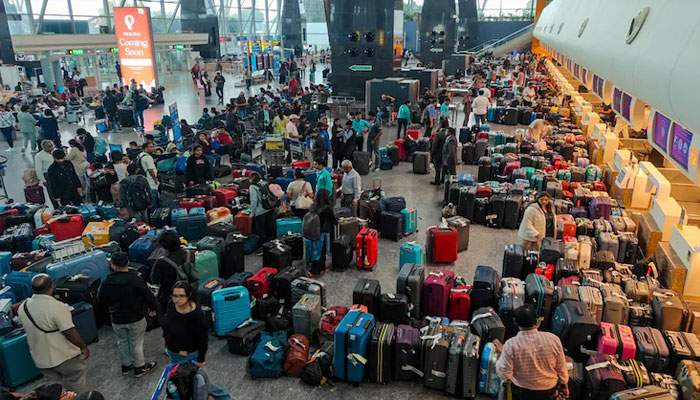
IndiGo Faces Major Pilot Shortage, Hundreds of Flights Cancelled
The new Flight Duty Time Limitations rules were intended to improve pilot safety by limiting duty hours and mandating longer rest periods.

NEW DELHI: India’s largest airline, IndiGo, continues to face a severe operational crisis, with hundreds of flights cancelled nationwide. The disruptions are linked to a shortage of pilots and crew following the implementation of stricter Flight Duty Time Limitations by the Directorate General of Civil Aviation on 1 November 2025.
Scope of the Disruption
On 5 December 2025, over 1,000 flights were cancelled, marking the fourth consecutive day of widespread disruptions. Major airports affected include Delhi, Mumbai, Bengaluru, Hyderabad, Chennai, and others. Thousands of passengers were stranded, dealing with rescheduling issues, delays, and backlog challenges. IndiGo’s on-time performance dropped from approximately 84 percent in October to about 67.7 percent under the new system.
Causes of the Crisis
The new Flight Duty Time Limitations rules were intended to improve pilot safety by limiting duty hours and mandating longer rest periods. However, IndiGo did not recruit sufficient additional pilots or ramp up training in time, despite having two years to prepare. Insiders report that the airline maintained a lean staffing strategy and minimized buffer crews, which exacerbated the problem. Given IndiGo’s massive network of over 2,200 to 2,300 daily flights, even a small crew shortfall caused widespread operational disruption.

Measures and Recovery
In response, the Directorate General of Civil Aviation temporarily relaxed certain rules for IndiGo, including night-duty and weekly rest requirements, to stabilize operations. IndiGo acknowledged planning and execution gaps and said it is working to gradually restore normal operations.
Read more: Security Forces Kill 9 Indian-Supported Terrorists in KP Operations
Implications for Travelers and Aviation
The crisis highlights the trade-off between crew safety and operational reliability, showing that safety rules require proper planning and staffing. Airlines are warned to maintain buffer staff and avoid over-optimizing schedules to prevent similar disruptions. Travelers are advised to double-check flight status, have backup plans, and expect possible delays during busy seasons. The incident may also prompt stricter regulatory oversight, potential penalties for mismanagement, and increased pressure on airlines to hire and train more crew.


Comments are closed, but trackbacks and pingbacks are open.