
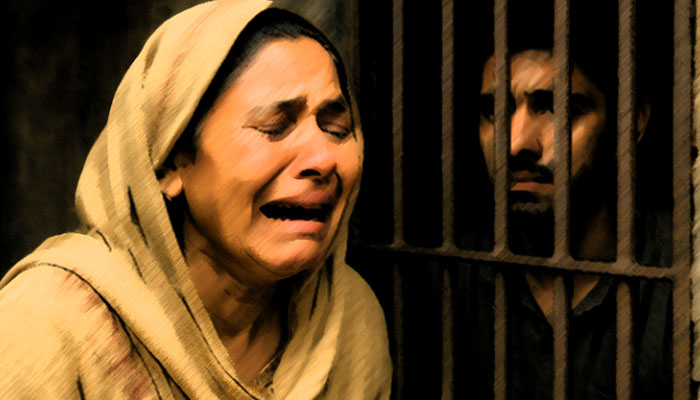

Recently, the world observed Human Rights Day, celebrating freedom, dignity and equality. But since 5 August 2019, Indian illegally occupied Jammu and Kashmir (IIOJK) has been under a state of unprecedented political and civil oppression. The abrogation of Articles 370 and 35A stripped the region of its autonomy, silenced dissent and undermined the rights of millions. While the world recently observed Human Rights Day, celebrating freedom, equality and dignity, the people of IIOJK continue to live under curfews, mass detentions, communication blackouts and cultural erasure. Political leaders remain imprisoned, journalists face harassment and Kashmiri language and identity are under attack. This stark contrast between global celebration and the lived reality of Kashmiris underscores a crisis that demands urgent international attention.
Immediately after the abrogation of Articles 370 and 35A, authorities imposed strict curfews across IIOJK. Schools, colleges and businesses were closed. Internet, phone and broadband services were suspended for months. Families were cut off from each other. Journalists could not report freely. According to the Kashmir Chamber of Commerce and Industry (KCCI), the region suffered economic losses of nearly $2.5 billion in just 120 days and around 500,000 people lost their jobs. Tourism, handicrafts, exports and IT industries were brought to a standstill.
Peaceful protests erupted across the region. In Srinagar alone, over 10,000 people gathered peacefully in early August 2019. They were met with tear gas, pellet guns and baton charges. Thousands were arrested. Security forces were deployed in unprecedented numbers, making IIOJK one of the most militarized zones globally.
Political leaders have faced decades-long imprisonment. Veteran leader Shabbir Ahmad Shah has spent nearly four decades behind bars. Masarat Alam has been detained under the Public Safety Act (PSA) 35 times. Yasin Malik has been sentenced to two life terms, with calls for the death penalty by Indian authorities. Human rights defender Khurram Parvez, recognized by TIME magazine as one of the world’s 100 most influential people, remains incarcerated. These measures have effectively silenced political and civil society voices.
A new and alarming phase of systematic de-Islamization threatens Kashmir’s religious and cultural identity. Kashmiri language instruction has been banned in schools, while Hindi has been made compulsory. Educational institutions face sustained assaults. Observers note that Hindutva ideology underpins these policies, reflecting a deliberate attempt to erase the region’s distinct heritage.

Independent journalism in IIOJK is under severe strain. The Committee to Protect Journalists has warned that press freedom is “nearing extinction.” Journalists face harassment, arrests and intimidation. Censorship and communication blackouts prevent accurate reporting and documentation of human rights violations, silencing critical voices.
Civil society organizations report killings, torture and enforced disappearances. In 2019 alone, at least 368 deaths, over 22,900 women were widowed, 17,855 children orphaned and more than 11,200 cases of sexual violence reported. Over 110,445 homes were destroyed and 8,000 people remain missing. The repeal of the Jammu and Kashmir RTI Act and closure of the State Information Commission removed key mechanisms for accountability. Local political institutions were weakened, leaving residents without representation or recourse.
The United Nations, Amnesty International, Human Rights Watch and the Organization of Islamic Cooperation (OIC) have repeatedly raised concerns over IIOJK. They highlight mass detentions, extrajudicial killings and restrictions on freedom of speech. India maintains these are internal matters necessary for peace. Yet reports from civil society reveal ongoing political, cultural and social oppression.
Human Rights Day celebrates freedom, equality and dignity. In IIOJK, however, citizens continue to live under curfews, surveillance and restricted civil liberties. Political leaders are imprisoned. Journalists face threats. Kashmiri language and culture are under attack. Youth unemployment remains high, above 17% and economic opportunities are scarce. The contrast between global celebrations of rights and the reality in IIOJK is stark.
Human rights in Indian illegally occupied Jammu and Kashmir remain under serious threat. Freedoms of expression, assembly and political participation are restricted. Violence, arbitrary detentions, economic instability and cultural erasure persist. Human Rights Day highlights the urgent need for action: while the world celebrates rights and dignity, Kashmiris continue to live under oppression. Restoring political representation, human dignity and cultural freedom is essential. International attention and intervention remain critical to address this ongoing crisis.
The writer is a student of BS. International Relations at the National University of Modern Language, Islamabad and is currently serving as an intern at Kashmir Institute of International Relations.

Comments are closed, but trackbacks and pingbacks are open.