

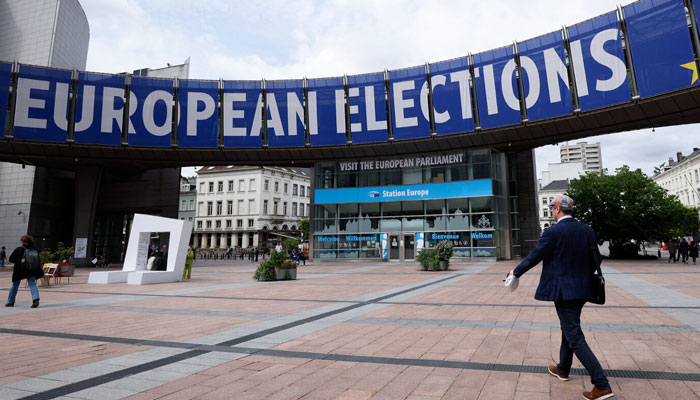

Local elections in Europe are no longer confined to traditional municipal issues such as roads, sanitation, public transport, or city services. Over the past few years, climate change and environmental policy have increasingly become central political themes. As a result, in countries like France, Germany, and the United Kingdom, the balance between environmental action and economic concerns has emerged as a major political debate.
Political analysts often describe this phenomenon as “Climate vs Economy” politics. The key question is how far strict environmental policies should be implemented and how their economic impacts should be managed.
Municipal governments in Europe now play a much more significant role. Local authorities are directly responsible for decisions on low-emission transport zones, public transport expansion, renewable energy initiatives, and urban planning.
In this context, the upcoming 2026 French Municipal Elections carries particular importance. In many French cities, green transport, car-free zones, and environmental policies have become central topics in political campaigns.
While there is widespread public support for environmental protection, certain policies have sparked economic concerns. Rising energy costs, carbon taxes, and environmental restrictions on industry have led to heated debate. Some business sectors argue that rapid energy transitions could prove costly for European industries.
Consequently, many political parties now frame environmental policies not only as ecological imperatives but also in terms of economic stability and energy security.
A notable dimension of this debate is farmers’ protests across Europe. Over the past two years, agricultural communities have staged large-scale demonstrations against environmental regulations and agricultural reforms, arguing that strict ecological rules could harm rural economies and livelihoods.

Particularly in Netherlands and Germany, ongoing debates over nitrogen emissions and agricultural policies have directly influenced local politics.
Meanwhile, Green parties in Europe are adjusting their strategies. For example, the Green Party of England and Wales and other Green parties are linking climate initiatives with employment, technology, and energy independence.
Their message emphasizes that environmental policies are not just expenses but also opportunities. Renewable energy, new technologies, and green industries can become vital components of future economies.
Today, the key question in Europe is no longer whether to tackle climate change, but how quickly it should be done and at what cost. This debate could shape the trajectory of European politics in the coming years.
For developing countries like Pakistan, these discussions are also highly relevant, as balancing environmental policy with economic development is becoming a major global challenge.
Hence, European local elections now offer not only insights into municipal governance but also a glimpse of the future of global climate policy.


Comments are closed, but trackbacks and pingbacks are open.