
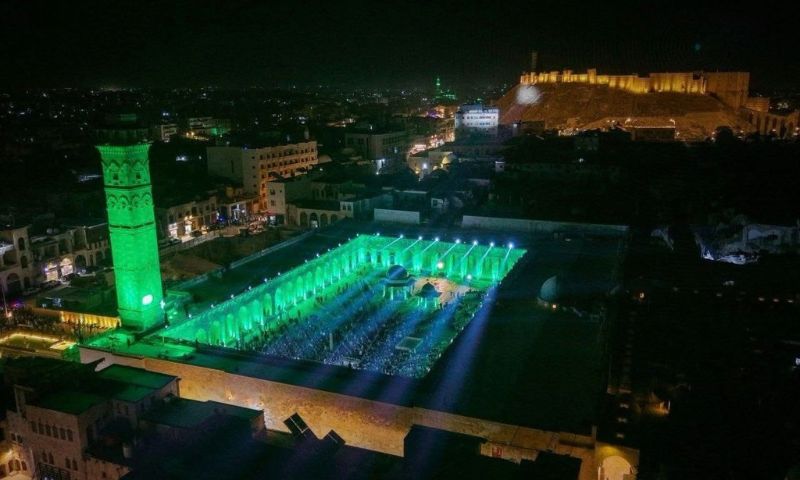
Hijaziyah Hall Aleppo Restored as Great Umayyad Mosque Reopens After 14 Years
Worshippers return to one of Syria’s most important landmarks, with a minaret rebuilt from stones saved from the war rubble.

Aleppo – (Special Correspondent/Web Desk) – The Hijaziyah hall Aleppo is open once more, as the Great Umayyad Mosque welcomed worshippers again on Thursday. The famous mosque had been closed for about 13 years because of the war.
Senior officials, religious scholars and local figures attended the reopening ceremony. Many people also shared photos and videos online, and Muslims around the world welcomed the news.
The mosque is in Aleppo’s Old City, which became a frontline during the Syrian conflict. Its tall minaret fell in 2013, and other parts of the complex were also damaged.
Now the minaret stands again. Workers collected many of its original stones from the rubble, sorted them, recorded them and placed them back in the new structure.
The restoration did not stop at the tower. Teams also repaired the arcades, the courtyard floor, the washing area, the public drinking fountain and the Hijaziyah hall.
The Umayyad Mosque in Aleppo has officially reopened after extensive restoration work, including the complete reconstruction of its minaret.
Some historians suggest the Mosque was originally commissioned by Umayyad Caliph Sulaiman to rival the Great Mosque his brother al-Walīd built in Damascus.
— Von Ranke (@ibnace3) October 8, 2026
Aleppo Governor Azzam al-Gharib said the reopening gave one of the city’s key landmarks back to its people after years of destruction.
Some people had already prayed in parts of the mosque during Ramadan in 2025, when limited repairs allowed prayers to restart. This new reopening follows much wider work on the whole complex.
Officials say the mosque will once again host Quran study circles and religious lessons, along with daily prayers. For centuries, it has been a place of worship and learning for the people of Aleppo.
The mosque dates back to the Umayyad period and has been rebuilt and changed several times in its long history.
There is also a quiet reminder of the war in the walls. When visitors walk under the new minaret, some of the stone above them is very old. It came from the ruins and returned to the place where it stood for centuries.
Comments are closed, but trackbacks and pingbacks are open.