
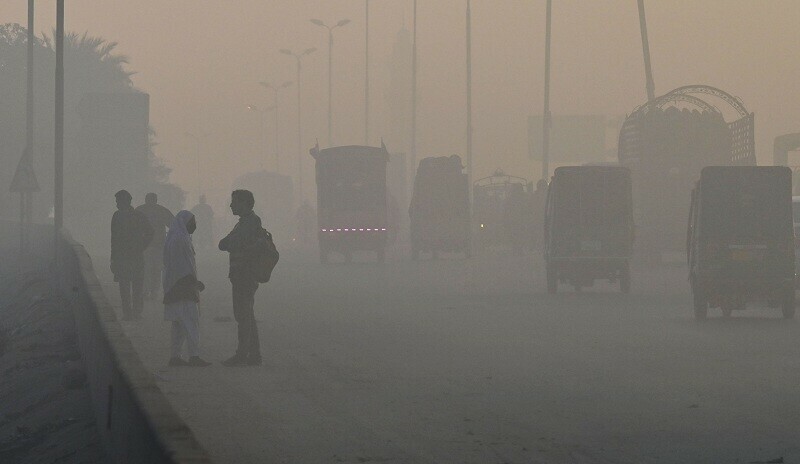

Every winter, Punjab’s skies turn into a grey veil. Lahore wakes up not to sunshine but to a choking mist. Roads vanish in the haze, eyes burn, throats tighten, and the morning air feels heavier than guilt. The people of Punjab have learned to live with this suffocation calling it “seasonal smog,” as if nature were responsible. But this year, for the first time, the provincial government has decided not to wait for the winds to change. Under Chief Minister Maryam Nawaz, Punjab has declared war, not on weather, but on negligence.
Smog is not a mystery of nature; it is man-made poison. It rises from our fields, our factories and our vehicles. When farmers burn crop residue after harvesting rice, thousands of acres turn into open furnaces, releasing tons of carbon and nitrogen oxides into the air. Add to that the black smoke from unfiltered factory chimneys and the endless trail of two-stroke rickshaws and you get a toxic cocktail that hides the sun and steals our breath.
For years, we treated this crisis as a passing phase, something that would disappear with the next rainfall. But in reality, it’s a reflection of our own habits: careless, short-sighted, and indifferent.
Maryam Nawaz has made it clear: the fight against smog will not be seasonal anymore — it will be systematic. Her government has launched an aggressive “Clean Air Punjab” initiative, bringing together environmental, agricultural and industrial departments under one coordinated plan.
The first major step has been the “imposition of a Smog Emergency” across the worst-affected districts — Lahore, Sheikhupura, Gujranwala, Faisalabad, and Sialkot. During peak days, schools and offices operate on flexible schedules. Water sprinkling on main roads and green-belt maintenance have become daily operations.
On the agricultural front, the government has banned stubble burning with stricter enforcement than ever before. Farmers found violating are not only fined but also offered practical alternatives — such as subsidies for mechanical residue management and incentives for eco-friendly composting.
The industrial sector is also under inspection. Old brick kilns are being shifted to zig-zag technology, cutting emissions by up to 60%. Factories without filtration systems are being sealed. Meanwhile, the traffic police have been directed to impound smoke-emitting vehicles and enforce emission testing on all commercial fleets.

But Maryam Nawaz’s plan is not limited to firefighting. Her long-term vision revolves around green transformation. She has directed urban authorities to restore Lahore’s lost identity as “the city of gardens.” Tree-planting campaigns are being revived under the slogan “One Citizen, One Tree.” The government is also investing in electric public transport, promoting hybrid buses and pushing oil companies to supply cleaner Euro-V fuels.
At the administrative level, an Environmental Monitoring Cell has been set up in the Chief Minister’s Office to track air quality in real time, using satellite data and on-ground sensors. The data isn’t just for record; it’s used to trigger policy actions within hours, not weeks.
Yet, the Chief Minister has repeatedly emphasized that no government can win this war alone. Citizens must understand that every lit pile of garbage, every poorly maintained car and every unnecessary motorcycle ride adds to the cloud choking their own families.
People are being urged to wear masks, limit outdoor movement during smog peaks and keep themselves hydrated. More importantly, awareness drives in schools are teaching children that clean air is not a luxury — it’s a shared right and a shared responsibility.
Punjab’s smog is more than an environmental problem; it is a test of civic maturity. Developed nations faced similar crises decades ago but overcame them with tough policies and collective discipline. The same transformation can happen here — if the will lasts beyond the headlines.
Maryam Nawaz’s approach shows political courage. She could have blamed the weather, like many before her. Instead, she chose accountability — to confront pollution, challenge habits and invest in a cleaner future. Her environmental vision is not just about air quality; it’s about restoring dignity to life itself.
From smog to serenity — that’s not just a slogan; it’s a direction. If this momentum continues, Punjab may soon breathe easier, not only in its lungs but in its conscience. For the first time in years, there’s hope that one winter morning, Lahore’s children will wake up and actually see the sun — not through a grey filter of regret, but in the clear blue promise of a new beginning.
Comments are closed, but trackbacks and pingbacks are open.