
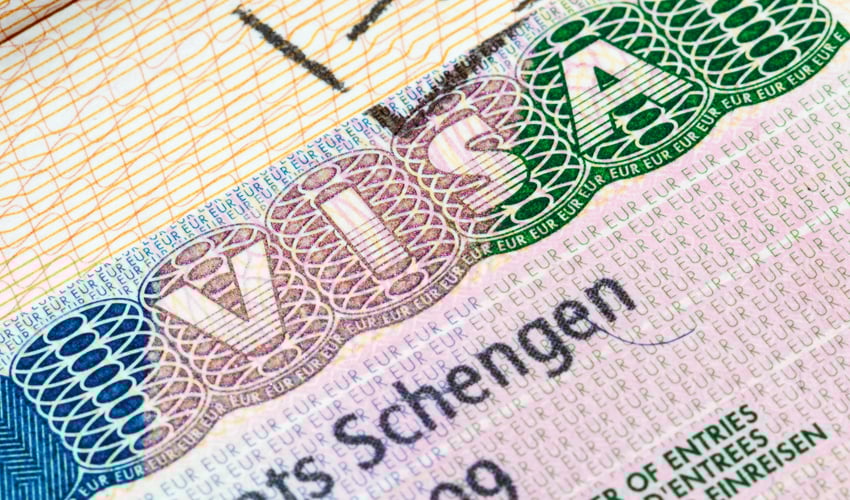

Islamabad/Brussels – In a significant development for global travellers, especially from Pakistan, the European Union (EU) has officially announced that the Schengen visa system will be fully digitalised by 2028. The move will replace traditional passport stickers with secure, digitally signed visas — bringing a new era of contactless, paper-free travel to Europe.
Under the new system, visa applicants will receive their Schengen visas via email or through mobile apps, embedded with a secure 2D barcode. Physical visits to visa centres and manual passport stamping will largely become obsolete, except for first-time applicants or those whose biometric data needs updating.
EU’s Digital Travel Revolution
This step is part of the EU’s broader plan to modernise travel procedures, improve border security, and simplify the visa experience. A centralised online platform is currently in development, allowing applicants to upload required documents, pay visa fees, track application progress, and receive their digital visa — all from their personal devices.
The digital visa system was successfully tested during the 2024 Paris Olympics, where France issued over 70,000 electronic visas. Encouraged by this soft rollout, the EU is now preparing for a full implementation across all Schengen states.
What This Means for Pakistan
For Pakistani citizens, the digital shift is expected to significantly ease the visa process. Applicants will benefit from:
-
Shorter processing times
-
No more physical visa stickers
-
Better application tracking
-
Contactless entry via biometric e-gates at EU borders
While those applying for the first time will still need to provide biometric data in person, subsequent renewals will be processed online — drastically reducing embassy visits and paperwork.
Upcoming Border Systems: EES and ETIAS

The EU’s digital overhaul also includes two new systems:
-
Entry/Exit System (EES), launching in October 2025, will replace manual passport stamps with facial recognition and fingerprint scanning at borders.
-
European Travel Information and Authorisation System (ETIAS), expected by late 2026, will require visa-exempt travellers — including holders of Pakistani diplomatic or official passports — to obtain online travel authorisation before visiting.
Though ETIAS does not apply to regular Pakistani passport holders, EES will impact how all non-EU travellers enter and exit Schengen countries.
Read more: Digital Schengen visa by 2028: What Pakistanis must know
Flexible European Visa in the Pipeline?
Some EU nations — notably Italy, France, and Greece — are advocating for a flexible pan-European tourist visa, which could make multi-country travel across both Schengen and non-Schengen areas easier. Though still under discussion, the idea is gaining momentum, with Italy’s proposed “Jubilee Visa” for 2025 and Greece’s backing seen as early signs of progress.
If approved, such a system could eventually eliminate the need for travellers to distinguish between Schengen and non-Schengen states when planning European trips.
Timeline Overview
-
October 2025: Launch of EES biometric system
-
End-2026: ETIAS becomes mandatory for visa-exempt travellers
-
By 2026: Expanded digital visa pilot programmes
-
By 2028: Full EU-wide adoption of digital Schengen visas
A Smarter Future for Travel
As the world embraces post-pandemic digital solutions, the EU’s plan for a fully electronic Schengen visa aligns with global trends toward smarter, more secure, and user-friendly travel experiences. For Pakistani travellers, it signals the end of visa stickers — and the start of a more streamlined journey to Europe.


Comments are closed, but trackbacks and pingbacks are open.