

Endangered Shina Literature and the Cultural Message of Naeem’s Poetic Voice
By: Imran Fahad

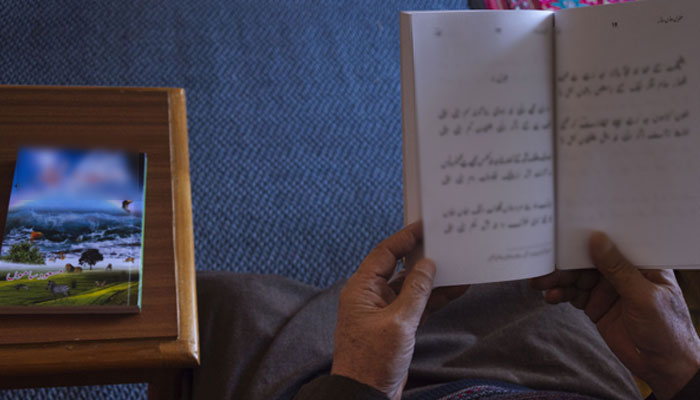
A recent Shina poem by Sir Naeem, former Principal of Boys High School Chatorkhand and now retired, emerges as a critical preservation of endangered Shina vocabulary at a time when the language itself faces cultural reduction and shrinking usage among younger speakers. The poem uses rare original words such as Burzain, Gashochi, Shesh, Shain, Bochik, Mushéeni, Ishpíri, Aji Loli, and Zach, each carrying layers of cultural significance. Today, these expressions are either unknown to many Shina speakers or have been replaced by Urdu terms due to social change. Naeem’s poetic strategy deliberately records them inside verse, making the poem a small yet significant cultural archive.

For example in the lines
Roman-Shina: Mas toom hath gíni Burzainék tham thás
English: “I wanted to plant a fruit orchard with my own hands,”
the word Burzain refers to a traditional fruit garden which historically represented livelihood, hospitality and seasonal celebration. Likewise, in the verse
Roman-Shina: Gashóchi láyek we ms sháinék tham thás
English: “I wished to build grape arbors from Gashochi vines,”
the word Gashochi is not a general word for grape; it is a special Shina noun for a specific mountain grape, and Shain refers to the traditional hanging structure of vines, something younger generations rarely see today. Similarly, Zach means grap and Aji-loli Zach identifies the red-colored grape which was once a local specialty. These meanings show that the poem is not simply about grapes; it is documenting a traditional horticultural world that is now declining.
Another strong cultural marker is the word Shesh, which means shade. Yet in Shina poetic culture, Shesh is metaphorical: the protective elder whose existence provides security for children and grandchildren. When the poet says he wanted to be a shade, he is essentially expressing the old cultural duty of grandfathers who protected and guided families. Likewise, Bochik means kiss, but culturally it refers to affectionate blessings that elders placed on children. Ishpíri means gift, yet it originally referred to ceremonial offerings among families. Even Mushéeni (meaning “the earlier times”) is a nostalgic reference to a traditional way of living.
Thus the poem continuously inserts endangered vocabulary, turning lost words into living memory through poetic repetition. Naeem does not translate these Shina words inside the poem, which is a deliberate literary method: the poet keeps them pure and original, while the reader learns them through context. When we translate into English, for example
Roman-Shina: Yátos to sáto sáth ishpíreek bút aa
English: “When we walked, ceremonial gifts were exchanged,”
we realize that Naeem is not only writing poetry but restoring customs, memories and practices that would otherwise silently disappear.
From a cultural research view, this poem strongly reflects what linguists consider endangered vocabulary domains. Words related to land, fruits, family relations and village rituals disappear first, because modern life removes the activities that required those words. Today’s children and youth may never see Burzain orchards or Shain grape arbors, so the vocabulary vanishes without being noticed. Naeem’s poem therefore becomes an act of documentation, preservation and resistance. He protests silently against linguistic loss by giving language poetic beauty again.
Critically, the poem also contains deep moral advice. The poet prays that his hands never harm others, his children never separate from him, and his tongue never cause curses. Through these prayers, Naeem transmits the ethical values of mountain culture, where elders carried responsibility through patience, sacrifice and silence. His message is not personal only; it is generational. Even when he speaks of himself—“I wanted to plant,” “I wished to build”his “I” represents a collective identity rooted in local agricultural civilization.
Therefore the central thesis that emerges from this poem is that Naeem uses endangered Shina vocabulary and agricultural metaphors to reconstruct cultural memory and moral responsibility, allowing Shina literature to preserve identity at a moment of linguistic decline. In this way, the poem transforms itself into both a linguistic record and a cultural reminder. Its greatest achievement is that Naeem, after a lifetime of educational service, now protects his language with poetry, ensuring that future generations may still recognize words, meanings, colours and emotions that otherwise were in danger of being forgotten forever.



Comments are closed, but trackbacks and pingbacks are open.