

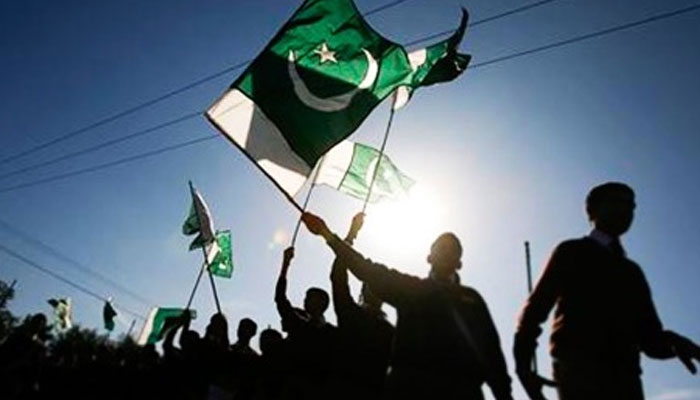
Building Hope for the Best — When the World Watches, and a Nation Answers in Silence
By TA’ZEEM HEJAZI

There are moments when history does not knock—it whispers. Not in the noise of declarations, not in the glare of flashing cameras, but in the quiet dignity of conduct, in the unseen grace of hosting, in the subtle strength of restraint.
Islamabad, in these passing yet profound days, did not merely become a venue. It became a mirror—where the world did not just look… it saw.
For years, Pakistan has lived within narratives crafted at a distance—stories stitched together by fragments, assumptions, and selective memory. But when the world’s most seasoned journalists arrive—not as tourists, but as witnesses—the distance dissolves. The borrowed lens is replaced by lived experience.
And experience… has its own authority.
Pakistan did not raise its voice. It arranged its space.It did not argue its case.It opened its doors.
And in that opening, something shifted.
The hosting of globally renowned press was not merely an administrative success—it was a civilizational expression. A quiet statement that said: “Come, see for yourself.”From seamless facilitation to the understated warmth of engagement, Pakistan revealed not a performance—but a personality.
Measured.Composed.Unapologetically real.
And the response?It did not come in scripted praise—but in authentic acknowledgment.
Words of appreciation, spoken by those trained to doubt before they admire, carried a weight far greater than ceremonial applause. For the Pakistani nation, these words were not just compliments—they were moments of recognition long awaited.
A nation, for a fleeting yet meaningful moment, felt seen without distortion.
And perhaps, this is where honor resides—not in being praised, but in being understood.
Yet, as Islamabad breathed this moment, another current flowed—soft, steady, brotherly.
From Qatar… from the Kingdom of Saudi Arabia… gestures emerged that were not bound by protocol, but enriched by fraternity. In a world of calculated alignments, these gestures carried the warmth of shared trust.
And then came a step that transcended diplomacy—the deployment of Pakistan’s air defense within the sacred geography of Hijaz and Najd.
This was not strategy alone.This was trust—an entrusted responsibility.
A trust so sacred that it echoes the Divine command:
“Indeed, Allah commands you to render trusts to whom they are due.” — (Qur’an 4:58)
To guard the land where revelation descended…to stand in defense where millions turn in prayer…is not merely a military role—it is a moral responsibility.
And responsibilities of this nature are not assigned—they are entrusted.
Pakistan, in accepting this trust, does not merely rise strategically—it is elevated morally.
But beyond all strategy, beyond every alignment, there are moments that travel directly into the hearts of ordinary people.
Moments when a distant podium, adorned with the emblem of the United States Presidency, speaks words that cross oceans and settle in Pakistani homes—not as politics, but as recognition.
Recognition.
Not demanded.Not negotiated.But felt.
And in that feeling, something ancient awakens—the quiet dignity of a nation that has endured, that has waited, that has continued to stand despite shifting winds.
Yet here lies the deeper truth:
Recognition is a moment.Reputation is a journey.
And journeys demand continuity.
The Qur’an reminds us:
“Hold firmly to the rope of Allah all together and do not be divided.” — (Qur’an 3:103)
Unity is not a slogan—it is a structure.A structure upon which nations either rise… or fracture.
And the Prophet Muhammad (peace and blessings be upon him) taught:
“The believers, in their mutual kindness, compassion, and sympathy, are like one body.” (Sahih Muslim)
A body does not survive if its parts are disconnected.A nation does not rise if its purpose is divided.
Pakistan today stands at such a threshold—not of celebration… but of continuation.
For what the world has seen must now become what the world consistently sees.

Hope, therefore, is not a feeling—it is a discipline.
A discipline to remain balanced when praised.A discipline to remain steadfast when tested.A discipline to build, quietly and consistently, beyond moments.
Even Western thought, distant in geography yet close in wisdom, echoes this truth. As Emily Dickinson wrote:
“Hope is the thing with feathers—That perches in the soul—And sings the tune without the words—And never stops—at all.”
Hope, then, is not loud.It does not demand attention.It simply endures.
But hope without action becomes illusion.
And here, Pakistan must choose—not between pride and humility, but between moment and momentum.
Will this be remembered as a brief applause?Or as the beginning of a new narrative?
The answer lies not in what was said…but in what will now be done.
And it is here—precisely here—that a dimension of quiet leadership must be acknowledged.
For while the stage often reflects the visible, the true architecture of such moments is built in layers unseen. Under the stewardship of the P.M & his government, a political will was shaped—measured, composed, and mindful of the delicate balance required in a world of shifting alignments. Alongside this, a disciplined strategic depth ensured that facilitation was not merely ceremonial, but credible.
The role of Field Marshal Hafiz Asim Munir, in this unfolding chapter, emerges not through proclamation but through presence. In matters of national security and strategic facilitation, effectiveness is rarely loud. It is deliberate, precise, and sustained.
It is through such calibrated effort that environments are created—where adversaries can sit,where dialogue can breathe,where possibility, however fragile, can begin to exist.
Leadership, in this realm, is not measured by visibility.It is measured by stability.
Not by speeches.But by outcomes quietly made possible.
The alignment between civil governance and strategic institutions, when guided by clarity of purpose, becomes a force multiplier. It creates space—space for diplomacy, for engagement, for the prevention of escalation.
And in a world increasingly defined by noise, such quiet alignment is rare.
The Qur’an reminds:
“If you support the cause of Allah, He will support you and make your foothold firm.” — (Qur’an 47:7)
Firmness here is not rigidity—it is steadiness.A steadiness that allows a nation to move forward without losing balance.
And where steadiness exists, confidence follows.
Not only within…but beyond.
The world observes.Not just what is said—but what is sustained.
And somewhere, beyond the corridors of power, beyond the echo of statements, a figure walks again—unseen, unannounced—carrying the quiet wisdom of time.
He pauses… looks ahead… and whispers:
*“Bacha…honoring the guest is easy,but sustaining identity is the real test.
Winds will change,voices will rise and fade,but only those who root themselves in character remain standing.
Do not chase recognition—become worthy of it, consistently.
Remember…history is not written by words alone,it is carved by conduct.”*
And then he moves on…as if nothing was said—yet everything was understood.
The winds that carried the world to Islamabad have now softened.The cameras will turn.The headlines will fade.
But what remains…is responsibility.
To build.To sustain.To rise—without noise.
Because in the end, nations are not remembered for the moments they hosted—but for the character they upheld.
So let this not be an end.Let it be a beginning.
A beginning where Pakistan does not seek to be seen—but becomes impossible to ignore.
A beginning where hope is not spoken—but lived.
A beginning…where silence continues to write history.
■■■

Comments are closed, but trackbacks and pingbacks are open.