

Beyond the Blast: What the Quetta Attacks Reveal About Pakistan’s Balochistan Policy
By: Samra Khaksar

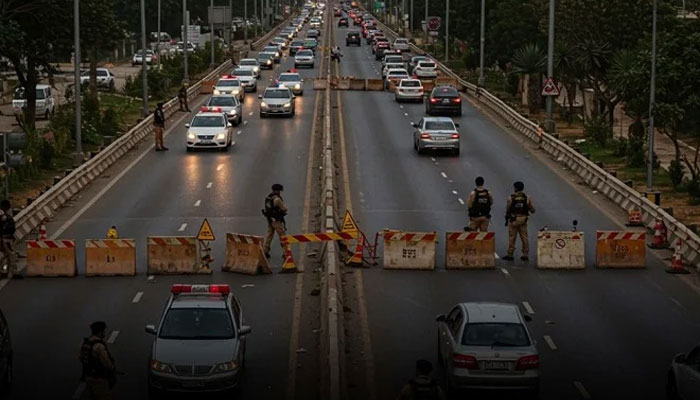
The recent Quetta attacks made Balochistan head-on-again, but this time not long in the limelight, the same fashion tragedy which plagues Pakistan most without attention. Every explosion, ambush or targeted killing by the Balochistan Liberation Army (BLA), is instantly deemed a failure of security and followed by denunciations, promises of action and eventually a slow reversion to silence. This repetitive pattern implies that the violence is not a one time deal but systemic: the assaults are not singular acts of terrorism but symptomatic expressions of a more fundamental political and strategic crisis that Pakistan has failed to face in a consistent and logical way. Quetta is at a very strategic location. Its closeness to the Afghan border, its roles as a military and administrative center, and its position in a province with abundant resources but with low developmental performance are all factors that enhance its importance. The instability in Quetta has a far reaching implication outside the provincial borders. Violence in the city is not only an indication of a lack of security in the moment, but also the instability of internal authority of the Pakistani government at a time when geopolitics in the region is proving to be merciless.
BLA is a nationalist insurgent group that is purporting to engage in fighting the Baloch rights but the ways of operation tell a different story. Attacking civilians, workers, ethnic minorities, and security forces serves to effectively disenfranchise the movement of all moral authority it claims to have. These kind of tactics would bring the group closer to non-state violent actors who would weaponize grievance instead of resolving it. This violence, in strategic terms, has little succeeded in enhancing Baloch political empowerment, but has entrenched state reactions, reduced political space, and increased militarization; these are all historically unhealthy responses to civilian voices and not the outcomes of a stronger one. But instead of reducing the issue to terrorism, it is dangerous to be lazy in analytical work. Militant groups do not come out of space. The extended history of political marginalization, the struggle of property ownership, forced disappearances, and unequal development of Balochistan have created the conditions in which the alienation may grow. Decades of governance in the province have been security-based and have viewed dissent as a law-and-order problem and not a political issue that requires dialogue, representation and trust-building. This will be effective as the violence is repressed in the short run, yet not the factors that allow insurgent discourses to attract and expand. The risk to the strategies is to allow militant groups like the BLA to have a monopoly of the language of grievance. In a situation whereby the legitimate political demands are denied or delegitimised, the violent actors come in to restructure resistance on their own terms. This is what contorts the Baloch struggle and places the province into a vicious circle as violence begets repression and repression begets alienation and civilians are left as the main casualties of insurgent brutality and state securitisation.
An external dimension is also to be considered. The strategic importance of Balochistan, especially in the region connectivity projects and the great power competition, makes it an easy target. Quetta militancy is not a geopolitical vacuum; the instability of the border regions, permeable borders, and regional politics leave room to those outside the country to increase internal divisions. Although not all of the attacks can directly be related to foreign participation, it would be strategic naivety to ignore the situation in the region. The reaction of the state to this kind of assaults usually focuses on the kinetic activity: intelligence services, arrests, and security forces. Though these measures are needed to avoid direct damage, they are not enough as a long-term policy. Counter-terrorism that lacks political involvement is counter-productive and will entrench the notion that the state is the only voice that can be heard. To achieve sustainable stability in Balochistan, one needs to recover politics through non-violence which involves building of robust civil institutions and providing just representation, responding to forced disappearance in a transparent way and development that is participatory and not extractive.
The other dimension that is equally significant is the narrative battle. Heavy-handed violence like the BLA democracy uses is employed to gain attention, position themselves as key agents in the Baloch movement. All attacks have a purpose, not to kill only, but to communicate. When the state reacts by force and silence, it gives up the narrative space. Isolating the militants among the population through separating legitimate grievances and illegitimate violence, that is, making clear that political rights and terrorism are not the same, would be a more effective approach. The fact that Quetta is exposed to violence on a regular basis also calls into question the internal security doctrine of Pakistan in general. A state cannot sacrifice the treatment of one province as always exceptional, which is ruled largely by the security prism, and the development, political reform, and social investment are put second. This kind of asymmetry creates resentment and failure in national integration. Fear induced stability is not strong; stability achieved by inclusion is lasting.
The tragedy of Quatta is, lastly, not only that people die, but that lessons are not learned. Every attack is another element in an already known pattern and not a turning point. Pakistan can be at the crossroads where it will have to choose between maintaining Balochistan as a security issue, or moving on to treat it as a political fact with multifaceted yet solvable needs.The BLA violence is something that is beyond condemnation but only condemnation will not put the violence to an end. A combination of security and justice, force and dialogue, control and consent is the only strategy that can lift Quetta out of the rut it is stuck in between insurgency and neglect. The actual question is can the state fight militant groups militarily or is it able to sustain peace politically before it faces another tragedy?
Author Bio:
Samra Khaksar is a student of Strategic Studies at National Defence University. The author is a researcher at Kashmir Institute of International relations and also worked as a research intern at Institute of Strategic Studies Islamabad (ISSI) where her work focuses on security and conflict dynamics. The author is also a Member of HEAL Pakistan, a non governmental organization.


Comments are closed, but trackbacks and pingbacks are open.