

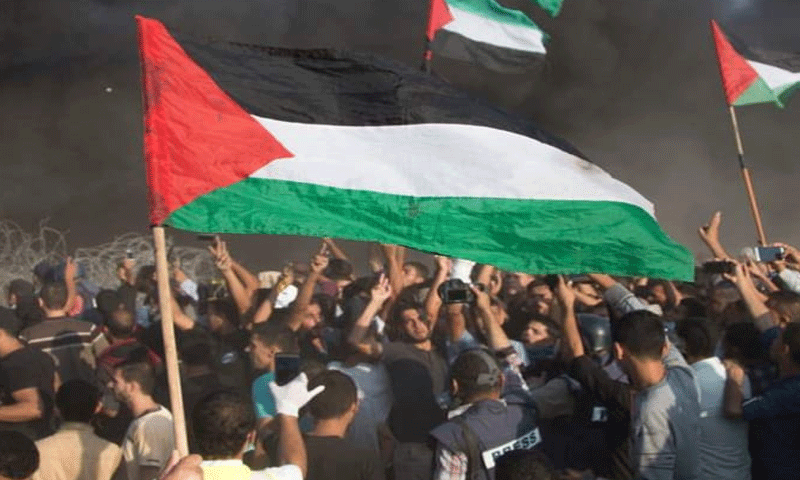
Belgium, Luxembourg & Malta Officially Recognize Palestine at UN General Assembly
France, the United Kingdom, Australia, and Canada also formally recognized the State of Palestine.

Gaza: In a significant diplomatic development, Belgium, Luxembourg, and Malta have officially recognized the State of Palestine during the ongoing session of the United Nations General Assembly.
The Prime Minister of Belgium emphasized the urgent need for full and unrestricted humanitarian access to Gaza, warning that the ongoing crisis is putting the two-state solution at serious risk. “The crisis in Gaza is endangering the prospects for a peaceful, two-state resolution,” he stated, calling for immediate steps to address the humanitarian catastrophe.
Addressing the Assembly, the Prime Minister of Luxembourg reiterated that a two-state solution remains the only viable path to lasting peace between Israel and Palestine. “Peace can only be achieved through a two-state solution. We must act now to preserve that hope,” he said.
Malta’s Prime Minister clarified that the recognition of Palestine should not be seen as a political win for Hamas, but as a step toward legitimate statehood and peace. “Recognizing Palestine is not an endorsement of Hamas but a commitment to peace and justice,” he affirmed.

Earlier this week, France, the United Kingdom, Australia, and Canada also formally recognized the State of Palestine. In a landmark statement, Canadian Prime Minister Mark Carney emphasized his country’s commitment to a peaceful future through genuine partnership. “We offer the Palestinian state a hand of partnership for a peaceful future,” Carney said.
He strongly criticized Israel’s continued construction of illegal settlements in the West Bank and the ongoing military operations in Gaza, which have led to the displacement of millions and the deaths of thousands of civilians. “These actions are in violation of international law,” he added.
Read more: PM Shehbaz attends UNGA Session from today with focus on Kashmir, Palestine
This collective recognition marks a significant shift in the international community’s stance on the Israeli-Palestinian conflict, signaling growing frustration over Israel’s military actions and settlement policies, and a renewed push toward a negotiated peace. As diplomatic pressure mounts, observers hope these recognitions will pave the way for renewed peace talks and greater international efforts to resolve the long-standing conflict.

Comments are closed, but trackbacks and pingbacks are open.