

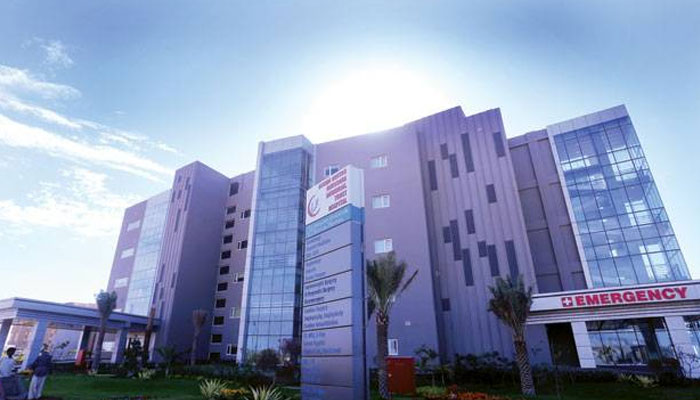

The medical profession is counted among the few fields in the world where knowledge, skill, compassion, and humanity blend so seamlessly that a physician transcends the role of a mere professional and assumes the form of a healer. It is often said that doctors are those whose hearts are filled with the spirit of serving humanity, but sometimes life presents moments when this statement transforms from a cliché into a living reality. I personally realized this truth when, due to a kidney ailment, I had to visit Bahria International Hospital Phase 8, where I met two remarkable personalities who not only upheld the honor of the medical profession but also set a shining example of human compassion—Major General (R) Arshad Mahmood and Dr. Moazzam Ayub.
When a person goes through illness, their psychological state also changes. Alongside physical pain, anxiety, fear, and uncertainty begin to surround the patient. In such circumstances, the hospital environment, the staff’s attitude, and the doctor’s manner of communication can alleviate half the illness on their own. My condition was much the same. The kidney problem had left me weak and worried, but the moment I entered the environment of Bahria International Hospital, I began to feel a strange sense of confidence and calm. The clean surroundings, organized system, and above all the courteous behavior of the staff were clear proof that treatment here is considered not merely a business but a service to humanity.
My first meeting with Major General (R) Arshad Mahmood left the impression of not just an administrator but also a deeply compassionate human being. His speech carried composure, his tone reflected kindness, and his demeanor exuded dignity. It was evident that throughout his professional life he has successfully combined discipline with service. Running a major medical institution successfully requires not only administrative competence but also vision, empathy, and the ability to carry the team along. These are precisely the qualities that distinguish the hospital under his leadership.
On the other hand, meeting Dr. Moazzam Ayub introduced me to the ideal image of a physician that we often read about in books. As a consultant nephrologist, his expertise is unquestionable, but what impresses most is his manner with patients. He explained the nature of my illness in a very simple and understandable way, answered every question patiently, and outlined the stages of treatment in such a reassuring manner that my fear began to subside. This is a quality not found in every doctor. Many possess knowledge, but the true excellence lies in practicing that knowledge with humanity.
It would not be an exaggeration to say that the trust and recognition Bahria International Hospital enjoys today are the result of the tireless efforts of such sincere and hardworking individuals. The reputation of any institution is built not by buildings but by people. Modern machinery and beautiful infrastructure certainly matter, but without compassionate hearts and dedicated hands behind them, institutions remain mere structures. Here, however, the situation is the opposite—humanity is at the center.
While sitting in Dr. Moazzam Ayub’s clinic, I observed another noteworthy aspect: despite the long queue of patients, there was neither fatigue nor irritation on his face. He treated each patient as if they were his most important one. This attitude indicates that he regards medicine not merely as a profession but as an act of devotion. In our society, patients often complain that doctors do not give enough time, do not listen fully, or create unnecessary fear. But here the situation was different—there was reassurance, guidance, and sincerity.
An important aspect of Major General (R) Arshad Mahmood’s administrative strategy also appeared to be his special focus on making the hospital system patient-friendly. From registration to diagnosis and then treatment, every stage appeared organized and clear. For a patient, it is a great relief not to have to endure unnecessary hassle. The true success of healthcare lies in providing the best possible treatment with the least mental stress for the patient, and this philosophy is visibly practiced in this institution.
It is also a reality that Allah grants healing through whom He wills. If medical professionals begin to attribute success solely to their own skill, they may lose the humility that is the soul of this profession. Yet the most striking quality in both of these personalities is precisely this humility and gratitude. During conversations, it was repeatedly felt that they consider their success a blessing from Allah and perform their duties with this awareness. This spiritual dimension is what transforms a good doctor into a great one.
My personal condition also improved noticeably. Along with the treatment, the encouragement and guidance I received significantly reduced the fear associated with the illness. When one goes through such an experience personally, one realizes how a smiling face, a reassuring sentence, and sincere advice can serve as powerful medicine for a patient. This is the human touch that is gradually becoming rare in modern medicine, yet here it was present in full measure.
Our society is in dire need of such medical institutions and such personalities who value ethical responsibility alongside professional excellence. The healthcare sector is not merely a service industry; it is a field directly connected to the survival of humanity. When doctors fulfill their responsibilities as an act of service, not only does the patient recover, but public trust in society also strengthens.
It is also worth mentioning that a successful hospital is not built by doctors alone but by the collective efforts of the entire team. At Bahria International Hospital, the cooperation of the nursing staff, technical team, and administrative personnel was also commendable. However, the direction of any institution is ultimately determined by its leadership, and in this regard, the vision of Major General (R) Arshad Mahmood and the medical expertise of Dr. Moazzam Ayub appear to provide a strong foundation.
As a patient, this experience did not remain limited to personal satisfaction; it also compelled me to reflect on how much the overall healthcare system in Pakistan could improve if other medical institutions adopted the same spirit. Pakistan does not lack talented doctors; the real need is to make the spirit of service an integral part of institutional culture.
In the end, my heartfelt prayer is that Allah grants further success to these distinguished personalities, blesses them with health and energy to continue serving humanity, and enables many more people to receive healing through their hands. Such individuals are in fact precious assets of society, quietly lighting the lamps of hope through their service to humanity. For me, this experience was not merely a medical consultation but a living lesson in compassion, professional integrity, and God-consciousness—a lesson that is comforting to remember and a responsibility to share.


Comments are closed, but trackbacks and pingbacks are open.