
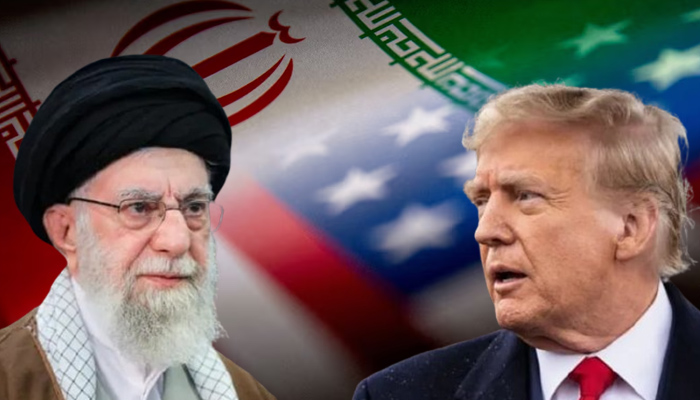

If one were to suggest that the recent actions by Israel and the United States against Iran are rooted in strategies conceived as far back as 1974, during the first Islamic Summit Conference in Lahore, and that these plans gained real momentum only after Pakistan emerged as a nuclear power in 1998, it may at first sound startling. Yet, if approached not as an emotional assertion but as a thoughtful hypothesis, it opens windows into a historical continuum where decisions do not crystallize in moments but evolve over decades.
What the world is witnessing today—the explosions, statements, and military maneuvers—is not merely the noise of the present moment; it is the echo of a long and intricate global process. To label Iran’s attacks or the responses they provoke as merely “temporary military skirmishes” is to flatten a profoundly complex reality. These events are, in truth, manifestations of the ongoing struggle within the international system, a struggle that is reshaping the delicate equilibrium of power, fear, and dominance.
The tension between Iran and Israel is no sudden storm; it is the culmination of clouds long in the gathering. The difference now is that this struggle has become more visible, more brazen, and infinitely more perilous. It resembles less a full-scale war than a game of strategic signaling, in which each side seeks, through missiles and drones, to delineate its red lines.
The danger lies in the fact that when messages are wrapped in gunpowder, even the slightest misunderstanding can escalate into a major confrontation. History repeatedly teaches that wars often begin not from intent but from miscalculations—an overreliance on power over prudence—and sometimes, by the time the error is realized, there is no time left for regret.
This crisis in the Middle East also exposes another fundamental reality: the world is no longer under the clear control of a single power. America’s attention is stretched across multiple fronts; Europe is gripped by uncertainty about its own security; and China and Russia appear preoccupied with constructing alternative global frameworks. The international system has entered a phase in which power is fragmented, and traditional rules, norms, and legal frameworks have lost their authority.
In such an environment, regional conflicts take on far more dangerous dimensions. Into this vacuum, history, memory, and fear converge to forge a new language of politics—a language that often gives birth to confrontation while stifling dialogue.
Looking back at the 1974 Islamic Summit Conference, one realizes it was far more than a mere diplomatic gathering; it was a symbolic moment. It was the moment when the Muslim world, for the first time, asserted its presence with collective dignity. This declaration gave rise both to hope and apprehension—hope for those who longed to see an autonomous Islamic voice, and anxiety for those who sought to maintain the global balance of power at all costs.
It is at this juncture that some analysts raise a crucial question: did concerted efforts to fragment the Muslim world gain momentum after this very gathering? The answer, history suggests, is often yes. Powerful systems tend to wield time, division, and internal weaknesses as instruments rather than relying solely on direct confrontation—and that, indeed, is what unfolded.
Consider the fates of several heads of state who participated in that conference—from King Faisal to Zulfiqar Ali Bhutto, and later from Saddam Hussein to Muammar Gaddafi. On the surface, their destinies might seem the result of individual circumstances, yet beneath them lay a hidden “cautionary tale.”
Intellectual honesty demands that we distinguish between conjecture and evidence, but it must also be acknowledged that the politics of power in the Middle East and South Asia has repeatedly produced events where change appears less a reflection of popular will and more an instrument of global interests. It is precisely at such junctures that history does not remain silent; it raises profound questions.
The second phase of this game was tied to installing preferred governments across the Middle East. In some places, the flames of civil war were stoked; in others, power was redistributed under the guise of reforms; and in yet others, sovereignty was exchanged for promises of security. The result is that today, many states in the region appear strong outwardly, yet are hollow at their core, with decision-making often captive to external balances rather than public interest.
In this landscape, Iran stands out as unique. It openly embraces a narrative of resistance—a narrative that has made it a perpetual target of pressure, sanctions, and military threats.

Pakistan may not be a direct party to this conflict, yet the reverberations of global politics do not respect borders. Increases in oil prices, uncertainty in international markets, and disruptions to supply chains hit the most vulnerable economies first. For a nation already under pressure, absorbing such external shocks becomes an arduous task.
At the same time, Pakistan carries symbolic significance as the only nuclear power in the Islamic world—a symbol that, for some, represents balance, and for others, a potential threat.
The diplomatic front is even more intricate. Iran is a neighbor; the Gulf states are economic partners; and the Western world has long held the keys to the global financial system. In such circumstances, neutrality, if not channeled into an active, cautious, and forward-looking strategy, remains nothing more than a slogan. A single misstep in the wrong direction can undermine not only foreign policy but also internal stability.
Regional wars often affect societies more than they do borders, fueling sectarian tensions, proxy narratives, and political intolerance—fires that smolder long after the initial sparks. In Pakistan too, despite earnest efforts, these embers continue to burn.
In recent years, South Asia has been viewed on this larger chessboard as a single pawn. Observers have often seen the tensions between India and Pakistan as a “tester,” a measure of defensive capabilities, responsiveness, and diplomatic support. Pakistan has demonstrated its defensive strength robustly, yet the broader Islamic world has largely remained confined to statements.
China is a factor that cannot be ignored, though its approach is typically cautious and long-term. Meanwhile, Pakistan’s relationships with Afghanistan and Iran, though burdened by history, remain bound by geographical imperatives. If the goal is to weaken regional alignment, sowing distrust among neighbors is a proven strategy—since a fragmented neighborhood leaves any country isolated. This is precisely what recent attacks on Afghanistan have demonstrated.
Beneath all these layers lies a fundamental question: is this entire story driven solely by the machinations of non-Islamic powers, or are the internal weaknesses of the Muslim world equally part of the narrative? We must examine both dimensions with intellectual honesty. External pressure is one thing, but internal divisions, economic fragility, and institutional instability are the cracks through which that pressure seeps. History bears witness that strong societies endure external conspiracies, while weak ones fracture under even minor shocks.
The question is not whether war will spread in the Middle East, but to what extent we can control our decisions in this uncertain global environment. In today’s world, power is measured not only by military strength but also by economic resilience, internal cohesion, and diplomatic foresight. Nations survive that prioritize prudence over emotion and strategic foresight over reactive impulses.
Wars may be fought on distant lands, but their consequences knock on the doors of every country caught unprepared or adrift. History teaches that direction is rarely determined amid the clamor of events—it is chosen in silence.
In this context, it would not be unreasonable to suggest that, before any major action against Pakistan, the logical strategic objective would be to neutralize its potential and likely allies. In the game of chess, a direct attack is always the final move; first, the pieces surrounding the opponent are removed to minimize resistance. In this perspective, if the United States and Israel succeed in installing a government of their choice in Iran, the strategic landscape of the region could be transformed entirely. An Iran steered toward conciliation rather than resistance would not only relieve pressure on itself but could also make the regional encirclement around Pakistan far more effective. For Israel, Iran’s geographical and intelligence significance could then be leveraged against a Pakistan weakened by economic crises with comparatively greater ease.
Undoubtedly, Pakistan’s most direct threat comes from India, and it is no longer a hidden truth that the current Indian leadership maintains close strategic ties with Israel. The defense cooperation, intelligence sharing, and narrative alignment between the two countries indicate that intellectual consensus on any aggressive plan against Pakistan already exists. Yet, neither the United States nor Israel has an interest in pushing India into a full-scale war. The reason is not merely military but also economic: India is an emerging market, a vast ocean of consumers, rich with opportunities for Western investment, technology, and profit. A war that devastates this market would deprive these powers of decades-long economic gains.
A more calculated strategy, therefore, appears to involve using India not as a direct adversary but as an instrument of pressure—a tool to keep Pakistan in a constant state of defensive readiness through border tensions, limited operations, and diplomatic pressure, without igniting the flames of full-scale war. In this approach, the real game is played behind the scenes, where sanctions, diplomatic isolation, economic fragility, and regional instability achieve what artillery and weapons cannot.
This is precisely why the nature of the threats facing Pakistan cannot be assessed solely through a military lens. The real danger lies in encirclement across economic, diplomatic, and regional dimensions simultaneously. Strains in relations with Iran, Afghanistan, or other neighboring states are not merely bilateral disagreements; they become part of a larger strategic void. In the politics of power, isolation is the costliest weakness, and history bears witness that, before major wars, such isolation is often prepared silently.
Against this backdrop, Pakistan’s most pressing challenge is not only identifying who conspires against it but determining the extent to which it can cultivate internal stability, regional cohesion, and economic sovereignty. In this cold and calculated game of global politics, the states that endure are those that do not merely monitor the intentions of their adversaries but also recognize and rectify their own vulnerabilities with equal seriousness.


Comments are closed, but trackbacks and pingbacks are open.