
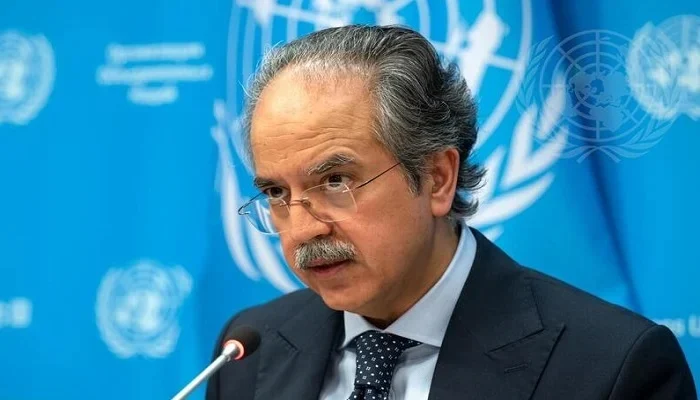

Islamabad – (Staff Reporter/Web Desk) – Pakistan’s Foreign Secretary Asim Iftikhar Ahmad has spoken out about the worsening situation in the Middle East, and his words are getting a lot of attention. In a recent interview with Geo News, the Asim Iftikhar Ahmad statement made it clear that Islamabad wants to see the fighting stop through talks, not more violence.
He explained that Pakistan is working hard behind the scenes. The goal is simple: bring down tensions, get a ceasefire in place, and push both sides back to the negotiating table. According to him, this is the only real path forward.
Ahmad pointed out that the United Nations already has the tools needed to solve this kind of crisis. He reminded everyone that the UN Security Council Charter was built to settle disputes through negotiation, not warfare. That’s the approach Pakistan wants the world to follow right now.
Still, the foreign secretary didn’t sugarcoat things. He admitted that the region is heading in a troubling direction. But he also said Pakistan understands it has a responsibility to help calm things down instead of standing on the sidelines.
This isn’t the first time Pakistan has stepped into a tense situation. Ahmad brought up the earlier standoff between Iran and the US, saying his country was one of the first to jump into diplomatic efforts back then. He said the whole world was watching how that conflict would unfold, and Pakistan made sure to play an active part in easing it.
Another major point he raised was the Makkah agreement, a deal that brings together Pakistan, Saudi Arabia, and Turkiye. Ahmad said all three nations are working together with one shared aim: stability and peace across the region. He noted that Pakistan is now taking on even more responsibility under this agreement.
The timing of these comments matters a lot. The wider crisis in the Middle East keeps growing, affecting Gulf security, energy supplies, and important shipping routes that many countries depend on. Reports from Reuters have also pointed out that Pakistan is under pressure to balance two roles at once, acting as a peacemaker while also honoring its defense ties with Saudi Arabia through the Makkah agreement.
This isn’t new territory for Pakistan either. During the earlier US-Iran tensions, Islamabad kept pushing for calm and dialogue. Geo News had previously reported that Pakistan used the Islamabad MoU framework to keep communication channels open, encouraging all sides to return to peaceful talks instead of escalating things further.
Ahmad also pushed back against the idea that the United Nations isn’t doing enough. He firmly believes the UN still plays an important part in solving conflicts around the world, even when progress feels slow.
Before wrapping up, he touched on two other long-standing issues, Palestine and Kashmir. He said both disputes need to be resolved based on existing UN Security Council resolutions, showing that Pakistan’s stance on global peace isn’t limited to just one region.
Overall, the Asim Iftikhar Ahmad statement paints a picture of a country trying to stay actively involved in global diplomacy, even as tensions rise elsewhere.
Comments are closed, but trackbacks and pingbacks are open.