
Aleem Khan Predicts Formation of Multiple New Pakistani Provinces
Tensions between Pakistan and India escalated following a deadly attack on tourists in Pahalgam

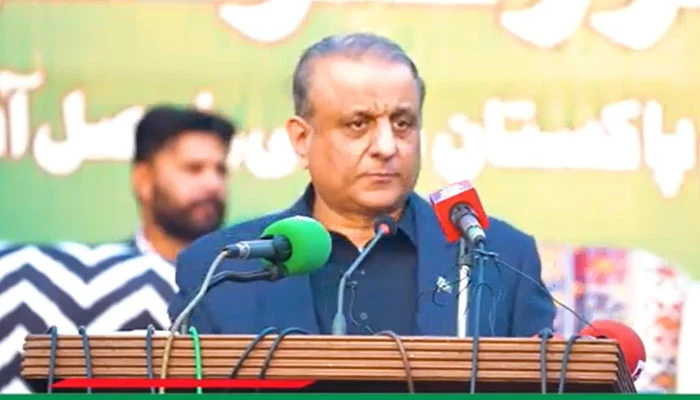
SHEIKHUPURA: Federal Minister for Communications Abdul Aleem Khan has said that Pakistan will “definitely” see the creation of smaller provinces in the future, arguing that the move would strengthen governance and improve public service delivery.
Speaking at the Istehkam-e-Pakistan Party (IPP) workers’ convention in Sheikhupura on Sunday night, the minister said that forming three provinces each in Sindh and Punjab — and similarly in Balochistan and Khyber Pakhtunkhwa — would enhance administrative efficiency. He added that neighbouring countries already operate with several smaller administrative units.
The proposal, however, remains contentious. The Pakistan Peoples Party (PPP), a key federal ally, has repeatedly rejected the idea of new provinces in Sindh. Last month, Sindh Chief Minister Murad Ali Shah warned that the PPP would not accept any move against Sindh’s interests, dismissing talk of dividing the province as baseless.
Read more: PPP’s Faisal Rathore elected as AJK PM after winning 36 votes

His statements followed remarks by the MQM-P, which suggested it may pursue new provinces through the upcoming 28th Amendment.
During his address, Abdul Aleem Khan also praised Chief of Army Staff (COAS) and Chief of Defence Forces (CDF) Field Marshal Syed Asim Munir, claiming that under his leadership, Pakistan had successfully responded to India during the recent military confrontation.
Earlier this year, tensions between Pakistan and India escalated following a deadly attack on tourists in Pahalgam, in Indian Illegally Occupied Jammu and Kashmir (IIOJK)—an attack India alleged was Pakistan-backed, a claim Islamabad denied, offering instead to join a neutral investigation.
According to Pakistani officials, the clashes that followed resulted in the downing of several Indian aircraft and drones. The hostilities lasted nearly 87 hours before a US-brokered ceasefire brought an end to the confrontation on May 10.


Comments are closed, but trackbacks and pingbacks are open.