
AJK Moves to Strengthen Public Health System Across the Region
Strict Measures Announced to Improve Healthcare Services and Drug Safety

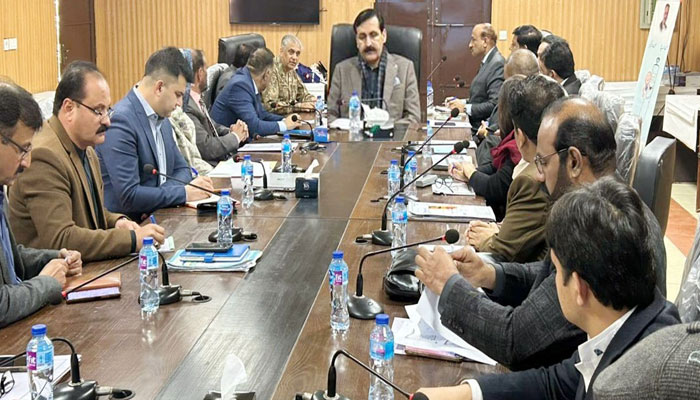
Muzaffarabad: A high-level meeting on public health reforms in Azad Jammu and Kashmir (AJK) was held under the chairmanship of AJK Minister for Public Health, Syed Bazil Ali Naqvi. The meeting was attended by Secretary Health Brigadier Amir Raza Tipu, Director General Health Dr. Mumtaz Ahmed, Director Health Services (CDC) Dr. Muhammad Farooq, Provincial EPI Program Manager Dr. Sardar Manzoor Hussain, Chief Drug Controller Fauzia Ashraf, District Health Officers of all districts, and Deputy Drug Controllers.
During the meeting, officials presented detailed reports on the current state of health services across AJK. These included updates on Basic Health Units, Rural Health Centers, Tehsil Headquarters hospitals, and other medical facilities. The reports highlighted active and inactive centers, availability of staff, shortages of doctors, specialists, paramedics, and support workers, along with issues in the supply of medicines, stock management, and the need for budget improvements. Infrastructure problems such as electricity, water supply, equipment shortages, and building repairs were also discussed, as well as ambulance shortages, staff absenteeism, and administrative challenges in remote areas.
Drug inspectors shared their reports on licensing matters, pending cases, the absence of a Drug Court, and difficulties in combating fake and substandard medicines. They also highlighted challenges in monitoring medical stores and delays in laboratory testing of drug samples.
After reviewing all reports, Minister Bazil Ali Naqvi issued strict orders. He directed that all Basic Health Units must become fully functional within the next ten days. He also announced that he would soon inaugurate the newly functional operation theatres and wards at THQ Hospital Dhirkot. The minister stated that he, along with the Secretary Health and DG Health, would conduct surprise visits to check facilities, staff attendance, and service delivery. He made it clear that District Health Officers would be held directly responsible for any negligence, poor performance, or lack of services, and strict departmental action would be taken against those who fail to meet expectations.
Read more: Public Responsibilities for the Growth of Tourism in Pakistan & AJK

The minister also announced a zero-tolerance policy against fake, substandard, unregistered, and expired medicines. Drug inspectors were instructed to carry out regular and surprise inspections of pharmacies and medical stores, take immediate action where illegal medicines are found, and enforce penalties such as license suspension, shop sealing, and registration of cases. A complete digital list of registered and unregistered drug outlets will also be prepared.
Plans were finalized to fully activate the Mirpur Drug Testing Lab and upgrade district-level laboratories with modern equipment to speed up testing of suspicious medicines. All districts will submit regular drug quality control reports to ensure strict monitoring.
The minister stressed the importance of transparency and accountability in the health system. He called for quick resolution of public complaints, frequent inspections of health facilities, and immediate action against poor performance. He stated that restoring public trust in health services is a top priority.
The minister also advised the public to check the registration and license numbers of medicines before purchase and to report any suspicious drugs or illegal medical stores to district authorities.
Officials attending the meeting assured full cooperation in implementing government directives. Experts believe that if these measures are carried out effectively, AJK’s public health system—especially drug quality, service delivery, and monitoring—could see significant and lasting improvements.


Comments are closed, but trackbacks and pingbacks are open.