

AJK Awami Action Committee- Some Bitter Facts
(Abdul Basit Alvi)
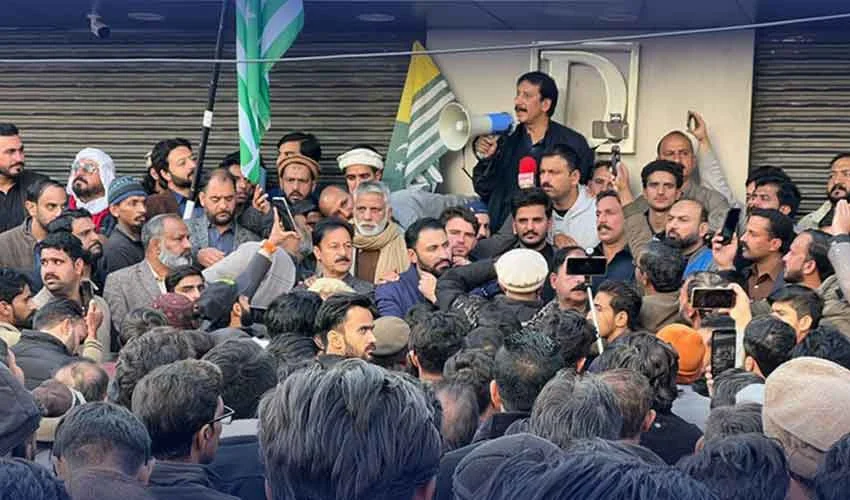
The Awami Action Committee (AAC), which originated as a pressure group primarily composed of traders, civil society, and professionals in Azad Jammu and Kashmir (AJK), rose to prominence in early 2024 through strikes and negotiations that led to a 23 billion rupee subsidy package. However, public optimism quickly soured as the AAC accused the government of slow and insincere implementation. The group intensified its demands in 2025, including the controversial call for abolishing twelve reserved legislative seats for Kashmiri migrants from Indian Illegally Occupied Jammu and Kashmir, a move critics argue would undermine Pakistan’s political stance on Kashmir, weaken constitutional arrangements, and alienate migrant Kashmiris.
In addition, their call to cut political perks and security measures, while acknowledged as necessary by some, raised concerns from security experts who warned such cuts could destabilize governance in a region near the volatile Line of Control. Analysts also expressed concern over the AAC’s coercive tactics, its demands for exclusive control over hydropower, and the growing suspicion of foreign influence behind the group, further fueled by its association with anti-state rhetoric and separatist elements at protests.
The AAC’s actions have drawn widespread criticism for radicalizing youth and using street protests as a means of blackmailing the government, establishing a dangerous precedent for political discourse in the region. This has resulted in significant economic disruption, particularly for AJK’s local businesses and tourism industry, further aggravating public frustration. The AAC’s involvement in violent protests, which led to casualties, and its exploitation of these incidents to generate political leverage, has deepened divisions. The Pakistani government’s response, including a high-level diplomatic move to Muzaffarabad, was seen as a positive step, offering a contrast to the AAC’s disruptive tactics. The group’s persistence in blocking key entry points to AJK has raised alarms, with critics viewing it as a threat to Pakistan’s unity and sovereignty.
Despite the AAC’s claims of fighting for better governance, its failure to distance itself from anti-state elements has eroded its credibility, leaving it facing accusations of political opportunism and foreign influence, while the majority of AJK’s citizens call for peaceful, lawful avenues of protest and resolution.
Unfortunately, the Awami Action Committee has little to do with the genuine Kashmir cause or the broader freedom movement. At a time when experts are strongly criticizing the Modi government’s repressive tactics against Kashmiri women leaders, the AAC has remained conspicuously silent. The convictions of Dukhtaran-e-Millat chief Aasiya Andrabi and her associates Nahida Nasreen and Fehmeeda Sofi, after they had already spent eight years in detention before a verdict, have exposed India’s harsh system of political repression in Indian-illegally occupied Jammu and Kashmir.

Legal experts argue that dissenters are deliberately targeted under draconian laws, forced into prolonged trials far from home, and eventually convicted on weak charges, while the real punishment is inflicted long before any judgment is delivered. They emphasize that the actual “crime” of these women is political, as Andrabi has consistently advocated the Kashmiri right to self-determination and resisted attacks on Muslim identity and religious freedoms. In contrast, the Awami Action Committee has allegedly failed to raise its voice on such core Kashmir-related issues and instead advances demands that do not meaningfully benefit the general public. Although it claims to represent traders, it has been unable to ensure fair pricing or quality standards even for basic food and household items. When the federal government reduces petrol and diesel prices, transportation costs and market prices are rarely adjusted accordingly, further burdening ordinary people. Many citizens believe the AAC functions as a protector of traders and shopkeepers rather than a representative of public interests, acting as a shield for them while neglecting the real problems faced by the population.
Critics argue that the committee’s primary objective appears to be pressuring the state and challenging its writ rather than pursuing constructive solutions. The culture of force, intimidation, and disruption associated with the AAC is widely rejected in AJK, where such methods are seen as alien to local traditions. Analysts and concerned citizens stress that Kashmiris should be granted rights equal to those of Pakistanis and that prices and facilities should be aligned with those in Pakistan through lawful means, not coercion. They warn that repeatedly conceding to pressure tactics amounts to allowing the state to be blackmailed.
Many believe that constant threats of sit-ins and shutdowns should no longer be entertained, as these so-called leaders lack sustainable solutions and often resort to destructive actions such as damaging electric poles or threatening communication infrastructure. There is a growing view among mature voices that anyone responsible for vandalism or destruction should be held accountable and made to repair the damage at their own expense, rather than being rewarded with political attention. The people of Kashmir, they argue, will ultimately see through hollow leadership that thrives on disruption instead of constructive engagement, and lasting progress will only come through responsibility, restraint, and genuine concern for public welfare.
AJK Information Minister Urges Students to Use Technology and Social Media Positively
Regrettably, the Awami Action Committee is now sending a powerfully negative and highly damaging message to the youth: the notion that the resolution of their demands can only be achieved through the raw power of the street, mob action, and outright intimidation. This is a fundamentally flawed, dangerous, and unsustainable message that cannot be supported or appreciated by mature, responsible citizens and political analysts. Ultimately, the people of AJK and its youth yearn for peace, progress, and lasting stability, not division, perpetual hostility, or chaos. Having borne the immense, unique burdens of living in a globally disputed region for decades, their collective focus is and should be on sustainable development, securing jobs, improving healthcare, and enhancing education.
All political movements must resolutely resist the temptation to become instruments of national disruption or to serve the malicious interests of foreign agendas. National unity, the consistent strengthening of institutional capacity, and adherence to economic realism must serve as the primary and unwavering guiding principles for all reform efforts going forward. If tactics based purely on pressure and coercion are allowed to become normalized, they will inevitably destabilize not just AJK but the entire federation of Pakistan.
Only through a sustained commitment to genuine cooperation, unwavering accountability, and honest, transparent engagement can the region hope to move forward in a way that truly benefits both the people of AJK and the national interest of Pakistan. The patriotic people of AJK have strongly and publicly rejected the politics of division and hate, clearly demonstrating their profound isolation from such unsavory and divisive political tactics. The path forward lies not in the cacophony of the street but in the reasoned discourse of dialogue, within the framework of law, constitution, and an undiluted commitment to the greater Kashmiri cause and the integrity of Pakistan.


Comments are closed, but trackbacks and pingbacks are open.