
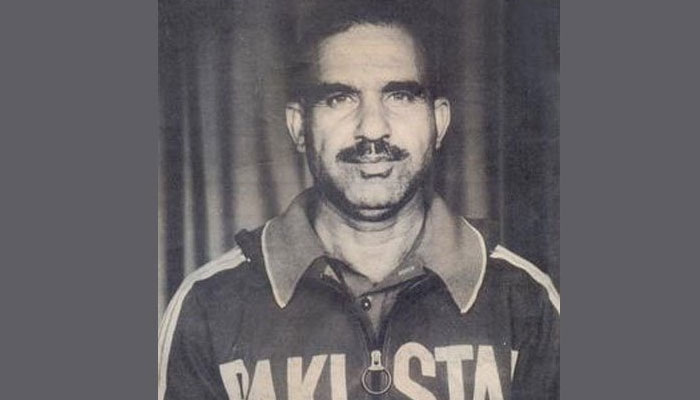

In the restless, turbulent tides of time, many names vanish like footprints carved in shifting sand. Yet, there are some souls whose legends travel on the breath of the wind—icons whose rhythmic strides create a resonance in the blood of generations for centuries to come. On the horizon of history, such a luminous star rose by the name of Subedar Abdul Khaliq. He was the son of Chakwal whose lightning speed did not merely tear through the track, but echoed the name of Pakistan in the grandest arenas of the world. This is more than the biography of an athlete; it is a saga of a “Bird” that gave a newly liberated nation its first flight of global dignity. Known to the world as the “Flying Bird of Asia,” he was, in truth, the blazing sun of the Chakwal desert, whose intensity left his rivals drenched in sweat on the world’s tracks.
This story begins on March 23, 1933, in the dust of a small, anonymous village called Jand Awan. It was a place where poverty and simplicity reigned, yet honor and resilience were kneaded into the very soil. Born in the home of Master Sajawal Khan, this child carried a natural electricity in his feet of which he was perhaps unaware. Running through the unpaved alleys of his youth and treading the paths to Government Middle School Hasola, he never dreamed that one day the world’s gaze would be tethered to the movement of his feet. His first encounter with destiny took place in 1948 at Pir Phullai, during a traditional festival of Pir Koudi. Amidst the scent of the earth, the beat of the drums, and the roar of the villagers, a youth emerged like a bolt of lightning, outclassing his opponents. The keen-eyed coaches of the Pakistan Army present there stood transfixed. They realized this was no ordinary clay, but pure gold that, if refined, could illuminate Pakistan’s name on the global horizon. From here, the Bird spread its wings under the Army Boys Scheme.
As Abdul Khaliq’s journey progressed from the training center at Attock to international arenas, the world saw that when this sprinter from a young nation stood on the track, his eyes held a passion for victory that made the impossible look effortless. The 1954 Manila Asian Games were a historic crossroads where Khaliq completed the 100-meter sprint in just 10.6 seconds, winning not only the Gold Medal but setting a new Asian record. This was the first international athletics medal in Pakistan’s history, signaling that the Green Crescent was ready to bloom in the world of sports.
It was an afternoon in 1956 when a sea of humanity surged at the Delhi Stadium. Under the heavy shadows of Pak-India tensions, a peculiar sensation hung in the air as Khaliq stepped onto the track. Legends like India’s Milkha Singh and Levi Pinto stood against him. At the crack of the starter’s pistol, Khaliq did not merely run; he moved like a desert storm destined to sweep everything away. He crossed the finish line in 10.4 seconds, shattering the Asian record once more. Witnessing this, the guest of honor, Indian Prime Minister Jawaharlal Nehru, was stunned. He summoned Khaliq and uttered that historic sentence which remains a jewel on the brow of history: “Khaliq, you do not run, you fly! You are the Flying Bird of Asia!” This was not just a title; it was an admission of greatness by the leader of a rival nation—a talent so profound it blurred the lines of borders.
This legacy of speed was not a solitary one. His younger brother, Abdul Malik, was also the pride of this soil. It was a rare sight in Pakistan’s history when two brothers would step into international arenas together, carrying the Green Crescent flag. Abdul Malik proved his mettle in the 110-meter hurdles and relay races at the 1960 Rome Olympics. Together, they proved that the soil of Chakwal is not barren; it produces sons who know the art of raising Pakistan’s head in pride. Their household became a sports academy where the day began with the dust of the track and ended with the shimmer of medals.
Yet, Khaliq’s greatness was not limited to the speed of his feet; his true test came in the thorns of 1971. When the clouds of war gathered, this great athlete stepped forward as a true soldier to defend the borders. Taken as a Prisoner of War (POW), the Indian authorities recognized him. Because of his global fame and the title of “Flying Bird,” he was offered release with special privileges. But this honorable son gave a reply that remains a metaphor for patriotism: “My freedom is conditional upon the freedom of my fellow prisoners. I cannot taste liberty alone while leaving my brothers at the mercy of the enemy.” This was a character that proved a great player is higher than the Himalayas, not just in the field, but in the heights of his soul.
Today, years later, a certain sadness takes hold when we look back. We did not give this hero the station he deserved. Our neighbors immortalized their athletes through cinema, yet we allowed our Bird to be forgotten. However, a ray of hope has appeared. The news that Hamza Ali Abbasi is portraying this legend in the upcoming film “Abdul Khaliq: The Flying Bird” is a breath of fresh air. This film will be more than entertainment; it will be a vision for the new generation, showing them that behind heroes like Arshad Nadeem lies the blood, sweat, and penance of ancestors like Abdul Khaliq.

Abdul Khaliq’s legacy lives on through his son, Muhammad Ejaz. Ejaz is not just a name; he is a symbol of a new era. Serving as a National Coach in the Punjab Sports Board, his greatest masterpiece is the foundation of Blind Archery in Pakistan. By placing a bow and arrow in the hands of the visually impaired, he proved that if the resolve is young, one can hit the target even without the light of the eyes. He is still striving to fulfill his father’s unfinished dreams, a testament that heroes never die; they live on through their children and students.
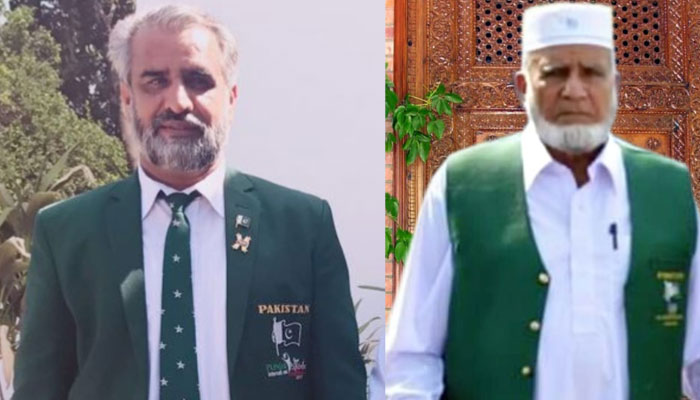
On March 10, 1988, this luminous star set at the CMH Hospital in Rawalpindi. Today is March 10, the anniversary of that setting star. Today, the winds of Chakwal are heavy with grief, and the memories of his wife, Mrs. Wilayat Bibi, are fresh—she who honored the companionship of a great hero. Her final wish, that the Chakwal Stadium be named after her husband, is the cry of the entire nation. This demand is not a plea for charity; it is the right of the son who gave Pakistan 36 international Gold Medals. It is a moment of reflection for visionary leaders like Secretary IPC Mohyuddin Wani to modernize sports and give such heroes the place that history has reserved for them.
Abdul Khaliq’s life is a beacon for the youth. Even today, the same spark exists in this soil; even today, some bird is spreading its wings on the footpaths of Chakwal. We must honor our heroes and carry their stories to every home. Abdul Khaliq is not just a person; he is a movement, a passion, and a flight whose limits are beyond the heavens.
ستاروں سے آگے جہاں اور بھی ہیں
ابھی عشق کے امتحاں اور بھی ہیں
In the same fierce winds where Khaliq ran, he ran not just for medals, but for the pride and ego of a nation. Every leap was a message that we know how to rise after we fall. Today, we must not limit his memory to a single day; we must make him a part of our curriculum, our playgrounds, and our national identity. Until the Chakwal Stadium bears his name, our duty remains unfulfilled. Let us pay tribute to this legend and give his name the immortality it deserves.
فرد قائم ربطِ ملت سے ہے، تنہا کچھ نہیں
موج ہے دریا میں اور بیرونِ دریا کچھ نہیں
Abdul Khaliq is alive even in death, for he is the metaphor for Pakistan’s honor that can never decline. His speed still flows in our dreams, and his resolve is the guardian of our courage. That Bird of Asia still asks us: Are we ready to fly once more?


Comments are closed, but trackbacks and pingbacks are open.