

For decades, cancer has remained one of humanity’s most relentless enemies not merely because of its complexity, but because it is often discovered too late. Medical science has long agreed on one central truth: early detection saves lives. Yet, for millions across the world, that opportunity arrives after precious time has already been lost.
Against this backdrop, recent research by a Pakistani scientist working in the United Kingdom offers a compelling reason for cautious optimism.
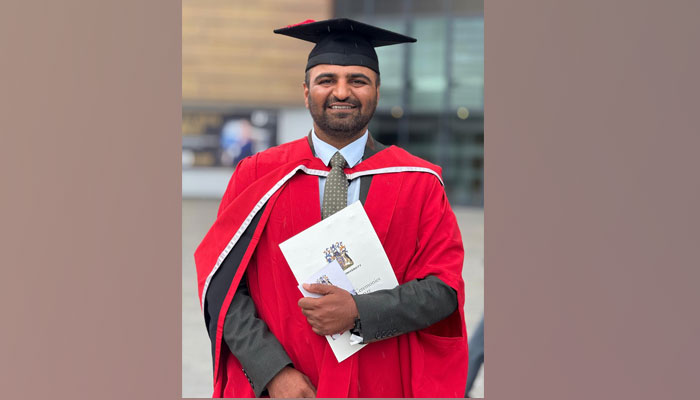
Zeshan Haider Raza, a bioinformatics researcher, has developed an artificial intelligence based system capable of identifying cancer at a genetic level with a reported accuracy of 98 per cent. Unlike conventional diagnostic methods that rely on visible tumours, invasive biopsies or costly imaging, this system analyses genetic data to detect the earliest molecular changes associated with cancer often long before physical symptoms appear.
The implications of such a development are significant. According to global health estimates, nearly 10 million people die from cancer each year, a figure expected to rise sharply by 2040. In many cases, survival rates exceed 90 per cent when cancer is detected early, but drop drastically once the disease progresses. The difference between recovery and loss frequently depends on timing.
Raza’s research analysed nearly 50,000 genes using multiple AI models, with the Random Forest algorithm delivering particularly strong results. The system demonstrated an ability to distinguish between healthy and cancerous genetic patterns across various cancer types, including breast, lung and liver cancer. If validated through further clinical trials, this approach could transform cancer screening into a faster, less invasive and more affordable process.
Importantly, Raza has emphasised that the technology is intended to support not replace medical professionals. Used alongside clinicians, such tools could help identify high-risk patients earlier, guide preventive treatment and reduce the burden on healthcare systems already under strain.

What makes this work especially noteworthy is its ethos. Raza has pledged to make the research openly accessible to the global scientific and medical community. In a world where cutting-edge healthcare technologies often remain confined to wealthy nations, this commitment carries particular relevance for developing countries like Pakistan, where late diagnosis remains a major challenge.
Pakistan has one of the highest cancer mortality rates in the region, largely due to limited screening facilities and delayed detection. AI-powered genetic screening, if adapted responsibly and ethically, could help bridge this gap bringing advanced diagnostics closer to underserved populations.
Naturally, caution is warranted. High accuracy in research settings does not automatically translate into immediate clinical application. Regulatory approvals, large-scale trials and ethical safeguards remain essential steps before such systems can be deployed widely. Science advances through verification, not headlines.
Yet, even with these caveats, the significance of this research cannot be dismissed. It highlights not only the growing role of artificial intelligence in medicine, but also the contributions of Pakistani scientists on the global stage often working far from home, yet addressing problems that disproportionately affect their country of origin.
The fight against cancer is far from over. But breakthroughs like this suggest that the balance may gradually be shifting from late reaction to early prevention, from uncertainty to informed intervention.
If nurtured with responsibility, collaboration and scientific rigor, this work could mark the beginning of a new chapter in global cancer care one where detection comes early enough for hope to prevail.


Comments are closed, but trackbacks and pingbacks are open.