

By Malik Muslim Raza Awan
17 November 2026
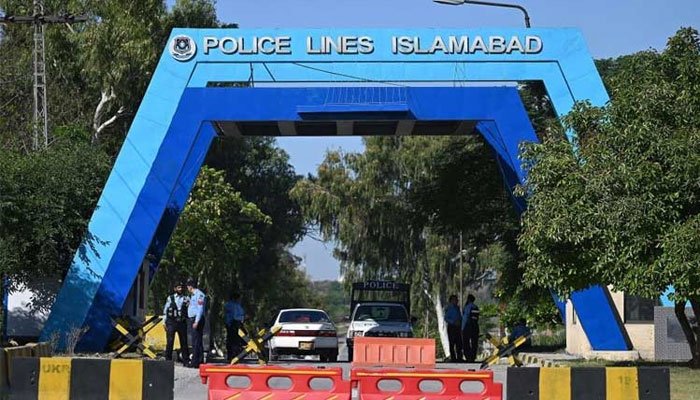
Fatima Asghar was thirteen when she died. Police say she had been working at the official residence of a senior FIA officer in Islamabad. Her death remains under investigation.
In Islamabad, the Domestic Workers Act prohibits anyone under sixteen from working in a household in any capacity. Fatima was three years below that minimum. How did a thirteen-year-old come to work in an official residence in the city from which Pakistan is governed? Who was supposed to notice, and who had the authority to do something about it?
How many girls are working behind closed doors?
Islamabad’s 2023–24 survey estimated that 15,180 children aged five to seventeen were in child labour across the capital territory. Among girls aged twelve and thirteen, 1.9 percent were in child labour. The survey groups those two ages together and covers different kinds of work, so it gives us no separate count of thirteen-year-old girls employed in private homes. About one in five children in child labour in the capital territory reported abuse at work.
Across Pakistan’s four provinces and Islamabad, surveys conducted between 2019 and 2024 add up to about 8.6 million children in child labour, including about 6.6 million in hazardous work. Those estimates come from different survey years. Worldwide, the International Labour Organization and UNICEF estimated that nearly 138 million children were in child labour in 2024, including 54 million in hazardous work.
What Rs30,000 a month asks of a father
Imagine a father earning Rs30,000 a month. The electricity bill is due, there is barely enough flour left in the house, and he needs petrol or bus fare to get to work tomorrow. He can ask the grocer for another week. He can put off buying shoes. A doctor’s fee and a trip to the pharmacy can undo whatever arrangements he has made. Even a wedding in the family leaves him wondering whether he can afford to go and how he will explain his absence if he stays home.
Then someone offers his son work at a mechanic’s shop. Someone else says his daughter can earn a little cleaning houses. A father who once imagined seeing his children finish school begins to count what each of them might bring home. He tells himself the boy will learn a trade and the girl may get a meal where she works. After enough evenings spent wondering how to feed them, he can barely afford to think beyond the next one.
This is one of the cruellest things poverty does to a parent. It makes him count how much it costs to feed the children he loves, then count on those same children to feed the family. When his son brings home his first wages, he may feel relief before he feels anything else. There is flour in the house again. By morning, the boy is expected back at the workshop.
Two childhoods on the same street
Across Pakistan, one child leaves home with a schoolbag while another opens the shutters of the workshop where the first child’s family gets its motorcycle repaired. A mother pays for her daughter’s tuition while a girl of the same age washes dishes in her kitchen. One girl is asked what she wants to become. The other is asked why she is taking so long.
Sometimes we say the girl is like one of the family. Would we let one of our own children miss school to do her work? Would we expect our own daughter to spend the night in an employer’s house? The girl’s father may sincerely thank us for giving her work. The money will buy dinner. What could she safely say, though, if the people she needed to complain about were the people her family depended on for her wages?
Whose cry do we answer?
At school, many of us heard the story of Muhammad bin Qasim coming to the rescue after a woman cried out for help. I question the certainty with which that story was taught. There was little room to ask where history ended and legend began. Yet the lesson we were expected to learn was plain. When someone cries out against injustice, those with the power to help should answer. Today, we can hear a mechanic call a boy for a spanner every week and ask only when our motorcycle will be ready.
A wage tells us little about how free a worker is. Can she refuse a task? Can she go home? Can she report mistreatment without fearing what will happen to her family? When someone is compelled to work and prevented from leaving, we have to speak plainly about forced labour. Pakistan’s Constitution prohibits slavery and forced labour and guarantees free and compulsory education from five to sixteen. Those protections have to reach the children whose workplaces are somebody else’s homes.
What it takes to bring a child back to school
Tell the father on Rs30,000 to take his children out of work, and he has every right to ask how he will feed them tomorrow. A family can feel the loss of those wages by dinner. Support has to reach the household while the children return to class. A girl who has missed years of lessons needs a way to afford the journey to school, the supplies she needs and the help to catch up.
Households that can afford to hire adults should pay adults to do the work. Islamabad’s authorities should explain how they check for underage employment in private and official residences and how a child can report abuse in confidence. They should also find out how many girls under sixteen are working in homes across the capital and whether those girls are attending school. A territory-wide percentage cannot tell us which child needs help today.
My own share of the guilt
I cannot write about that father as though I stand outside the picture. How many times have I watched a boy carry tools across a workshop floor and gone back to asking when my motorcycle would be ready? How many times have I felt sorry for a girl working in somebody’s home, then gone about my day without asking how old she was? I know how easy it is to feel for a child for a moment. I know how easy it is to forget that child once I am back in the comfort of my own home.
O people of my city, answer me,
Why are there tools in these little hands?
In eyes where dreams were meant to bloom,
Why are there so many tears?
This is my cry, and the first person I call to account is myself. We all bear responsibility, as a society, for the sin of taking away these children’s childhoods. A father choosing between his child’s wages and an empty kitchen has fewer choices than a household that can afford to hire an adult. Those of us with more power to change what happens have more to answer for.
How did we become so heartless that a child can work in front of us every day and we stop seeing how young she is? How can we ask God to have mercy on our own children and treat another child’s hunger as somebody else’s concern? When we bow our heads in prayer, do we ever think of the girl still working in the kitchen while our children are asleep?
I ask this of myself as much as I ask it of my country. Do we really believe in God, or are we only pretending that we do?
Comments are closed, but trackbacks and pingbacks are open.