
Experts Urge Higher Child-Focused Spending Before Budget 2026-27
Roundtable Highlights Gaps in Child Welfare Spending

Islamabad: (Web Desk) – Policy experts, parliamentarians and development partners have urged the government to place greater emphasis on child-focused spending in the upcoming federal and provincial budgets, warning that financial constraints and economic pressures could weaken Pakistan’s progress in human development.
The discussion took place during a pre-budget consultation titled “Child-Focused Social Sector Investments: Learning from Provinces – Challenges, Opportunities, and Gaps.” The event was organised jointly by UNICEF, the SDGs Secretariat, the Parliamentary Caucus on Child Rights and the Sustainable Development Policy Institute. It brought together lawmakers, policy analysts and development experts to examine current budget trends and identify shortcomings in funding for children’s wellbeing.
Opening the session, Shaista Pervaiz Malik, Convener of the SDGs Secretariat, said that budget decisions play a crucial role in shaping the future of Pakistan’s children, who represent nearly half of the country’s population. She stressed that investing in children’s health, education and protection is essential for sustainable development and long-term stability.
She added that although some progress has been made in social protection programmes, serious gaps remain in education funding, primary healthcare and nutrition services across provinces.
Convener of the Parliamentary Caucus on Child Rights, Dr Nikhat Shakeel, highlighted the challenge of out-of-school children and emphasised the importance of data-driven policies. She noted that without proper assessments, budget allocations may fail to reach the most vulnerable communities.
Providing an economic overview, Dr Abid Qaiyum Suleri, Executive Director of SDPI, explained that the federal budget is under intense pressure due to rising debt repayments, defence spending and pension liabilities. According to him, these obligations consume a large portion of the budget, leaving limited room for social sector spending.
He pointed out that health and education combined account for less than six percent of public expenditure, stressing that provinces must play a stronger role in supporting these sectors. He also recommended establishing Provincial Finance Commission awards to ensure fair distribution of funds among districts.
Speaking on behalf of UNICEF, Pernille Ironside said the debate should focus on building Pakistan’s human capital rather than simply balancing financial accounts. She noted that children make up about 40 percent of the country’s population, yet many still lack access to basic health services, quality education and adequate nutrition.
Ironside said that although the government has expanded social protection programmes with allocations exceeding Rs716 billion, more targeted investments are needed to address areas with the highest levels of child deprivation.
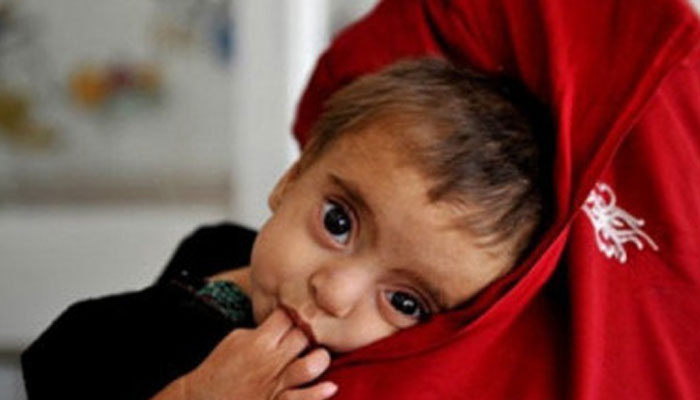
Policy analyst Sadaf Zulfiqar presented findings from Public Expenditure Reviews, revealing that Pakistan has one of the youngest populations in the region, with 40 percent under the age of 15 and 60 percent below 30. However, about 26 million children remain out of school, while nearly 40 percent suffer from stunted growth due to malnutrition.
The review also showed that Pakistan allocated only 1.5 percent of GDP to education and 0.9 percent to health in the 2022-23 fiscal year, both significantly lower than international benchmarks.
During the parliamentary discussion moderated by Zafarullah Khan, lawmakers highlighted region-specific challenges affecting child welfare.
Shahida Rehmani, Chairperson of the Women Parliamentary Caucus, called for expanded neonatal healthcare services, improved vaccination coverage and dedicated funding for maternal and child health.
Parliamentary Secretary for Information and Broadcasting Barrister Daniyal Chaudhary emphasised improving teacher training, noting that better teaching quality is essential to achieve stronger learning outcomes in public schools.
From Balochistan, legislator Dr Muhammad Nawaz warned that child welfare indicators remain alarming, citing low literacy rates, high infant mortality and widespread malnutrition.
15 Militants Killed In Intelligence Operations In Balochistan
Similarly, Nabeela Ayub Khan from Azad Jammu and Kashmir highlighted concerns about abandoned children and called for clearer legal frameworks governing custody and adoption.
Meanwhile, Asif Khan Mehsud from Khyber Pakhtunkhwa pointed out that years of conflict in merged districts have damaged school infrastructure and limited development funding.
Other lawmakers, including Riaz Fatyana and Dr Shazia Sobia Aslam Somroo, raised concerns about environmental challenges, outdated curricula, malnutrition and learning difficulties affecting children’s development.
Concluding the roundtable, Chairman of the National Assembly Standing Committee on Finance Syed Naveed Qamar urged parliamentarians to closely review budget proposals and ensure that allocations for education, health and child protection are safeguarded despite fiscal pressures.
He stressed that rising debt and defence expenditures should not come at the cost of investments in children, adding that parliament must lead efforts to prioritise child-focused development in the upcoming budget.
Comments are closed, but trackbacks and pingbacks are open.