
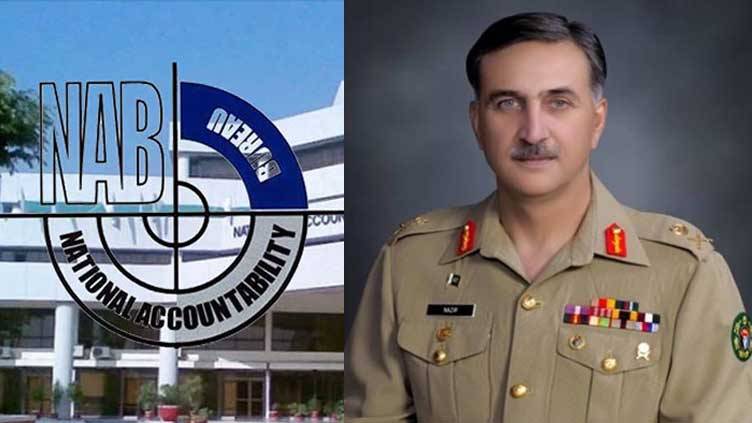
Govt extends NAB Chairman Nazir Ahmed tenure three years
Government extends NAB chairman Nazir Ahmed term after parliament changes accountability law.

National Accountability Bureau – (Web Desk) – The federal government on Friday extended the tenure of National Accountability Bureau chairman, Lieutenant General (retd) Nazir Ahmed, for another three years. The decision was announced through an official notification issued by the Ministry of Law and Justice.
Officials said the extension takes effect from today. Nazir Ahmed will continue to serve as NAB chairman under the same terms and conditions that already apply to the post.
The move came after parliament approved changes to the accountability law a day earlier. Both the Senate and the National Assembly passed amendments that allow the chairman’s tenure to be extended.
Earlier, the law allowed the NAB chairman to serve only one three year term, with no option for extension. The new amendment changes this rule and opens the way for the current extension.
Reports also said the International Monetary Fund had raised concerns about the earlier rule of a fixed and non renewable term. According to officials, the IMF believed the rule could affect the continuity and stability of the accountability institution.
The change was introduced through the National Accountability Amendment Bill 2026. The bill was presented in parliament by Senator Mohammad Abdul Qadir and later approved by both houses.
The amendment also brings a new change to the appeal system in accountability cases. Under the new rule, decisions of high courts in NAB related matters can now be challenged in the Federal Constitutional Court within 30 days. This step may expand the legal review process in accountability cases.
Federal Law Minister Azam Nazir Tarar told the House the government had no objection to the proposed amendments, describing them as constructive improvements to the existing law.
Speaking during the debate, Tarar said the bill addressed certain procedural ambiguities in the accountability law, particularly regarding the power of courts to grant bail and the handling of proceedings.
The bill also proposes allowing the chairman of the NAB to serve a three-year term that may be extended once for an additional three years, replacing the current provision that bars reappointment or extension.
Another change seeks to adjust the financial threshold used in NAB cases annually according to the inflation index published by the Pakistan Bureau of Statistics, ensuring that monetary limits remain realistic over time.
In addition, the bill clarifies that procedural provisions governing trials under the accountability law would also apply to appellate proceedings, a move aimed at removing interpretational ambiguity in the ordinance.
Leader of the House Senator Ishaq Dar supported the bill and said the Constitution allows the Federal Constitutional Court to hear appeals from High Court decisions if parliament provides such a forum through legislation.
“The Constitution clearly states that the Federal Constitutional Court shall have jurisdiction to hear appeals from judgments and orders of a High Court where an Act of Parliament so provides,” Dar said, citing the relevant constitutional provision.
“If anyone believes further changes are needed, another amendment bill can always be introduced. Legislation is an evolving process,” he said.
Pakistan LNG Supply Disrupted After Strait of Hormuz Closure
Law Minister Tarar told the House that under the existing NAB law only one appeal as of right is available before the concerned High Court, and the proposed amendment would expand legal recourse available to litigants.
He added that providing an additional appellate forum could help address longstanding criticism that the accountability law is overly stringent and lacks adequate safeguards for fundamental rights.
Following its passage in the Senate, the bill will now be sent to the National Assembly for consideration.
Comments are closed, but trackbacks and pingbacks are open.