
Minister warns state cannot sustain offering 70% electricity discount
Minister warns 70% electricity discount unsustainable as solar adoption rises, while new tariffs aim to balance consumer and industry costs.

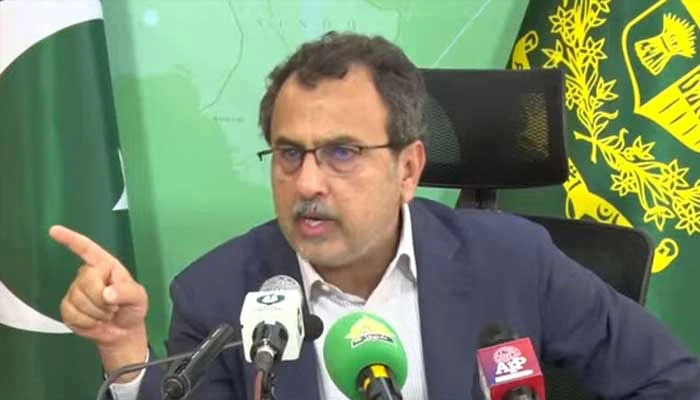
Federal Minister for Energy (Power Division) – As more people switch to solar energy, Federal Minister for Energy (Power Division) Awais Leghari revealed that the number of electricity consumers using less than 200 units has jumped from 9 million to 21 million.
“Many well-off households are joining this group by installing solar panels. It’s not feasible for the state to provide a 70% electricity discount to such a large number of consumers,” Leghari said during Geo News’ program Naya Pakistan on Sunday.
On the topic of power rates, he added that the country’s industrial electricity rates are now comparable to other regional countries, and dismissed claims that electricity costs in Bangladesh are as low as six to seven US cents per unit.
Leghari also said the government plans to restructure the power sector’s debt to reduce electricity prices more broadly, rather than only for industries.
He noted that the government does not have room for additional subsidies, but it can adjust tariffs by increasing fixed charges while lowering per-unit costs.
His comments come shortly after the government introduced relief measures for industries, cutting electricity tariffs by Rs4.04 per unit and reducing the export refinance scheme rate from 7.5% to 4.5% to help businesses and boost export-led growth.
Separately, the Centre has proposed a downward revision of up to Rs1.53 per unit in the base electricity tariff for some domestic power consumers, while recommending higher fixed monthly charges for certain protected and unprotected households, according to a motion filed with the National Electric Power Regulatory Authority (Nepra).
Under the proposal, protected consumers using 51–200 units would face fixed charges of Rs200–300 per month, while unprotected consumers consuming up to 600 units could see up to 100% increases in fixed charges, with monthly rates rising from Rs200 to Rs675 depending on consumption. Conversely, households consuming 601–700 units and above 700 units would see fixed charges reduced from Rs800–1000 to Rs675 per month.

The government also proposed reductions in base tariffs for higher-usage unprotected consumers. For 301–400 units consumption, a drop of Rs1.53 per unit to Rs36.46 is proposed; for 401–500 units, Rs1.27 to Rs38.95 and for 501–600 units, a cut of Rs1.40 to Rs40.22 has been suggested.
Similarly, for 601–700 units, Rs0.91 per unit cut to Rs41.85; and above 700 units, Rs0.49 to Rs47.20 per unit has been proposed.
Lower-usage unprotected consumers (1–300 units) and lifeline protected consumers would see tariffs largely unchanged, ranging from Rs3.95 to Rs33.10 per unit depending on usage.
Nepra will hold a public hearing on February 10 (tomorrow), 2026, allowing stakeholders and consumers to comment on the proposed tariff adjustments.
Meanwhile, responding to a question pertaining to the issue of transition to gross metering/net billing from the existing net metering, Leghari said that a consumer utilising solar net metering uses all of the electricity produced by him and doesn’t export then he’ll be able to recover his cost/investment — within 18 months, provided that the proposed regulations come into effect.
Whereas, a solar net metering user who uses 40% of the electricity produced by him and exports the rate, he too will be able to recover his cost in up to three and a half years in case of the new proposed regulations, he added.
Pakistan Praises Historic Saudi Defence Pact at UN
Comparatively, he noted, under the prevailing regulations with a buyback rate of Rs27 per unit for net metering and not net billing, than a consumer can recover his investment within around 18 months — nearly doubling the period of recovery for consumers exporting electricity units.


Comments are closed, but trackbacks and pingbacks are open.